



















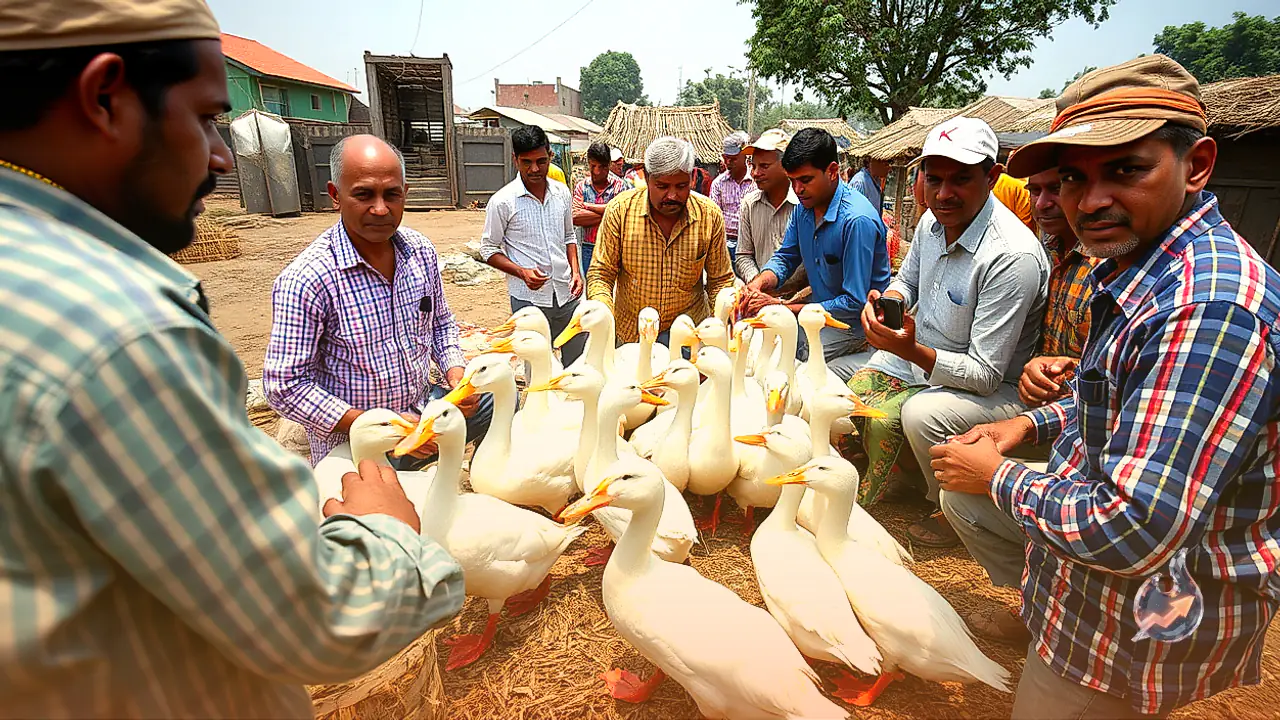

For salaried professionals seeking extra financial security without abandoning their primary careers, small-scale livestock farming offers a practical pathway. Pramod Kumar, a resident of Bikramganj in Bihar's Rohtas district, demonstrates how this approach works in practice. While maintaining his regular career in the networking sector, he manages a flock of roughly 200 ducks. The most notable aspect of his setup is that it requires no disruption to his office schedule, functioning smoothly with a minimal time commitment early in the morning and late in the evening.
Building a Backyard Setup on a Compact Plot
The venture began around seven months ago when Kumar began exploring opportunities to create a reliable side income stream. He specifically wanted an enterprise that would not demand constant daytime supervision. He turned to instructional material on YouTube to study poultry care and the operational requirements of raising waterfowl. Convinced of its viability, he acquired approximately 200 ducks and set up his farm on a compact plot measuring 50 by 10 feet, creating a dug-out water pit suitable for the birds.
Managing Time Around a Professional Schedule
Balancing a structured employment schedule with agricultural upkeep requires strict daily discipline. Kumar organized his routine so that livestock responsibilities take up only about one hour in the morning and another hour in the evening. During these brief windows, he handles feeding, water management, enclosure hygiene, and egg collection, leaving the rest of his day entirely free for his employment obligations.
Egg Production and Daily Revenue Streams
Kumar's flock consistently yields about 100 eggs per day. He sells these fresh eggs directly to buyers at a rate of 15 rupees each. Consequently, egg sales generate around 1,500 rupees in gross revenue every day. Over an entire month, this consistent daily output translates into total gross monthly receipts ranging from 45,000 rupees to 50,000 rupees.
Operating Costs and Realistic Net Margins
The primary ongoing expenditure for the enterprise is nutritional feed for the birds. Feeding the 200 ducks costs approximately 700 rupees to 800 rupees each day. After deducting feed expenses from daily sales, Kumar retains a net daily profit of roughly 700 rupees to 800 rupees. This leaves him with a steady monthly net surplus of between 21,000 rupees and 24,000 rupees from egg production alone.
Additional Earnings Through Livestock Sales
Beyond daily egg production, the farm provides another lucrative avenue of income through bird sales. Kumar occasionally sells grown ducks in pairs, commanding around 600 rupees per pair. This supplementary channel boosts his overall return on investment. Initiated just over half a year ago, Kumar's venture shows that salaried workers can successfully cultivate supplemental earnings without walking away from professional employment.