























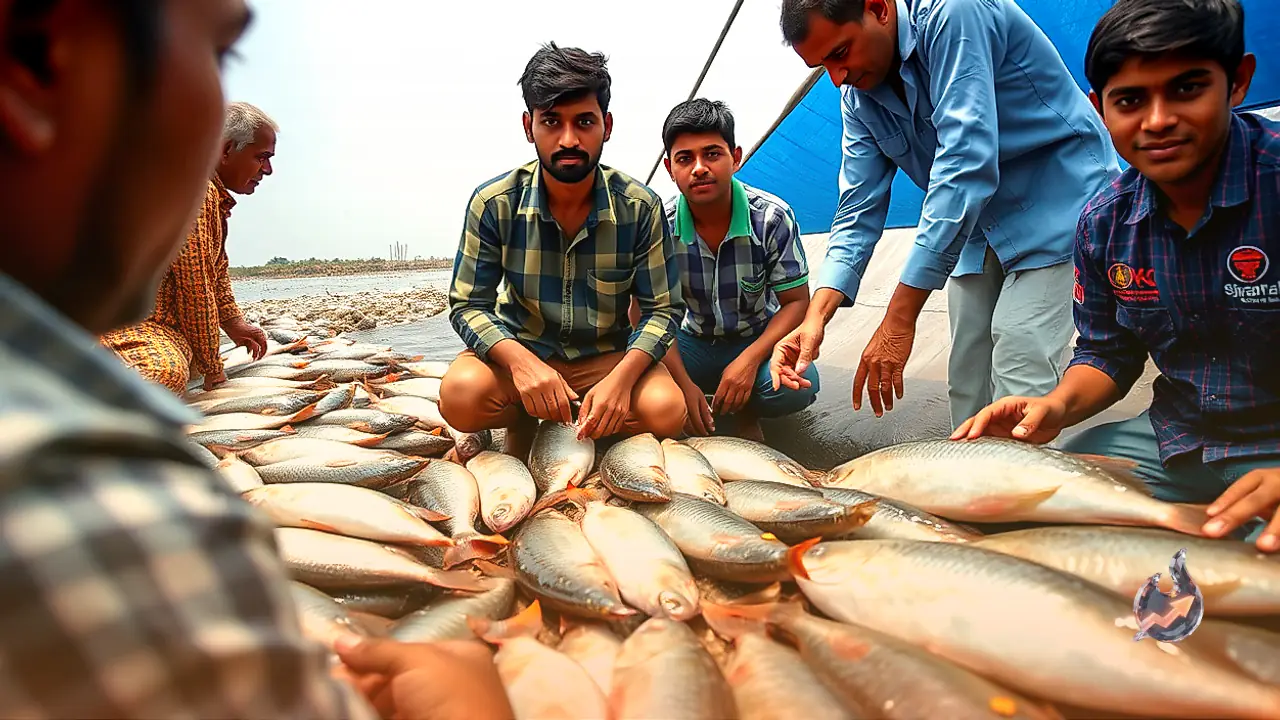

In the present era, young individuals are increasingly turning away from traditional job searches and stepping forward to launch their own enterprises. Moving beyond conventional farming methods, people are showing immense interest in diverse forms of aquaculture. Among these, fish farming stands out as a lucrative business where proper techniques and effective management can yield significant financial returns. Especially in Bihar, public interest in fish aquaculture has seen a remarkable surge. Achieving success in this venture requires meticulous attention to various critical factors, including pond preparation, fish species selection, water quality maintenance, and regular supervision. Even minor negligence can lead to fish mortality, resulting in heavy financial setbacks for the farmer.
Start Small and Adopt the Right Techniques
Explaining how beginners should approach fish farming, fisheries officer Krishna Kanhaiya Kumar advised that instead of making heavy capital investments at the outset, starting with a small pond is a much wiser approach. He recommended initiating fish farming in a one-acre pond and expanding the business gradually as practical experience grows. He pointed out that individuals starting fish farming in Bhagalpur can begin with Pangasius fish. Along with this, species like Catla and Rohu can also be stocked together in the same pond. By combining species that inhabit different water levels, farmers can make optimal use of the available pond space. For those getting a new pond excavated, it is essential to ensure a depth of 7 to 8 feet so that it maintains at least 6 feet of water, which is a prerequisite for successful three-layer fish farming. Furthermore, the width must be at least 20 feet to establish a viable and productive pond.
Focus on Pond Depth and Structural Requirements
When planning the excavation of a new fish pond, specific structural guidelines must be strictly followed. The excavation must reach a depth of 7 to 8 feet to guarantee a consistent water level of at least 6 feet, which allows farmers to implement a successful three-tier fish farming system. Additionally, the width of the pond should span a minimum of 20 feet to ensure long-term viability and operational success. Without adhering to these precise measurements and structural standards, maintaining a productive fish pond remains extremely difficult, which can eventually jeopardize the entire commercial undertaking.
Quick Returns Through Pangasius Cultivation
According to Krishna Kanhaiya Kumar, Pangasius is among the fastest-growing fish species available. This rapid growth rate makes it an ideal option for newcomers stepping into the aquaculture sector. With proper management and care, farmers can start witnessing financial returns within 6 to 7 months of stocking. However, fish farming cannot be classified as a completely effortless business venture. It demands continuous monitoring of pond maintenance, water parameters, and the health status of the fish. Any lapse in management at any stage can trigger massive fish mortality and substantial financial losses for the producer.
Pond Sanitization Between Production Cycles
The fisheries officer emphasized that once a harvest cycle is completed, thorough cleaning and maintenance of the pond become absolutely mandatory. Before introducing fish for the next production cycle, the pond must undergo comprehensive cleaning and sanitization. Depending on specific requirements, spraying agricultural lime is also practiced to disinfect the environment. Furthermore, market-available chemicals designated for pond treatment should be applied strictly according to expert recommendations. He warned that restocking a pond directly for a second cycle without proper cleaning and treatment can invite severe financial losses.
Technical Expertise Drives Long-Term Success
Succeeding in fish farming involves much more than merely releasing fish fry into a water body. Continuous attention must be directed toward pond upkeep, water conditions, species compatibility, and routine monitoring. By starting on a modest scale, acquiring necessary technical knowledge, and expanding operations step-by-step, individuals can transform fish farming into a highly rewarding source of regular employment and sustainable income.