





















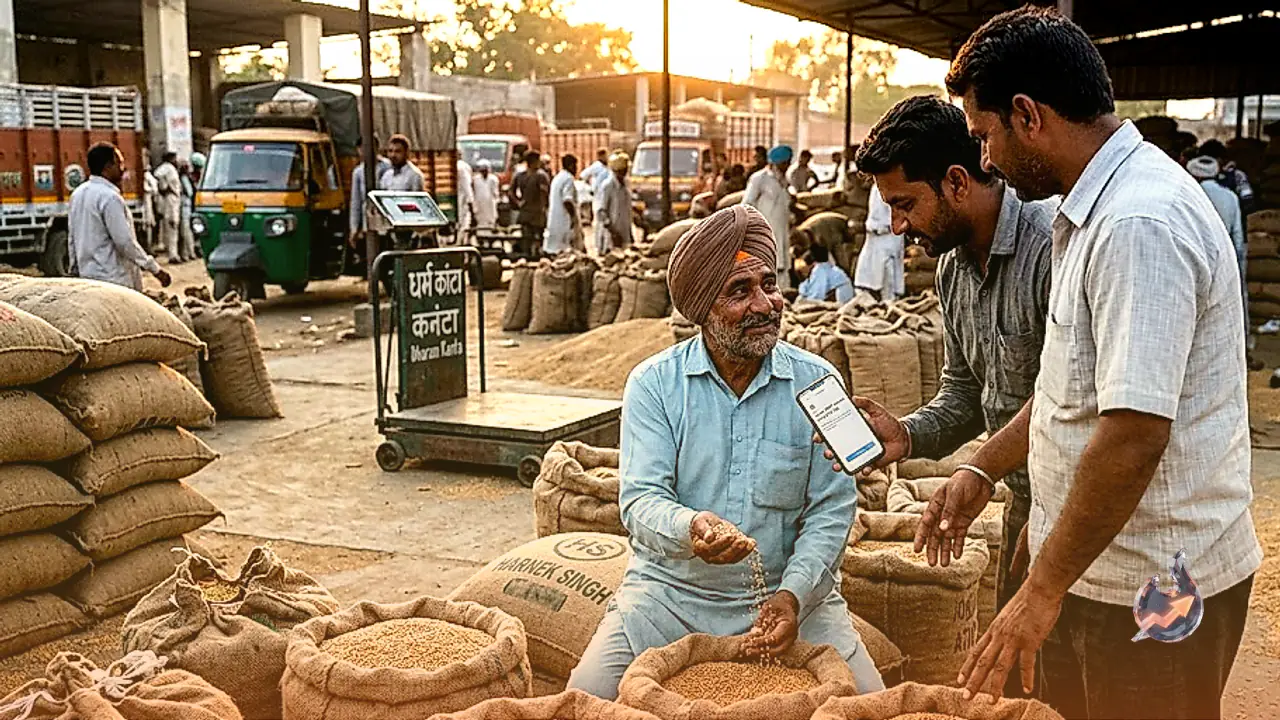

In an effort to ensure remunerative earnings for agricultural producers ahead of the upcoming rabi marketing season 2027-28, the central government has cleared an increase in the Minimum Support Price (MSP) across six rabi crops. Chaired by Prime Minister Narendra Modi, the Union Cabinet approved a hike of ₹25 per quintal for wheat, pushing its procurement benchmark to ₹2,610 per quintal. During the preceding 2026-27 marketing window, the baseline procurement price for wheat stood at ₹2,585 per quintal. The policy decision is intended to offer growers an adequate margin over their direct operational investments.
Margin Assured at More Than Double the Production Cost
Union Minister Ashwini Vaishnaw outlined the economic breakdown behind the pricing revision, noting that the national production cost for wheat is calculated at approximately ₹1,264 per quintal. Against this benchmark, setting the 2027-28 MSP at ₹2,610 per quintal ensures that the procurement value exceeds twice the assessed input cost. Wheat represents the primary agricultural commodity in India's rabi portfolio, with sowing operations typically commencing across major agrarian states in October and harvesting starting by April. Coming just as farmers prepare their acreage for the upcoming sowing cycle, this upward revision provides price clarity for primary producers.
Revised Benchmarks for Pulses, Oilseeds, and Barley
The pricing adjustment covers five additional commodities grown during the rabi cycle. Among coarse grains, the MSP for barley has been revised upward from ₹2,150 to ₹2,286 per quintal. In the pulses segment, gram has seen an adjustment from ₹5,875 to ₹5,958 per quintal, while lentil has been granted a notable raise from ₹7,000 to ₹7,390 per quintal. Oilseeds have also received strong policy backing: the support rate for mustard has been escalated from ₹6,200 to ₹6,613 per quintal, and safflower procurement pricing has been moved from ₹6,540 up to ₹7,215 per quintal.
Projected Payout of ₹90,962 Crore for Farmers
Official procurement estimates indicate that approximately 324 lakh tonnes of rabi commodities will be purchased under the MSP regime during the 2027-28 marketing window. To facilitate these purchases, an aggregate disbursement of ₹90,962 crore is projected to flow directly to farming households. These statutory minimum prices were finalized on the basis of assessments submitted by the Commission for Agricultural Costs and Prices (CACP). The advisory body formulates its recommendations by weighing domestic cultivation expenditure, broader supply-demand equilibrium, prevailing market price patterns at home and abroad, and seasonal agro-climatic risks.
Production Target Fixed at 12.1 Crore Tonnes
Alongside the upward pricing trajectory, the Ministry of Agriculture has outlined a domestic harvest target of 12.1 crore tonnes of wheat for the 2026-27 crop cycle. The policy framework seeks to achieve dual objectives: encouraging farmers to allocate acreage through guaranteed profitability, while maintaining sufficient national buffer reserves to meet consumer demand.
Strategic Cabinet Approvals for Green Grid and Urban Mobility
Beyond the agricultural support package, the Union Cabinet sanctioned two other long-term infrastructure initiatives with nationwide implications. In the clean energy vertical, the government approved the PM Dhara programme, a dedicated smart grid infrastructure plan designed to facilitate the smooth transmission and grid integration of renewable energy capacities across the country. Additionally, for the national capital, the Cabinet approved the rollout of an Intelligent Traffic Management System (ITMS) to modernize urban traffic monitoring and ease vehicular congestion across Delhi.