























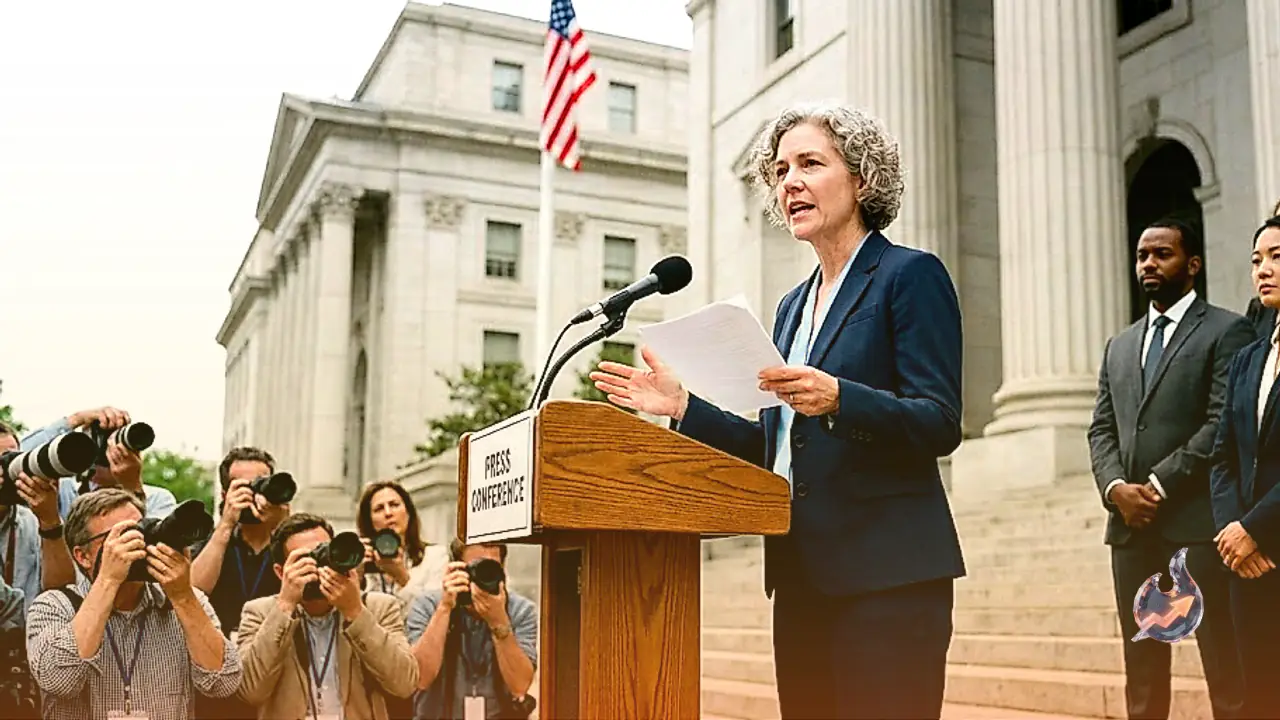

Domestic friction over trade policy has escalated significantly in the United States as a coalition of 25 states, all led by the Democratic Party, launched a formal legal challenge against the administration of President Donald Trump. The states have filed a lawsuit targeting the newly imposed tariffs on imports originating from roughly 60 countries, setting up a major courtroom battle over presidential trade powers.
Lawsuit Filed in the US Court of International Trade
The legal challenge was formally submitted on Monday to the US Court of International Trade. In their court filings, the participating states contend that implementing such massive import duties lacks a robust legal foundation and sufficient justification. According to the lawsuit, the affected goods coming from the targeted 60 nations are predominantly subjected to tariffs of 10% or 12.5%, a group of countries that accounts for approximately 99.4% of total American imports.
Disputing the Forced Labor Rationale
The state attorneys general argue in the court documents that the administration justified the measures under the banner of combating forced labor within global supply chains, yet there is no coherent link between the two issues. The filing stresses that applying a uniform tariff blanket across numerous nations bears no rational relationship to addressing the complex problem of forced labor.
Allegations of Sidestepping Proper Trade Procedures
Furthermore, the lawsuit accuses the Office of the United States Trade Representative of rushing through the investigations concerning the 60 countries without conducting proper, individualized consultations. The states argue the administration failed to explain why virtually identical tariff rates were slapped on nations with vastly divergent labor laws and trade regimes.
Controversy Over the 1974 Trade Act
This legal hurdle arrives after the administration turned to a different statutory mechanism to revive its tariff agenda following previous setbacks in federal courts. The states argue that the administration is misusing Section 301 of the Trade Act of 1974 to resurrect duties that had previously faced successful legal opposition.
Implementation Date and Global Impact
The disputed tariffs officially went into effect on July 24, replacing an earlier global tariff framework initiated by the president. These measures have directly impacted major trading partners, including India, China, and the European Union, drawing widespread international criticism following the recent move to penalize around 60 nations.
Defense From Trade Officials
Defending the policy, United States Trade Representative Jamieson Greer maintained that the nation has a long-standing history of restricting imports tied to forced labor. He urged international partners to adopt similar standards moving forward.