

















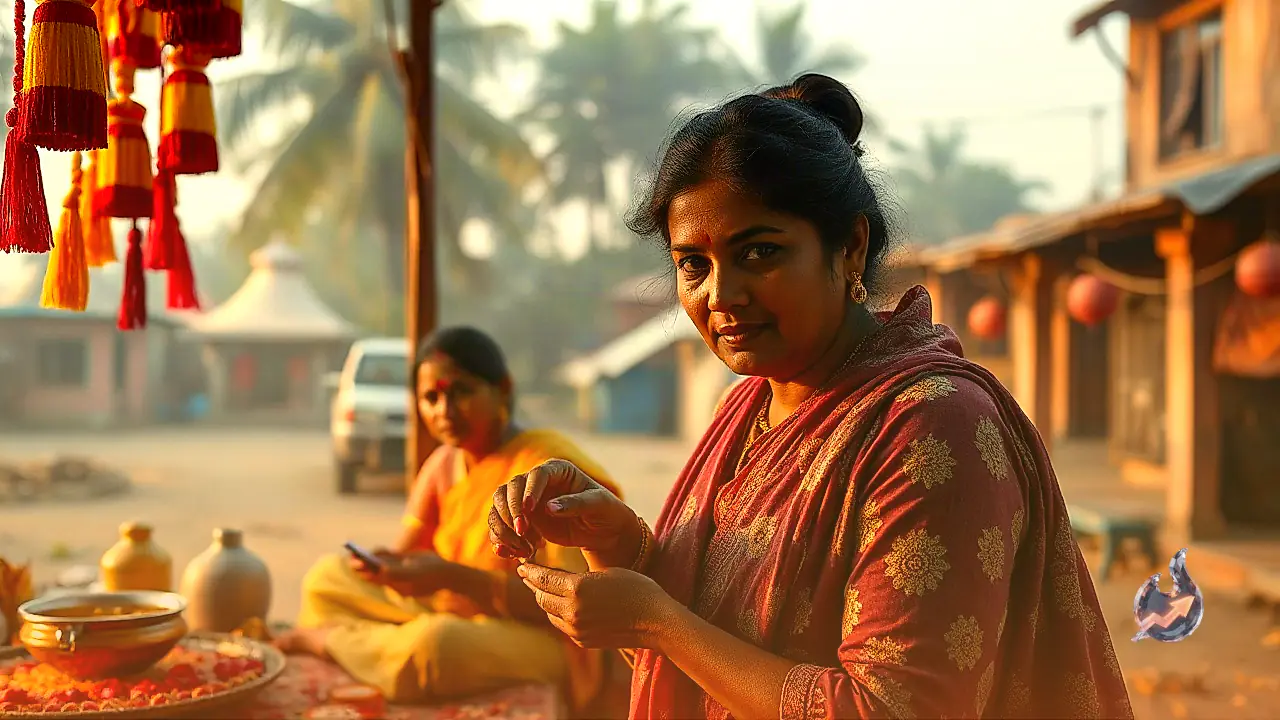

Raksha Bandhan is widely celebrated as a special festival symbolizing the pure bond of love and protection between brothers and sisters. As the festive date approaches, sisters eagerly look forward to tying sacred threads on their brothers' wrists in exchange for tokens of love. This year, rather than relying on mass-produced Chinese varieties, the wrists of brothers will be adorned with fully eco-friendly and indigenous rakhis. These items are being meticulously handcrafted by women associated with local self-help groups. These community groups routinely receive specialized training ahead of various festivals throughout the year, ensuring that participating women have consistent livelihood opportunities and steady income streams all year round.
Self-Help Groups Drive Local Women Toward Self-Reliance
Across the Amethi district, women belonging to self-help groups are being empowered to achieve financial independence through structured rakhi-making initiatives. This skill development program is being facilitated through the support of the RSETI institute. The women are learning to design a wide variety of rakhis that are entirely pure and environmentally sustainable. Participating members note that learning to craft diverse products during different festive seasons helps them build sustainable livelihoods and achieve financial prosperity. Master trainers involved in the program emphasize that these initiatives not only provide steady employment but also elevate the economic status of rural households during festive peaks.
Financial Empowerment Changes Daily Lives
Santoshi Devi, a woman associated with the Sai Baba Self Help Group, explains that group members have collectively organized themselves to manufacture these decorative rakhis. By learning different skill sets, they manage to produce unique items for every single festival, which grants them constant learning opportunities alongside steady financial gains. She shares that her financial prospects have remarkably brightened through the collective, eliminating the need to depend on others for financial assistance. Regular employment has finally become accessible right from her local community.
An Inclusive Initiative Strengthening Community Bonds
The skill-building drive has welcomed participants across diverse backgrounds, fostering an inclusive environment of enterprise. Nazreen, a Muslim woman participating in another local group, points out how beneficial the training program has been. She notes that these carefully crafted rakhis will beautifully grace brothers' wrists while strengthening bonds of affection through traditional protective threads. Receiving diverse training modules from RSETI has consistently provided her with year-round opportunities to build independence and master new trades.
Natural Materials and Expert Guidance Shape the Craft
Master trainer Shweta Baranwal, who instructs the women on various manufacturing techniques, explains that the entire collection of rakhis is strictly eco-friendly. The crafting process incorporates natural threads, beads, pom-poms, cowrie shells, and other sustainable elements to assemble unique defensive threads and decorative patterns. By teaching participants how to handle distinct raw materials and manufacture diverse products, the training program ensures that rural women secure reliable employment and expand their artisan capabilities.