
















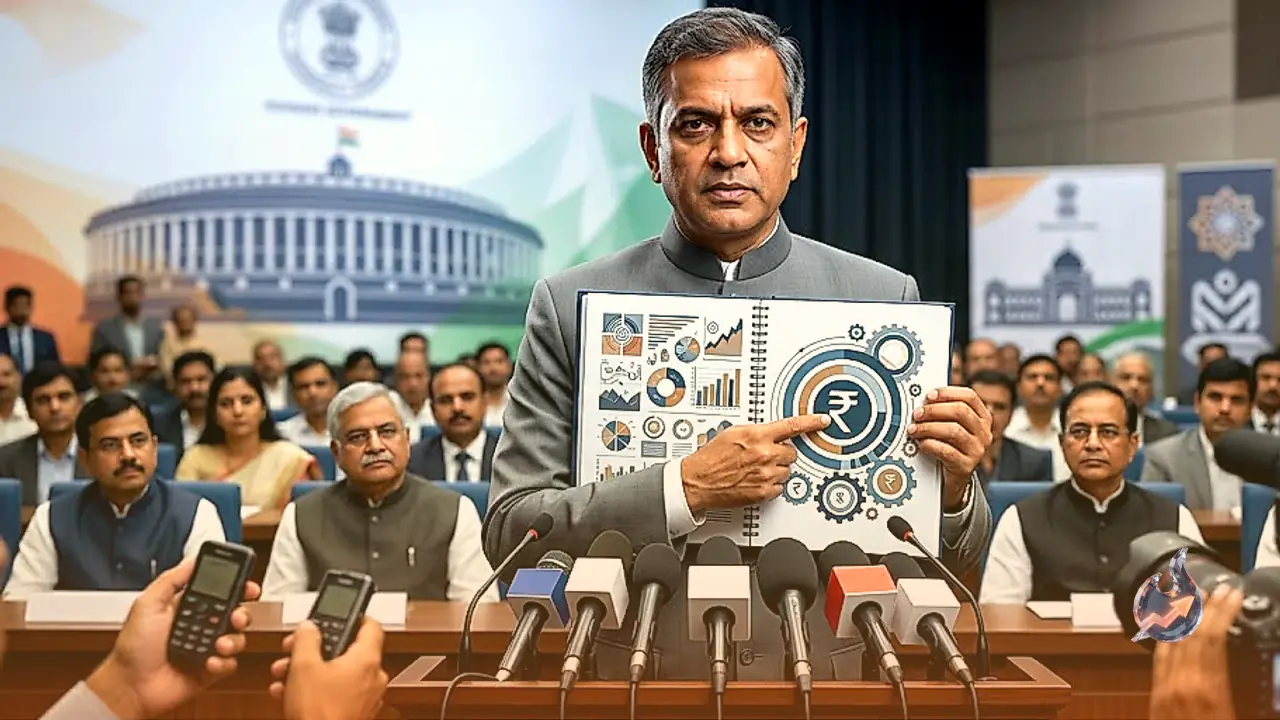

Discussions around the 8th Pay Commission are heating up across government offices, and now the largest body representing central government employees has laid out its key demands before the panel. The commission had invited suggestions from employee organisations up to June 15, and it is also travelling to various states and union territories to gather ground-level data. These organisations carry real weight because the commission builds its final recommendations to the central government on the back of exactly such inputs.
As part of this process, the National Council Joint Consultative Machinery (NC-JCM) has submitted a set of suggestions to the commission. It is regarded as the single largest representative body of central government staff, covering employee unions from railways, defence, posts, the central secretariat and several other departments.
A push to merge pay grades
One of the standout points in the submission is the call to merge pay grades. In simple terms, pay levels that sit very close to one another should be combined into a single level. The body argues that at many levels the nature of work is almost identical and the pay gap is not very large, yet the existence of separate levels ends up affecting promotions and career progression. As a concrete example, it has suggested that Level 9 and Level 10 be fused into one. The organisation believes this would make the entire pay structure simpler and shrink the gap between employees doing similar work.
Relief for those stuck at Level 5
Beyond that, a separate relief has been sought for Level 5 employees. The body points out that thousands of staff in railways, defence, posts and the central secretariat have remained stuck at Level 5 for years without moving up. It has therefore demanded a one-time upgrade of all existing Level 5 employees directly to Level 6. If accepted, these employees would no longer have to wait for a promotion, and their pay would rise as well.
Minimum pay and increment demands
Along with these, the organisation has recommended raising the minimum salary from Rs 18,000 to Rs 69,000. This amount would be the basic pay, meaning the dearness allowance (DA), house rent allowance (HRA) and other allowances would be added on top of it. It has also asked for the annual increment to be lifted from 3 percent to 6 percent. The body further wants a clean, well-structured pay matrix built up to Level 13, so that any employee can easily understand how their salary will grow after a promotion. In addition, it has requested that the pension formula be recalculated in line with the new salary, so that retired employees also share in the benefit of the hike.
Are these demands binding?
The obvious question is whether these suggestions must be implemented. The answer is clear, no. The organisation has only offered suggestions, which can also be read as demands. The matter now rests entirely with the pay commission, which will decide how many of these it accepts and how many it turns down. And even after the commission gives its go-ahead, the final call on whether to act on the suggestions will lie with the government.
Who is leading the commission
The 8th Pay Commission is being headed by former Supreme Court Justice Ranjana Prakash. Professor Pulak Ghosh has joined as a member, having earlier served on the Prime Minister's economic advisory committee. Pankaj Jain, a former IAS officer, is the member secretary of the commission.