























The practice of apiculture is gaining significant momentum across the Jehanabad district in Bihar, with local residents increasingly stepping into this field. This growth is bolstered by various government support schemes designed to assist aspiring entrepreneurs. One such beneficiary is Santosh Kumar Kesari, a resident of Nadiyawan village in the Kako block, who has successfully transformed his career through bee-keeping. When Santosh embarked on this journey seven years ago with just 10 boxes, he could not have imagined expanding his operation to 400 boxes, achieving impressive financial success through sheer dedication and strategic planning.
Training and Early Challenges
After completing his graduation, Santosh spent a considerable period struggling with unemployment, taking on odd jobs to make ends meet. Following advice from a local acquaintance, he underwent professional training at the Krishi Vigyan Kendra in Gandhar. He initiated his bee-keeping venture in 2019 with a modest start of 10 boxes. With further support from ATMA Jehanabad, which provided him with 50 additional boxes, he never looked back. His consistent efforts have culminated in a monthly income of up to 40,000 rupees.
Production Scale and Economics
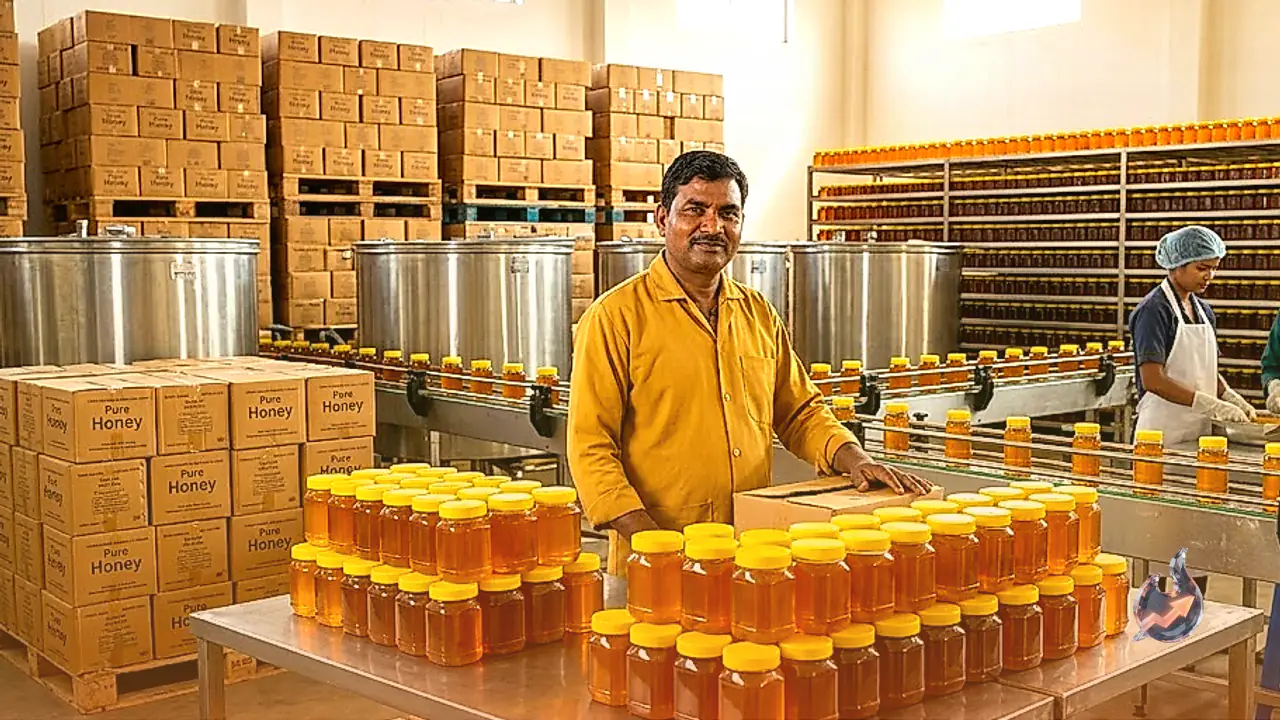
Currently, around 200 families in the district are actively engaged in the honey production business. While the market price for a single bee box is approximately 4,000 rupees, government subsidies allow farmers to acquire them for as little as 1,200 rupees per box. Under optimal conditions, a single box can yield up to 60 kilograms of honey in a year. Consequently, managing 400 boxes enables Santosh to produce an annual yield of approximately 240 quintals, leading to substantial overall earnings.
Market Volatility and Storage Needs
Santosh notes that honey prices in the market remain highly volatile. While retail prices can reach up to 500 rupees per kilogram, bulk sales to traders often fluctuate between 150 rupees and 300 rupees per kilogram. He emphasizes that while local production is high, the lack of proper storage facilities and regulated market access forces producers to sell their stock immediately. If reliable storage infrastructure were available, producers could hold onto their honey to sell at better price points, significantly improving their margins.