























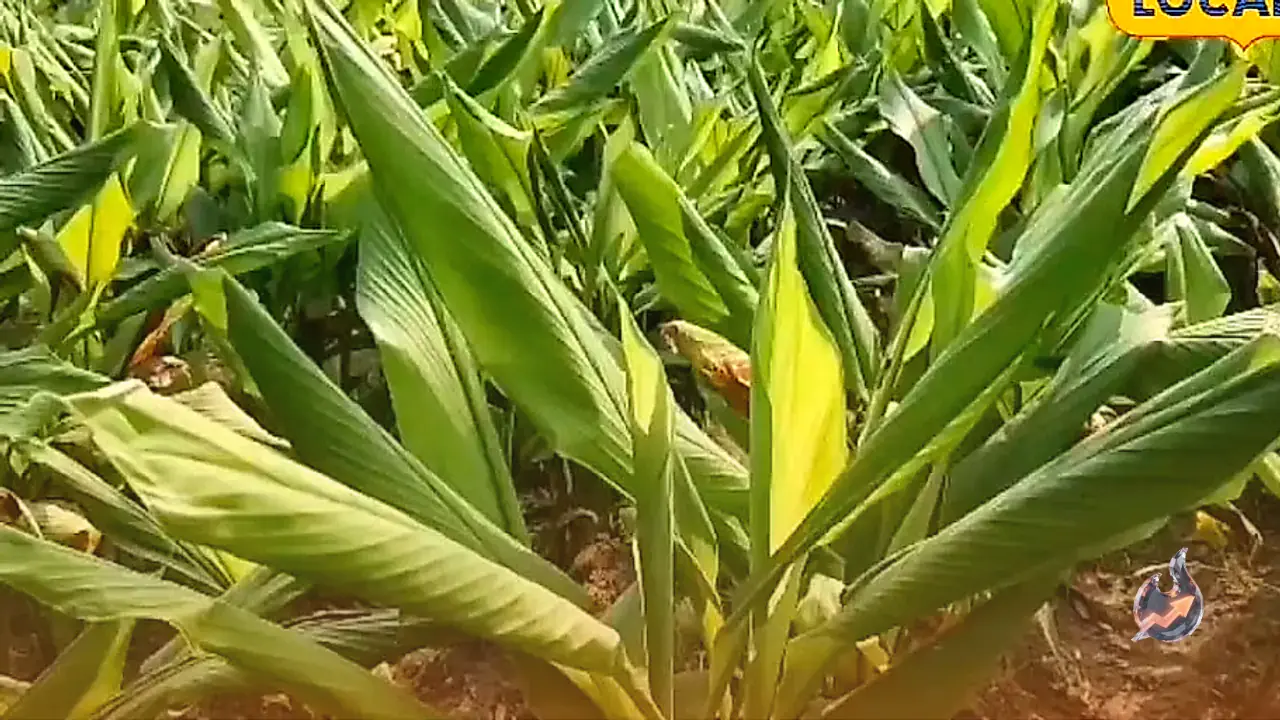

Farmers in Sultanpur are currently facing significant challenges in protecting their turmeric crops from the destructive stem borer insect. As an agrarian economy, India has seen continuous scientific and modern research advancements in the agricultural sector since independence, leading to consistent progress. Turmeric remains a vital part of this agricultural landscape; however, the monsoon season often triggers an influx of pests and diseases. Among these, the stem borer is particularly dangerous, as it causes leaves to wither and drop, threatening the entire harvest. If these signs are visible in turmeric fields, immediate action is necessary because the damage affects both leaf health and overall agricultural output.
Understanding the Pest Impact
Agricultural scientist Dr. A.K. Singh explains that during the Kharif season, the turmeric crop is currently experiencing high susceptibility to the stem borer. This pest attacks the primary structure of the leaves, effectively blocking the flow of essential nutrients from the roots to the plant. This process eventually leads to a dead heart condition, causing the plant to dry out entirely. To counter this, various pesticides are available in the market, which can be applied to stop the infestation based on professional guidance.
Effective Control Measures
To safeguard the turmeric crop, the use of Chlorantraniliprole-based pesticides is strongly recommended. According to the expert, farmers should ensure a follow-up application at intervals of 10 to 15 days to achieve the best protection. Additionally, Dimethoate and Thiamethoxam are viable treatment options. Carbofuran 3 percent granular pesticide can also be utilized for soil-based protection. Furthermore, spraying Monocrotophos 36 EC is highly effective in managing the stem borer infestation, thereby preventing substantial crop losses for the farmers.
Strategic Field Management
Dr. A.K. Singh emphasizes that farmers must maintain consistent vigilance over their crops. It is crucial to keep fields clear of weeds and decaying organic matter, which can harbor pests. Timing is critical for the efficacy of these treatments. To achieve superior results, pesticides should be applied during the early stages of development, specifically within 15 to 20 days, before the pest population spikes. Continuous monitoring combined with the timely application of recommended pesticides is the most effective approach to preserving the health and yield of the turmeric crop.