























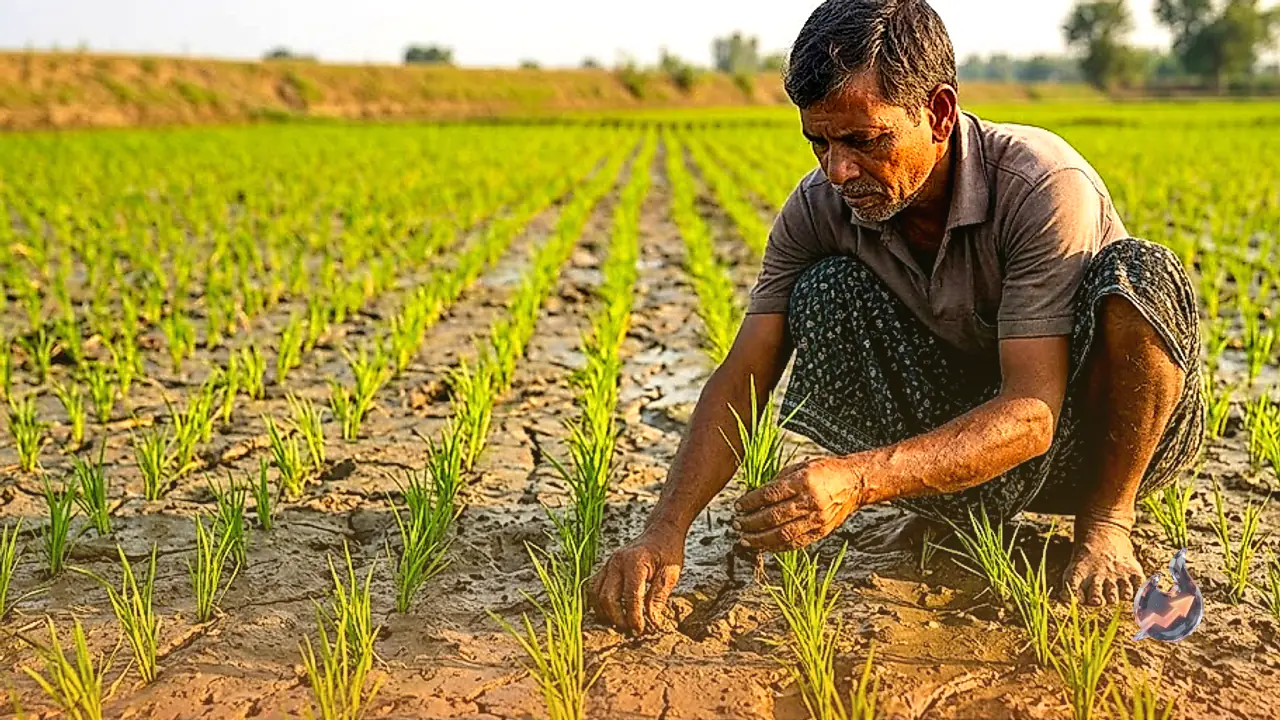

With the arrival of the monsoon in Sultanpur, rice planting is in full swing across the region. Protecting the paddy crop from invasive weeds is a critical concern for farmers during this period, as uncontrolled weed growth can severely hamper final production. Many farmers make the mistake of applying weedicides immediately after transplantation, which is not scientifically sound. Agricultural experts emphasize that herbicides are only effective when weeds reach a specific growth stage, making precise timing essential for successful crop protection.
Optimal Timing for Herbicide Application
The most important factor to consider before spraying is the number of leaves on the weeds. Application should ideally occur when weeds have developed between 3 and 5 leaves. If the weeds have grown more than 5 leaves, the efficacy of the chemical decreases significantly, rendering the treatment ineffective. Therefore, strictly monitoring the growth stage of the weeds is vital for maintaining crop health.
Expert Guidance from Agricultural Scientists
Dr. A.K. Singh, an agricultural scientist at the Krishi Vigyan Kendra in Sultanpur, suggests that for controlling broadleaf weeds, farmers should wait until 15 to 20 days after paddy transplantation. By this time, weeds usually reach the 2 to 3 leaf stage. Farmers are advised to calculate the recommended dosage of Bispyribac Sodium for one acre and apply it as a solution in water to ensure uniform coverage.
Precise Application Methods
Soil moisture levels at the time of application are critical. The field should not be flooded during spraying; instead, it should only have sufficient moisture for absorption. It is best to irrigate the field approximately 24 hours after applying the chemical. This specific approach ensures that weeds are completely eradicated within one week without negatively impacting the growth of the paddy plants.
Traditional Cultivation Techniques
Dr. A.K. Singh also highlights that chemical treatments should be supplemented by traditional weeding and hoeing practices. Regular mechanical weeding is highly beneficial as it improves soil aeration, which in turn promotes healthier root development. This practice not only strengthens the crop but also contributes to better overall plant growth and a significant increase in the final harvest volume.