






















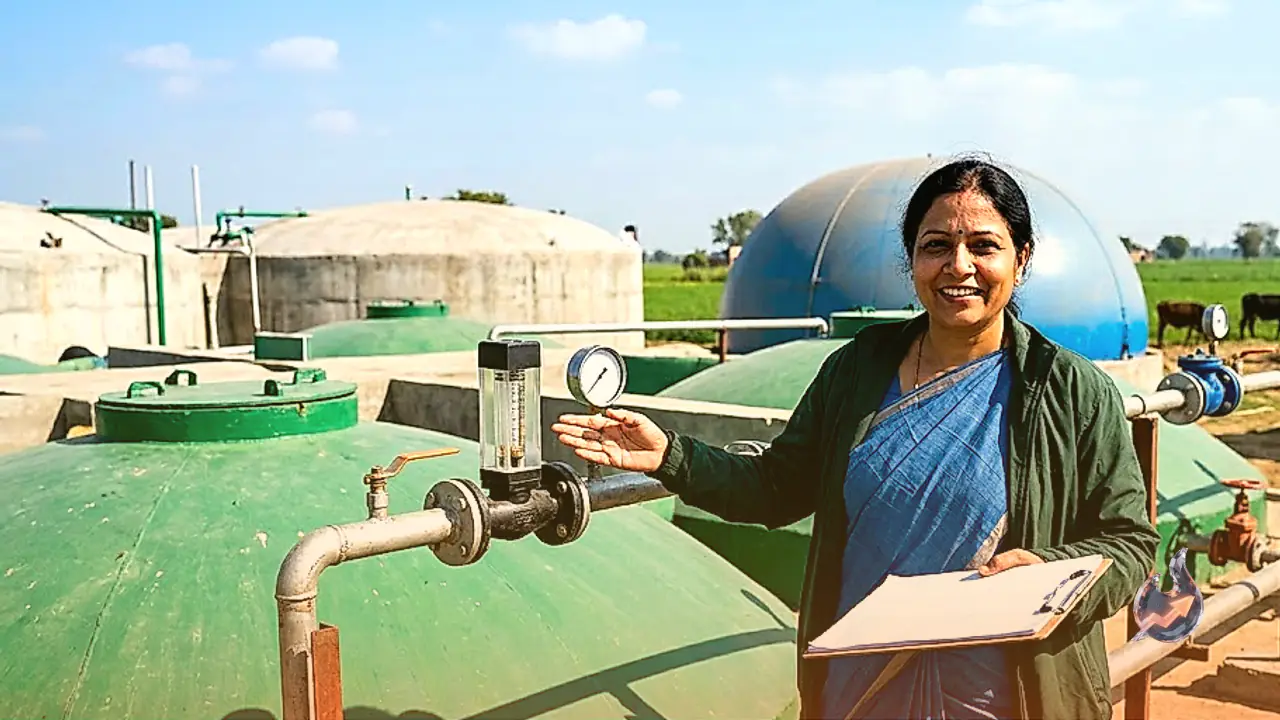

The central government's approved Rs 23,731 crore 'GOBARdhan' scheme holds the potential to serve as a transformative national investment rather than a standard budgetary expense. According to the Indian Biogas Association (IBA), this initiative focused on transforming agricultural waste, cattle dung, and organic refuse into clean energy could help trim India's natural gas import bill by roughly $5 billion in the coming years.
Reducing Energy Import Dependence and Trade Deficit
India currently relies on overseas supplies for nearly 50 percent of its natural gas requirement. This heavy dependency exposes the national economy to global price volatility and geopolitical disruptions. Official figures show that during the 2024-25 financial year, the nation's LNG import bill reached approximately $15.2 billion.
Projections from the IBA suggest that if around 1,500 Compressed Biogas (CBG) plants operate at their full functional capacity across the country, the trade deficit linked to natural gas imports could drop by nearly one-third. This operational shift is estimated to unlock savings of around $5 billion (approximately Rs 40 lakh crore), providing a strong buffer to India's foreign exchange reserves.
Cutting Fertilizer Import Costs and Current Account Deficit
The benefits of the GOBARdhan scheme extend beyond the energy matrix into the agricultural sector. In FY 2024-25, India spent nearly $18 billion on fertilizer imports, which significantly escalated the government's subsidy burden. By generating organic bio-fertilizer outputs from CBG units and encouraging sustainable farming practices, the nation can curtail its reliance on imported chemical fertilizers.
The industry body estimates that fully functioning 1,500 CBG plants could reduce total fertilizer imports by at least 5 percent. A cut of this magnitude is anticipated to lower the current account deficit by about $1 billion, delivering tangible fiscal relief to the country's macro economy.
Spurring Rural Jobs and Localized Economic Growth
Beyond fiscal numbers, the GOBARdhan (Galvanizing Organic Bio-Agro Resources Dhan) program offers deep social and economic advantages for India's hinterlands. Establishing supply chains for collecting, handling, and processing agricultural residue and organic waste creates distributed employment networks.
The deployment of these biogas infrastructure projects will generate job openings for both skilled and semi-skilled workers in rural regions. This decentralized industrial growth will boost local incomes, foster rural entrepreneurship, and clean up the environment through effective waste management.