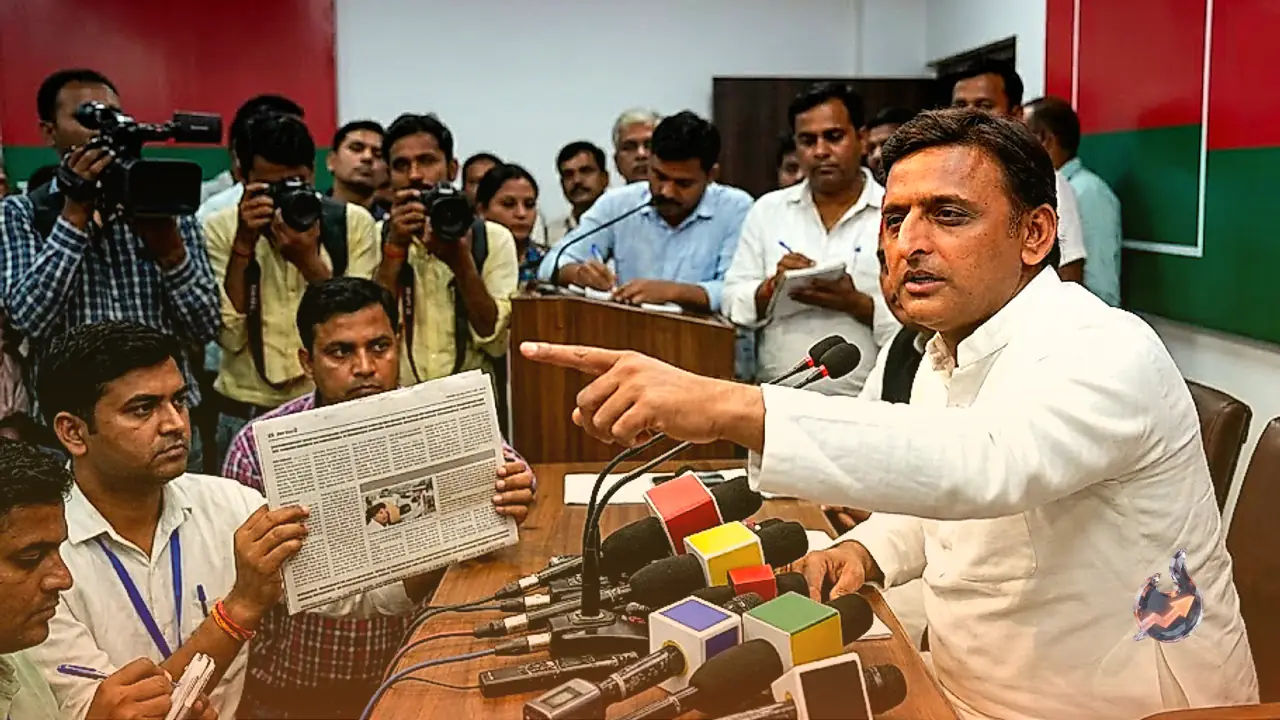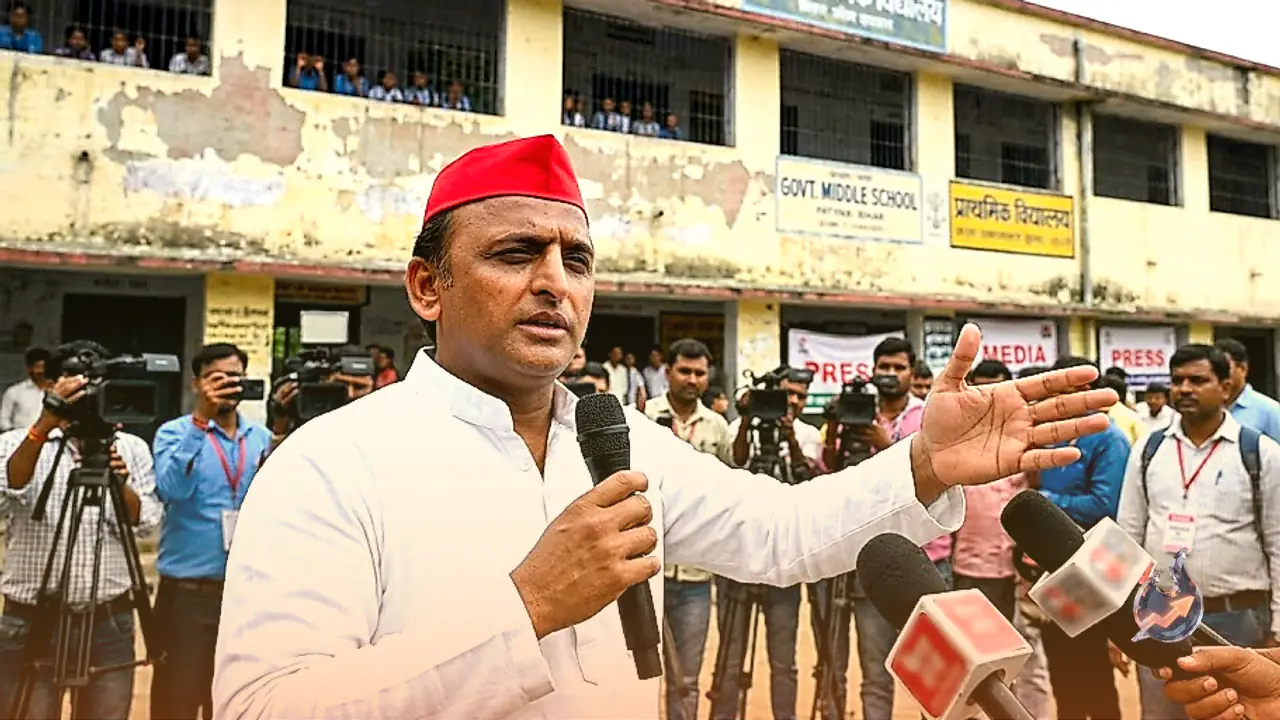






















A major debate over transparency and public accountability has emerged following a directive issued by the Bihar Education Department that restricts media personnel and social media creators from entering state-run school premises. The official order prohibits unauthorized filming and reporting inside government primary and secondary schools. Reacting to this development on the social media platform X, Akhilesh Yadav raised sharp questions regarding the administration's intent, stating that blocking media access is a direct attempt to cover up the dismal conditions prevailing within public educational institutions.
Education Department Order and Entry Restrictions
Under the new rules laid down by the education department, journalists and independent content creators are barred from bringing cameras or recording videos inside school campuses without prior official permissions. Authorities indicated that unannounced visits and video recordings disrupt daily academic schedules and disturb classroom learning. However, observers and critics contend that the restriction aims to shield state officials from public scrutiny. Recent videos shared across social platforms had exposed severe infrastructural failures, prompting widespread public attention toward the state of government schools.
Concerns Raised Over School Infrastructure
Highlighting the specific deficiencies present in public schools, Akhilesh Yadav provided a comprehensive overview of missing facilities that students face daily. He emphasized that restricting camera access does not resolve underlying administrative failures. Among the major issues highlighted were the lack of functional classrooms, blackboards, electricity supply, and ceiling fans. Furthermore, essential student provisions such as clean drinking water, usable toilets, science laboratories, textbooks, notebooks, school uniforms, and mid-day meal quality remain severely compromised in numerous institutions. He asserted that imposing a restriction on reporting merely underscores the depth of neglect in these schools.
Public Reaction
The restriction and subsequent political debate have evoked varied responses from the public. Numerous citizens voiced concern that restricting media access reduces institutional transparency and limits public oversight needed to drive educational reforms. Conversely, others noted that maintaining strict discipline within school premises is necessary to ensure an uninterrupted learning environment for students.