























The imposition of heavy trade duties is a familiar and frequently utilized strategy in the geopolitical playbook of President Donald Trump, who has consistently wielded financial tariffs to assert economic dominance and force diplomatic concessions. When the United States administration formally announced a staggering 58 percent tariff on Indian seafood imports in August 2025, global market watchers and economic analysts anticipated a severe, potentially fatal blow to India's thriving export sector. The conventional wisdom in international trade firmly suggests that such punitive financial barriers, especially when enforced by the world's largest consumer economy, would invariably paralyze a dependent industry and trigger massive job losses. However, the reality of the situation unfolded entirely differently for the Indian market. Rather than buckling under the immense pressure of these stringent American trade restrictions, the Indian seafood industry orchestrated a remarkable and historic turnaround. The sector not only survived the anticipated economic onslaught but managed to completely shatter all previous revenue records. In a fascinating twist of commercial irony, even after the punitive taxes were fully enacted and enforced, the United States continued to purchase Indian seafood in massive volumes, highlighting the inescapable global demand for these specific products and the resilience of established supply chains.
The Looming Crisis for Coastal Economies
To fully understand the absolute gravity of the threat posed by the American tariffs, one must consider the sheer scale and historical depth of the trade relationship between the two nations. For decades, the United States has stood uncontested as the most crucial, reliable, and voluminous consumer of Indian shrimp. An in-depth analysis of international trade statistics reveals that the American market alone consistently absorbed approximately 35 to 40 percent of all shrimp exported from India. When the news broke that this enormous buyer was suddenly slapping an additional 58 percent tax on the commodity, a wave of profound anxiety understandably swept through the ranks of Indian exporters, processing facility owners, and the wider maritime business community.
The financial stakes were exceptionally high, as India's massive seafood enterprise, which was valued at approximately 62,000 crore rupees at the time, found itself directly in the crosshairs of these sudden American trade barriers. The prevailing fear across the industry was that the immediate addition of a 58 percent tax would artificially and drastically inflate the retail price of Indian shrimp on American supermarket shelves, restaurant menus, and wholesale markets. The logical conclusion drawn by many experts was that American consumers and businesses would immediately balk at the soaring costs and rapidly shift their purchasing habits toward cheaper, tax-free alternatives sourced from competing Southeast Asian or Latin American nations. If this pessimistic and widely predicted scenario had actually materialized, the economic shockwaves would have been absolutely devastating. It would have directly threatened the livelihoods, financial stability, and daily survival of millions of marginalized fishermen, thousands of workers employed in specialized seafood processing units, and countless extended families residing along India's expansive coastline who depend entirely on this marine economy.
Shattering Records Amidst Global Trade Pressures
Despite the dire predictions, the alarming headlines, and the palpable fear that initially gripped the coastal industry, the definitive financial results tabulated a year later left economic analysts and trade experts worldwide in a state of absolute disbelief. The Indian seafood sector, which many international observers had hastily written off as a guaranteed casualty of the escalating tariff war, experienced an explosion in commercial growth that defied all conventional economic expectations and historical precedents. Instead of the widely anticipated collapse, the export numbers showcased a monumental, robust, and record-breaking upward trajectory.
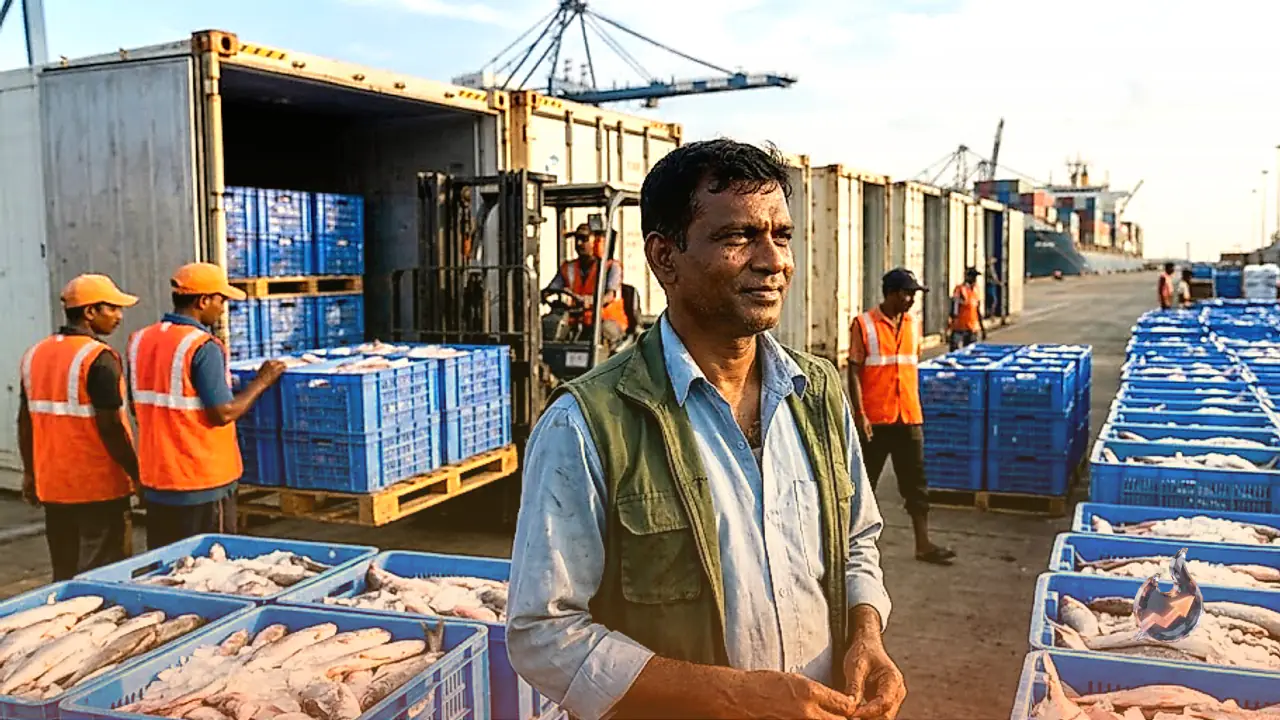
The financial leap recorded by the industry was nothing short of historic. The total valuation of India's seafood exports vaulted dramatically from its previous benchmark of 62,000 crore rupees to an unprecedented, all-time high of 73,800 crore rupees. This massive influx of national revenue was driven by a staggering volume of international physical trade. Over this turbulent period, Indian marine suppliers successfully processed and dispatched roughly 20 lakh metric tons of marine products to various diverse destinations across the globe, ensuring that the domestic supply chain remained hyper-active and financially solvent.
At the absolute center of this surprising financial triumph was the very product the aggressive American tariffs had specifically targeted: frozen shrimp. The stringent tax policies implemented by the United States were explicitly designed to curb the influx and competitiveness of this particular item. Yet, completely defying the restrictive measures and the intended economic damage, frozen shrimp alone generated a record-shattering revenue exceeding 49,000 crore rupees for the Indian economy, permanently cementing its status as an unstoppable and highly desirable force in global food markets.
Mastering the Pivot: How Trade Policy Saved the Day
The pivotal question that economists immediately began asking was how India managed to execute such a miraculous economic feat in the face of aggressive, targeted trade barriers erected by a global superpower. The answer lies in the rapid, forward-thinking, and highly aggressive restructuring of India's international trade policies. Recognizing the extreme inherent vulnerability of relying too heavily on one or two dominant buyers for national income, policymakers, trade diplomats, and industry leaders made a decisive, unified pivot to permanently eliminate this concentrated geographical dependence.
The primary weapon deployed in this successful economic counter-offensive was the strategic, accelerated implementation of Free Trade Agreements (FTAs). In recent years, the Indian government had proactively negotiated, structured, and signed these crucial trade pacts with a multitude of robust economies and highly influential international trading blocs. When the American market suddenly became a hostile, prohibitively expensive environment due to the massive tariff hikes, these newly forged international alliances provided an immediate, ready-made safety net for stranded exporters.
The newly established, tax-free or low-tariff trade corridors with wealthy and rapidly expanding markets, specifically naming the United Arab Emirates (UAE), Australia, Mauritius, Japan, South Korea, and the diverse member states of the European Union, proved to be an absolute game-changer. These comprehensive agreements paved the way for secure, low-friction, and highly lucrative alternative routes for Indian seafood. The very moment the cost of exporting to the United States spiked, Indian merchants seamlessly and rapidly redirected their massive shipping containers toward these welcoming international ports. Consequently, the catastrophic financial risk associated with American market dependence was rapidly neutralized, rendering the much-feared tariff threat completely ineffective and functionally obsolete.
The Future: Expanding into the Deep Ocean
Having successfully navigated the highly turbulent waters of international trade wars and firmly cemented its dominance in the global seafood arena, the Indian industry is refusing to rest on its laurels or remain stagnant. The strategic, long-term vision of the government and marine enterprises has now expanded far beyond the familiar, traditional coastal territories. In a coordinated bid to exponentially boost the national 'Blue Economy' and propel the marine trade to unprecedented, sustainable heights, the government has conceptualized, funded, and aggressively rolled out a highly ambitious blueprint officially known as the 'Deep Sea Fishing Mission'.
Historically, the operational scope and daily reach of traditional Indian fishermen were largely confined to shallow coastal waters and marine areas immediately adjacent to the shoreline. This geographical limitation naturally and strictly capped the overall volume, variety, and financial value of the annual catch. However, the newly minted deep-water mission is specifically designed to completely shatter these historical boundaries. Under this transformative initiative, traditional fishing fleets and massive commercial vessels are currently undergoing massive structural upgrades, being systematically outfitted with state-of-the-art satellite navigation technologies, advanced sonar, and modern, heavy-duty marine equipment.
This immense technological leap directly empowers the Indian commercial fleet to venture confidently and safely into the farthest reaches of the nation's vast Exclusive Economic Zone (EEZ) and the expansive, uncharted waters of the open ocean. The primary commercial objective of this deep-water expansion is the targeted harvesting of high-value, premium marine species that live far from the coast. By specifically targeting highly lucrative catches like Tuna, which consistently command exceptional prices and massive, unyielding demand in upscale international markets, the industry aims to dramatically increase the overall value addition of its total exports, ensuring massive and sustained economic growth for decades to come.
The Ironic Conclusion: US Remains the Top Buyer
The overarching narrative of this high-stakes trade conflict ultimately concludes with a profound, undeniable irony that perfectly highlights the complex, often unpredictable realities of modern global supply chains. The United States administration had aggressively and publicly attempted to squeeze the Indian seafood market by levying the massive 58 percent tariff, fully expecting this extreme financial barrier to choke off the supply, protect domestic interests, and force Indian exporters into submission. However, the practical realities of ingrained domestic consumer demand and deeply established wholesale networks ultimately rendered the severe restriction effectively toothless. When the final, audited export data for the year was compiled and analyzed by trade officials, it revealed a startling, inescapable truth: despite the exorbitant, punishing taxes designed specifically to deter them, corporate buyers and consumers in the United States simply could not sever their immense reliance on the product. Driven by inescapable market necessities and a lack of viable large-scale alternatives, the United States ironically maintained its position as the single largest global purchaser of Indian shrimp throughout the previous year, definitively proving that premium product quality and entrenched market demand can ultimately override even the most aggressive geopolitical trade barriers.