


















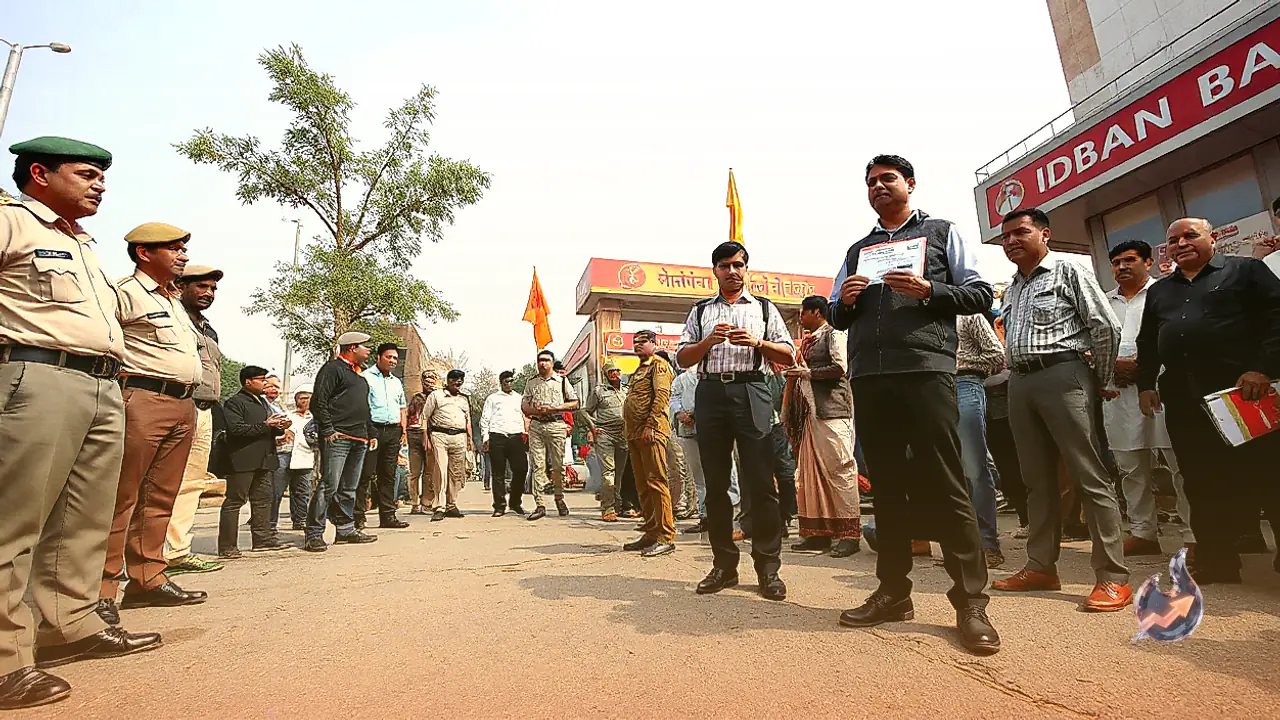

Account holders at IDBI Bank may experience significant delays and service disruptions over the coming two days. More than 10,000 officers and staff members across the country are participating in a 48-hour nationwide strike on November 2 and November 3. The protest has been organised under the banner of the United Forum of IDBI Officers and Employees to register strong opposition against the proposed privatisation of the institution. This 48-hour operational halt is anticipated to stall counter services, cash handling, general branch administration, and cheque clearance functions across branch networks nationwide.
Demand to Halt Privatisation Move
Employee representatives have formally called upon the central government and senior bank leadership to abandon the ongoing privatisation process. The unions assert that the turnaround of the institution into a solvent and profitable entity was not achieved through private investment. Instead, they credit this resurgence to the relentless dedication of the workforce alongside consistent backing from the central government and Life Insurance Corporation of India. During periods of severe financial distress, bank staff preserved customer trust and sustained daily operations to revive the institution, supported by restructuring capital provided by both the government and LIC.
From Balance Sheet Crisis to Sustained Revival
Between 2016 and 2020, IDBI Bank incurred severe losses following the Asset Quality Review initiated by the Reserve Bank of India, which uncovered massive non-performing assets across its loan book. To prevent systemic risk and restore financial health during that challenging phase, the central government together with Life Insurance Corporation of India injected more than 46,000 crore rupees in equity and capital support into the lender.
Substantial Earnings and Healthier Core Ratios
The capital infusion coupled with rigorous operational adjustments delivered a remarkable turnaround over recent years. According to employee representatives, IDBI Bank accumulated over 30,100 crore rupees in cumulative net profit over the past six years. Asset quality metrics also improved drastically during this timeframe, as the gross NPA ratio dropped from a peak of 31.78 per cent in 2018 down to 2.30 per cent.
Key performance metrics further indicate that the net NPA ratio has declined to just 0.16 per cent, while the capital adequacy ratio stands robust at 26.38 per cent. Additionally, the provision coverage ratio has climbed to 99.31 per cent. Union officials point to these balance-sheet benchmarks as clear evidence that the bank operates on a solid financial footing, arguing that shifting an already revitalised public lender into private ownership remains completely unwarranted.