















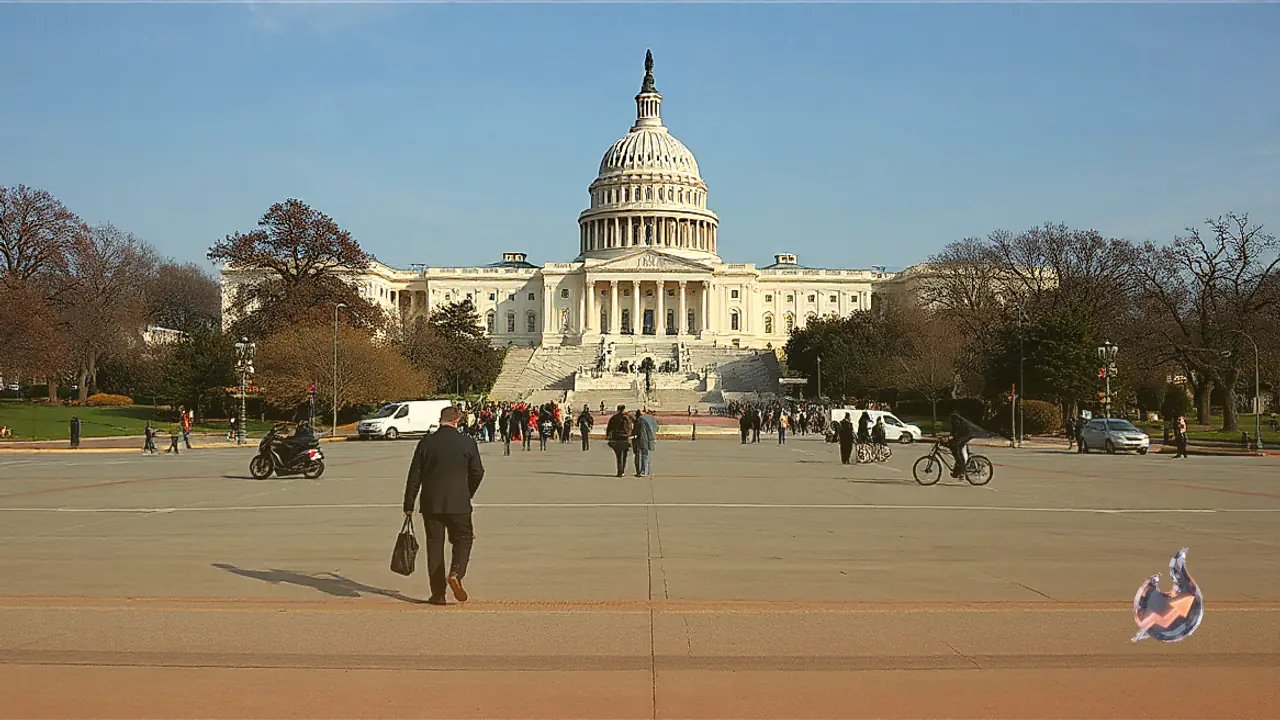

Voters across the United States head to the ballot box on November 3 in a critical legislative contest that will define the political landscape in Washington. The election will determine which party governs both chambers of the legislature during the final 2 years of President Donald Trump's second term in the White House. Ballots will be cast across all 435 seats in the House of Representatives alongside one third of the 100 Senate seats. Securing a majority in either legislative body would grant the Democratic opposition significant leverage to scrutinize executive decisions on global commerce, cross-border tariffs, and immigration protocols.
Bilateral Trade Landscape and Tariff Pressures
A shift in congressional control toward the Democrats would not immediately overturn existing commercial arrangements between New Delhi and Washington. Tariffs already levied on manufactured exports and the status of overseas Indian professionals will see little immediate alteration. The primary difference lies in the legislative friction Democrats could introduce by challenging aggressive unilateral tariff mandates and forcing contentious public hearings. Nevertheless, the commander-in-chief retains presidential veto authority over international economic measures, making rapid reversals difficult even under heightened scrutiny.
The American market stands as the premier export destination for Indian merchandise. Both governments announced an interim commercial framework in February that envisioned an 18 percent duty on Indian goods. That measure saw a major setback when the US Supreme Court struck down tariffs established under emergency presidential authority, ultimately bringing the standard levy down to a baseline of 10 percent.
Despite this reduction, the two capitals have failed to reach an overarching bilateral trade pact. United States Trade Representative Jamieson Greer recently stated that a comprehensive trade deal is not expected anytime soon. Similarly, Indian Finance Minister Nirmala Sitharaman observed that ongoing trade negotiations have effectively reached a standstill with limited room for further progress.
Immigration Hurdles and H-1B Work Authorizations
Work permits under the H-1B framework remain an exceptionally sensitive issue for Indian technology enterprises and specialized personnel working stateside. The current administration proposed an aggressive levy of 100000 dollars on new visa petitions, prompting immediate court litigation. In response, two federal judges halted the implementation of this steep fee due to procedural failures, though the broader legal fight remains unsettled.
Even if an opposition-led Congress exerts tighter oversight on future immigration legislation and executive actions, rapid adjustments to employment visa norms are far from guaranteed. Research conducted by the Takshashila Institution in Bengaluru points out that while Capitol Hill maintains broad bipartisan sympathy for India, that goodwill remains somewhat superficial. Furthermore, an influential faction within the ruling party continues to push for strict limitations on foreign workforce numbers.
Limits of Congressional Restraint on Executive Power
Winning control of both legislative chambers would still leave the opposition with constrained tools to derail the administration's broader economic platform. The president commands a robust veto power over congressional legislation, and traditional Senate filibuster rules create procedural hurdles against swift statutory changes. Treasury Secretary Scott Bessent remarked that even if the Democrats capture the House of Representatives, their capacity to block the administration's economic goals remains severely limited. While the upcoming vote may introduce fierce parliamentary checks, bilateral trade trajectories will continue to hinge on direct diplomacy between the two administrations.