



















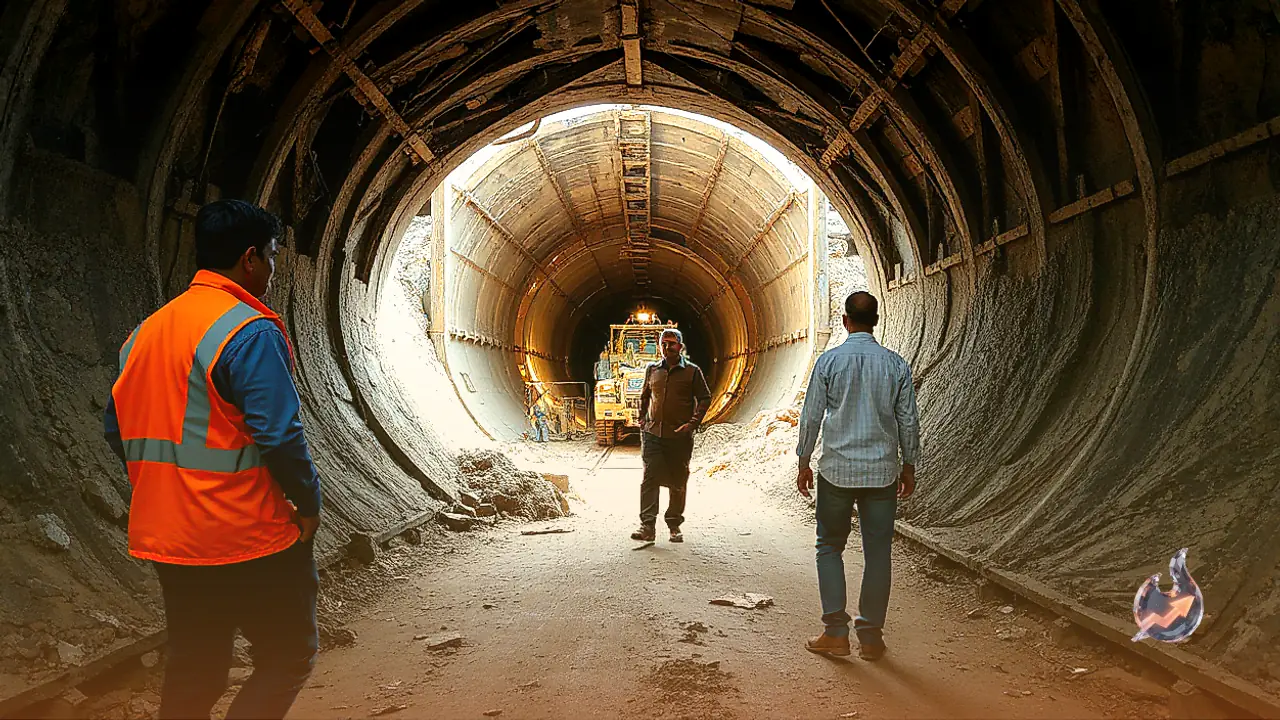

Efforts to disrupt the delivery of massive tunnel boring machines essential for subterranean metro networks and mountain transit routes are pushing India toward complete domestic manufacturing. Union Minister Piyush Goyal announced that if external partners decline to supply these heavy excavation units, the country will engineer and produce them on its own soil. The move confirms that essential national connectivity and infrastructure works will not be allowed to stall because of overseas supply barriers.
Tackling Rare-Earth Constraints Through Startup Innovation
The global reliance on specialized minerals critical for defense hardware, electronics, and electric transport systems has frequently created leverage in international trade. When access to these crucial materials faced restrictions, domestic alternatives were swiftly prioritized. Union Minister Piyush Goyal convened discussions with homegrown startups, challenging engineers to design powerful electric motors that operate entirely without rare-earth elements. In response, Indian innovators have successfully engineered specialized motors that match the efficiency, torque, and reliability of conventional counterparts without relying on restricted external inputs.
Protecting National Interests While Maintaining Diplomatic Balance
Piyush Goyal made it clear that India has no intention of trading away its sovereign strategic priorities under external technological pressure. While other countries might yield to commercial or resource arm-twisting, India has chosen the route of indigenous capacity building. At the same time, maintaining a measured diplomatic stance, he indicated that India does not seek hostile relations with its neighbors. If there are no deliberate attempts to obstruct industrial access or partnership channels, healthy bilateral ties can be maintained.
Global Bottlenecks Accelerating Local Industrial Capability
Overseas supply halts and resource controls are increasingly triggering a self-reliant manufacturing expansion across key engineering sectors. Rather than slowing major public works, export blockades on heavy tunneling equipment and electric drive components are creating opportunities for indigenous industrial ecosystems. The refusal to supply critical hardware has turned into a major market opening for Indian startups, manufacturers, and heavy engineering enterprises seeking to build durable domestic capacity.