





















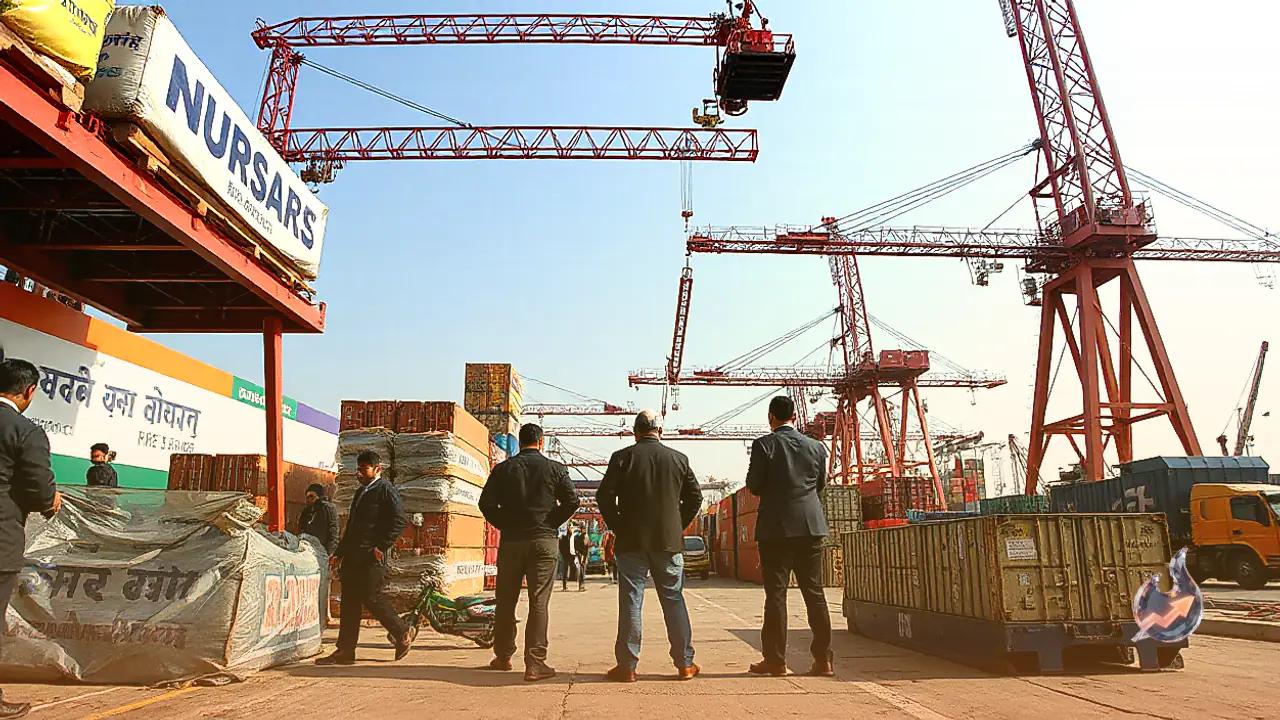

Expanding its international economic footprint, India is rapidly positioning its exporters to access the world's most lucrative commercial arenas under preferential terms. Through an aggressive series of trade partnerships, Indian goods and services are projected to gain entry into nations representing an aggregate gross domestic product (GDP) of $85 trillion. Union Minister of Commerce and Industry Piyush Goyal urged domestic manufacturing enterprises to transcend the convenience of the vast internal marketplace and actively build a formidable international presence. This marks an exponential expansion compared to 12 years ago, when the nation's trade agreements covered economies totaling merely $10 trillion.
Accelerating Trade Diplomacy Over Four and a Half Years
A structured shift in India's external commercial policy has dramatically altered its trade footprint over recent years. Prior to 2014, the combined GDP of all partner countries with which India had implemented free trade agreements stood at just $10 trillion. In stark contrast, the administration has successfully finalized 9 strategic trade pacts across the past four and a half years alone. These recent frameworks incorporate 38 developed economies boasting an aggregate GDP of $60 trillion. Furthermore, negotiations are currently underway for seven to eight additional economic arrangements, which will unlock access to another $15 trillion in global market size once formalized.
Access Encompassing Three-Fourths of the Global Economy
Once the ongoing rounds of negotiations reach completion, the combined reach of these pacts will encompass approximately 76 percent of the entire global economic output. Out of the world's total GDP of $115 trillion, an astonishing $85 trillion will become preferentially accessible to Indian enterprises. To achieve this milestone, official discussions are actively progressing with partners including Canada, Israel, Mexico, Chile, the Gulf Cooperation Council (GCC), and the Southern African Customs Union (SACU).
Transitioning from Domestic Comfort to World-Class Branding
To capitalize on this unprecedented market opening, Indian industry must re-engineer its export mindset and production benchmarks. Piyush Goyal stated,
"It is time for us to create global brands."The minister noted that while the sheer scale of the domestic market naturally absorbs substantial industrial output, sustainable growth requires venturing beyond familiar territory. Exporters must place rigorous focus on superior product design, elevated packaging standards, and uncompromising world-class quality to establish enduring global brands across foreign territories.