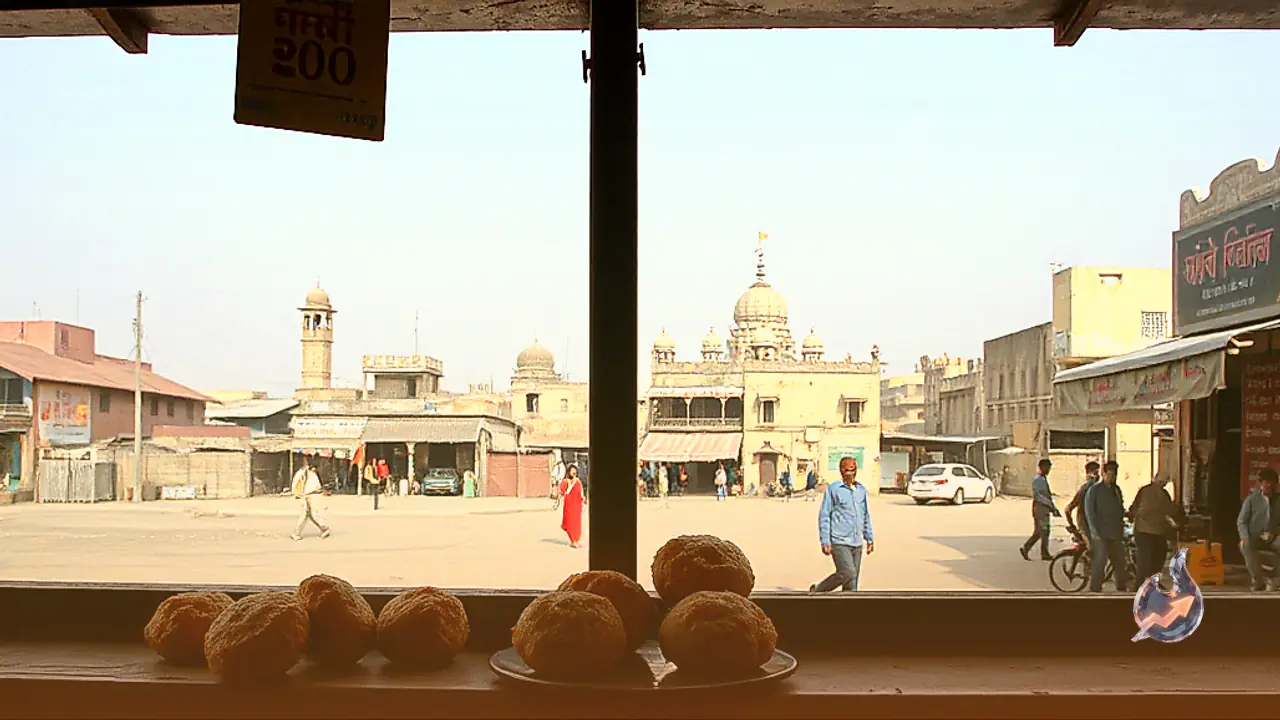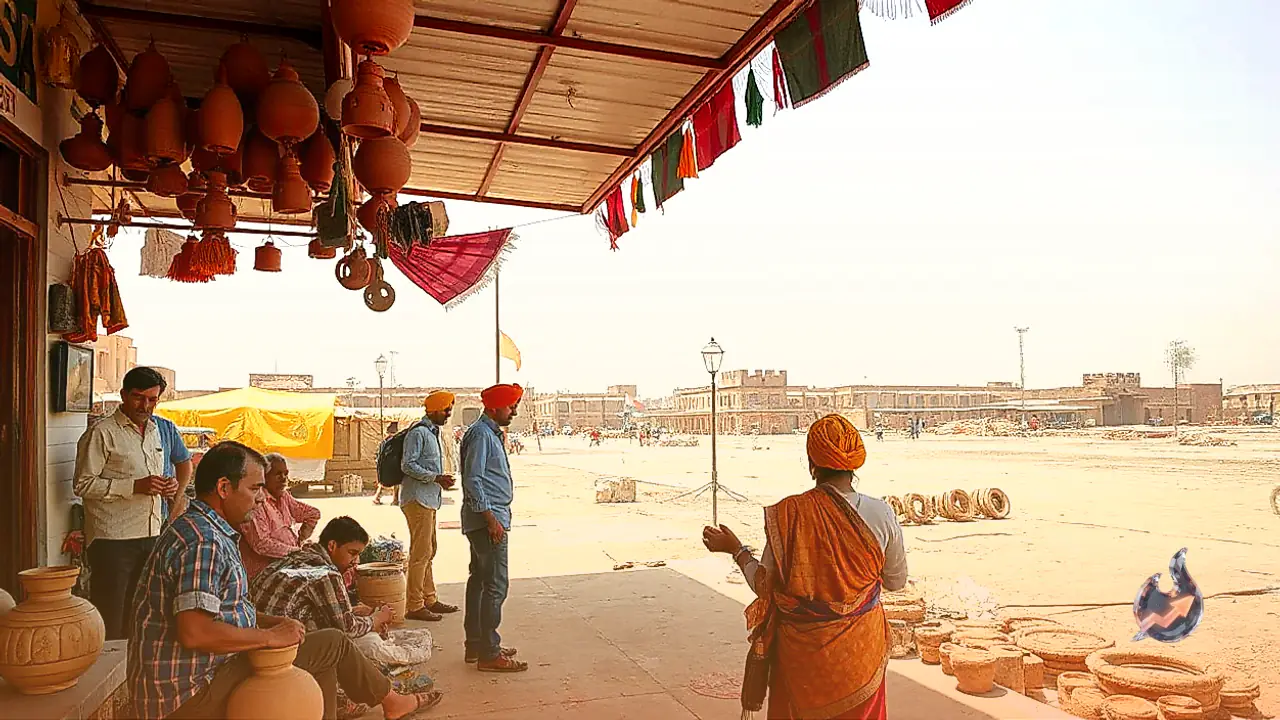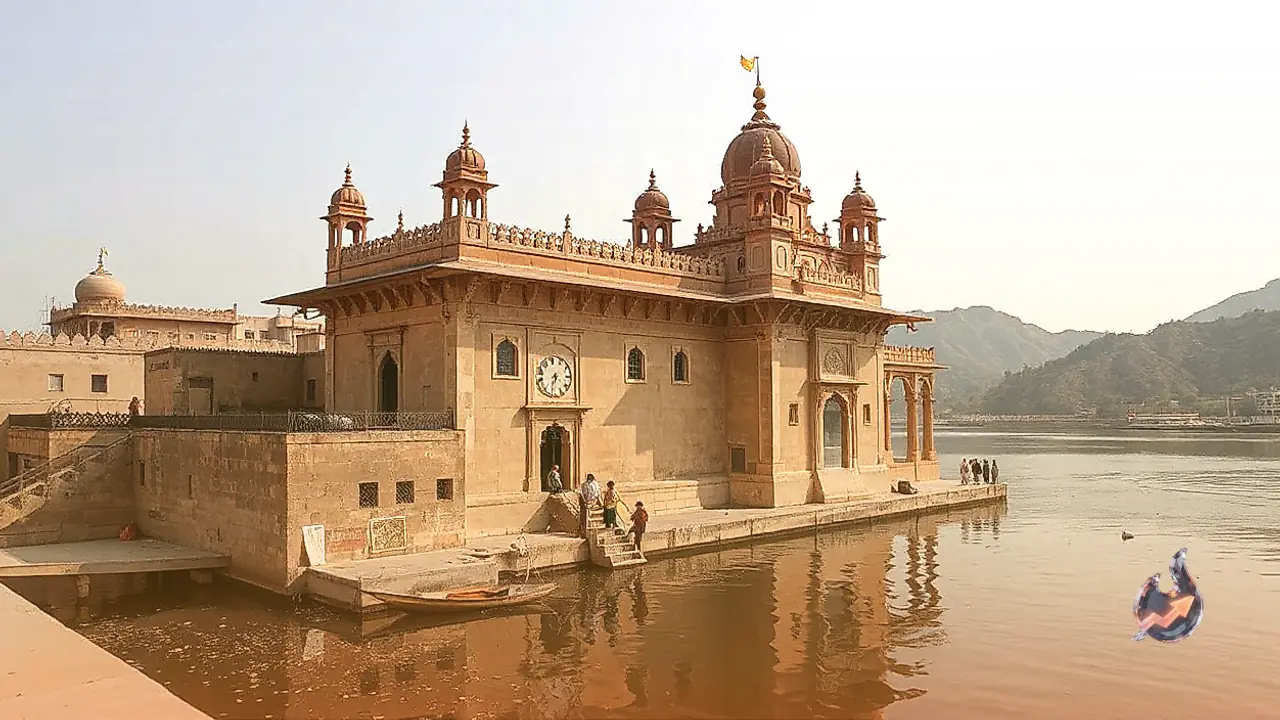
















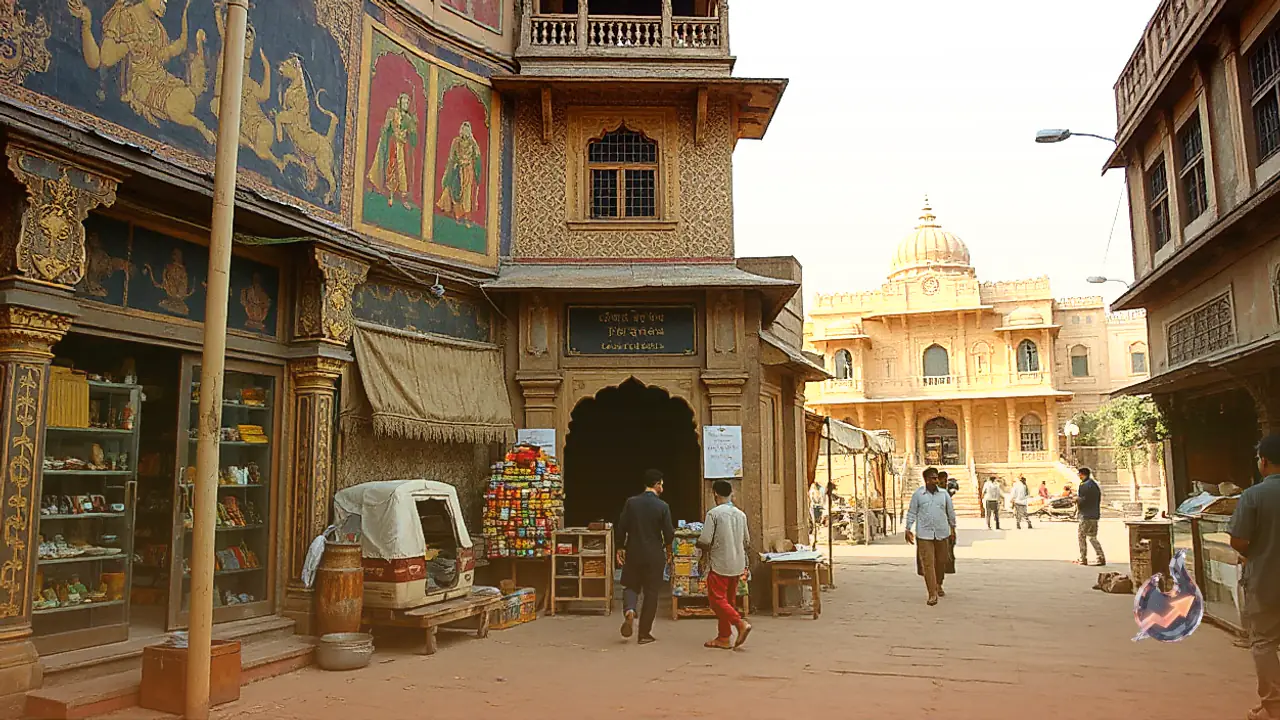

In the town of Mahansar, situated within the Bisau tehsil of Rajasthan's Jhunjhunu district, stands an unusual commercial building where visitors arrive not to purchase merchandise, but to marvel at the walls and ceilings. Known widely as Sone ki Saal, or the golden room, this nearly 190-year-old historic shop is celebrated for its breathtaking murals depicting episodes from the Ramayana, the life of Krishna, and the Mahabharata, all painstakingly rendered using real gold ink. Even after nearly two centuries, the metallic radiance of these intricate illustrations remains fully intact, making the site an essential stop for domestic and international travellers touring the Shekhawati region.
Global Bullion Merchant Seth Harkanathrai Poddar Commissioned the Structure
The establishment was commissioned in Vikram Samvat 1905 by prominent merchant Seth Harkanathrai Poddar for conducting his expanding commercial enterprise. During that era, Poddar was a leading trader in gold and silver, frequently undertaking overseas business journeys as far as China and Japan, while merchants from distant lands routinely travelled to his base for trade. Along with his sharp business acumen, Poddar was deeply spiritual, with profound devotion to Lord Rama and Lord Krishna. When designing his commercial hall, he resolved to integrate his devotional faith into the architectural framework of the workspace itself.
Greek Artisans Spent Four Years Rendering Mythological Epics
To bring this elaborate vision to life, Seth Harkanathrai brought in specialized artisans from Greece who were masters of the delicate technique of painting with gold ink. The painting process inside the shop stretched across four continuous years. Because the artists were foreign to the subcontinent, every mythological narrative, character nuance, and dialogue from the Ramayana and the life of Krishna had to be explained to them in detail beforehand. Once the foreign craftsmen grasped the underlying stories, they transcribed each sequence onto the plaster using pure liquid gold ink. Poddar held the exceptional skill and microscopic precision of these craftsmen in higher regard than the sheer material worth of the gold itself.
Three Distinct Galleries Featuring 52 Divine Incarnations
The structure measures approximately 100 feet in length and 20 feet in width, systematically partitioned into three consecutive functional wings. The first wing showcases the narrative arc of the Ramayana, tracing the saga from the birth of Lord Rama through to the burning of Lanka. The central wing features an extensive pantheon of Hindu divinity, illustrating Lord Ganesha alongside 52 incarnations of gods and goddesses. It also includes the popular moral depiction of Shravan Kumar carrying his aging parents in baskets balanced on a shoulder sling during their holy pilgrimage. The third wing is dedicated entirely to Krishna's divine chronicles, the killing of King Kansa, and the climactic battles of the Mahabharata.
Dome Ceilings Trace the Epic Arc From Krishna's Birth to the Kurukshetra War
The interior architecture features a sweeping curved dome where the life story of Krishna unfolds in chronological order. Prominently featured scenes include King Kansa driving the chariot carrying Devaki following her wedding, the birth of Krishna within the confines of the Mathura prison, and Vasudeva safely crossing the turbulent Yamuna river to carry his newborn child to Gokul. The dome also captures the mischievous childhood antics of Krishna, all outlined in gleaming gold. The visual chronicle culminates in dramatic representations of the Kurukshetra war from the Mahabharata.
Preserved for Modern Travellers by the Shivbax Rai Poddar Trust
According to Kuldeep Poddar, a sixth-generation descendant of Seth Harkanathrai Poddar, the historic premises are currently maintained and safeguarded under the management of the Shivbax Rai Poddar Trust. To support the ongoing preservation of this fragile cultural asset, the trust charges a designated entry fee from visitors who travel from across India and around the globe. Standing as an extraordinary confluence of Shekhawati merchant enterprise, religious devotion, and classical foreign artistry, this golden gallery continues to serve as an enduring testament to the mastery of nineteenth-century painters.