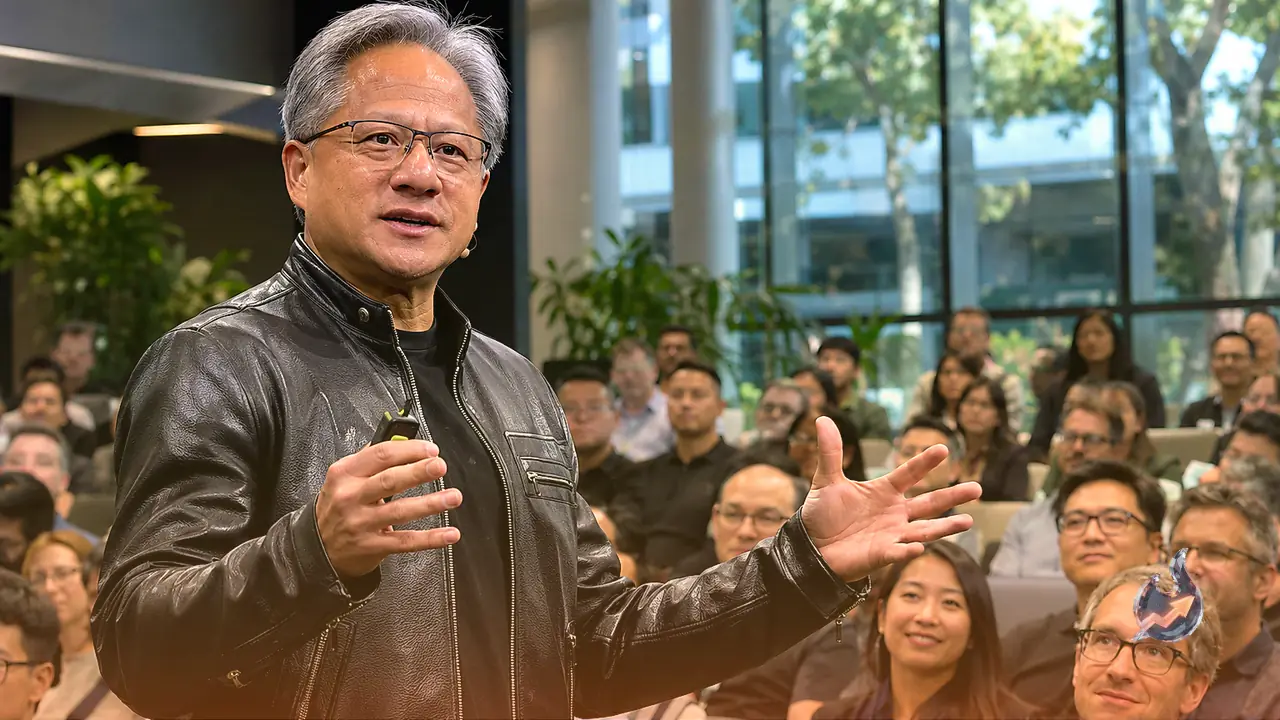

In his first all-hands meeting with Nvidia employees, Jensen Huang spoke about his leadership and the company’s internal expectations. He said he attends therapy for 90 minutes every day and is rethinking how he manages people. On conduct violations, he said the behavior is unacceptable, while making clear that an employee is not automatically dismissed the moment a violation occurs.
The Tuesday meeting also covered a safe environment for women, succession planning and the role of politics at Nvidia. Huang said the company can keep operating and delivering financial results whether or not he is present.
Therapy and a management style under review
Huang told employees that he goes to therapy for an hour and a half each day and that it has helped him a lot. He presented it as part of his effort to work on himself and how he leads. He acknowledged that the intensity he brings can raise the performance of people around him, but said it can also go too far.
When that happens, Huang said, people can be hurt, belittled and disempowered. He called that wrong and said he needs to figure out how to bring his “crazy intensity” to the work without causing that harm. He did not outline specific changes he plans to make, but described the challenge as keeping the drive while avoiding the damage he said excessive intensity can cause.
Conduct cases will depend on the circumstances
Huang addressed online claims that, as a powerful technology executive with an expensive jacket, he considered himself above the law or Nvidia’s code of conduct. He rejected that characterization and said such behavior had not been tolerated at the company and would not be tolerated going forward.
He told employees that breaking the code is inappropriate and unacceptable. At the same time, he said the promise of enforcement does not mean every violation leads to an immediate exit. The company will look at the facts, circumstances and a range of assessments before acting. Huang said the management team will make the decision after considering what serves the interests of the company and its employees.
A safe environment for women
On women at Nvidia, Huang said the company needs to create and sustain a safe environment for them. He said that if he had done anything to put that at risk, he was deeply sorry and would do everything he could to fix it. He reiterated that the company would not tolerate such conduct.
Huang did not describe a particular incident or complaint in the meeting. His remarks focused on the company’s responsibility to maintain a safe environment for women employees and to address conduct that could put that environment in jeopardy.
How Huang views succession planning
Huang said Nvidia can run autonomously throughout the day, and employees have seen that ability in practice. In his account, the company is set up to keep executing and delivering financial results whether he is there or not. He used that point to explain why the organization’s ability to operate does not depend on his presence.
He also said he does not believe in succession planning, while distinguishing the idea itself from what people think it means. Huang said the company’s lack of succession planning is not due to ignorance of the concept. He described himself as the longest-running technology CEO in history, without detailing what form of leadership transition he would support instead.
Government pressure and politics
Huang rejected a rumor that senior levels of the US government wanted him back. He called the claim completely untrue and said Nvidia’s board of directors had carried out its duty as it should have.
He said President Donald Trump really loves Nvidia and gloats about the company. Huang then addressed whether that connection made Nvidia political or partisan. He said Trump is the president of the United States and his president, and that he would do what he could to inform Trump about decisions that could serve the country’s interests. Huang added that he would do the same for whoever becomes the next president.
Huang insisted that politics does not play a role in the company. He said he does not like politics being discussed at work, suggesting employees take those conversations home, while saying he welcomes discussion of work at the office.