






















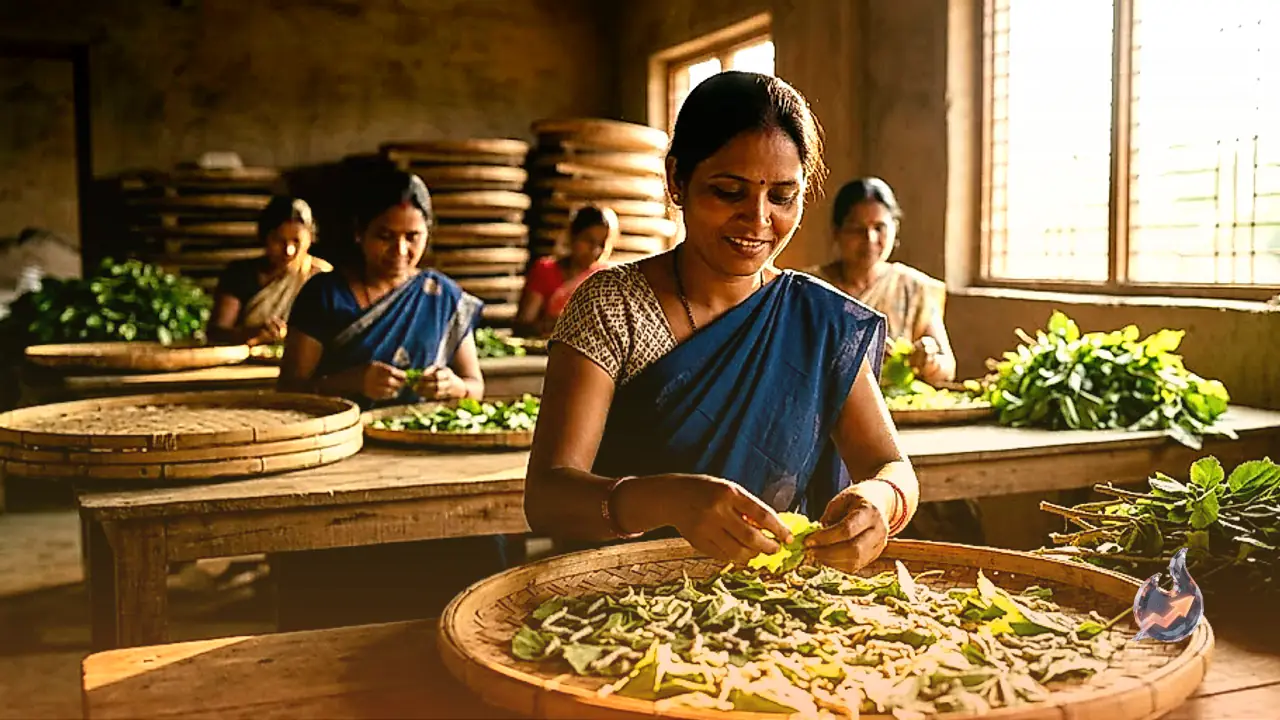

Rural women in Lakhimpur Kheri, Uttar Pradesh, are set to get a fresh source of income as the silk department rolls out a plan to bring 200 women into sericulture, or silkworm rearing, by 2026-27. The goal is straightforward: give women a way to earn from within their own villages so they don't need to move to cities for work.
The push matters because sericulture can be started without heavy capital or large resources, making it a practical option for women who don't own large landholdings or have money to invest upfront. That is precisely why both the state government and the silk department are throwing their weight behind this sector. A number of farmers in the district are already engaged in silk production, and officials now want to widen the circle to include women, turning it into a much larger community effort.
Training, technical guidance and market access
Women selected under the scheme will first be trained in the basics of silkworm rearing. Alongside that, they will receive technical guidance and be shown how to move their finished produce into the market. The department wants the entire chain, from production to sale, to be free of hurdles for these women, so they can capture the full value of their work without depending on middlemen.
130 women already on board, target set at 200
According to Deputy Director of Sericulture Arvind Kumar, the department has fixed clear targets for 2026-27. The most important of these is enrolling 200 new women into silk production. Alongside that, the department also aims to bring 200 new cocoon producers into the fold. Department figures show that 130 new beneficiaries have already been added to the scheme so far, and the remaining beneficiaries will be selected over the coming months and given training along with the other facilities on offer.
Arvind Kumar said the government wants rural women to find employment close to their homes so they are not forced to head to other cities in search of work. That idea sits at the core of the entire scheme: letting women strengthen their family's finances while staying rooted in their own villages.
A 2.5-acre mulberry nursery aims for 2.5 lakh saplings
Silk production ultimately depends on mulberry plants, since they are the primary food source for silkworms. That is why a mulberry nursery has been raised on 2.5 acres of land in the district, with the department targeting the production of roughly 2.50 lakh saplings from it. Once ready, these saplings will be distributed among farmers and the newly enrolled women beneficiaries to strengthen the base needed for silk production. The more abundant the mulberry supply, the more successful and profitable the sericulture work becomes, which is why the nursery is being treated as the foundation of the entire scheme.