























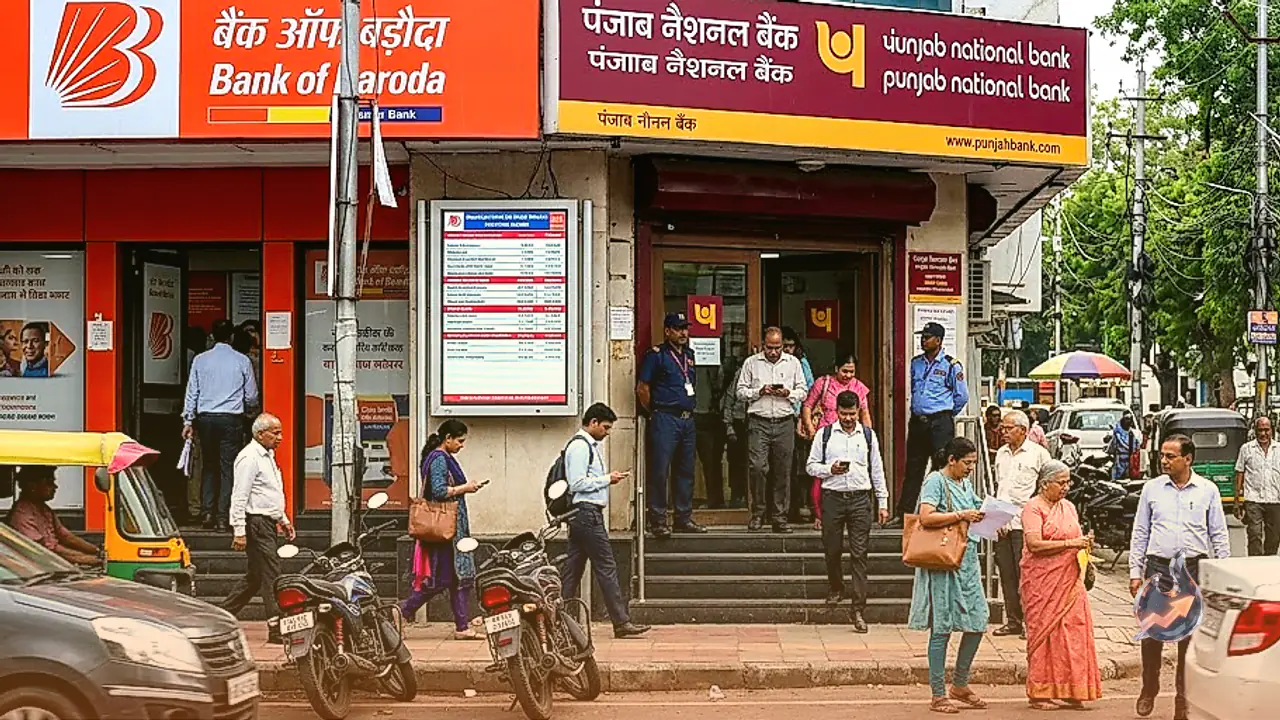

Borrowers across the country are facing immediate upward pressure on their monthly loan repayments after commercial banks moved swiftly to reflect the central bank's latest monetary tightening. Following the Reserve Bank of India's decision on Wednesday to lift the policy repo rate by 0.25 percent, major state-owned and private financial institutions announced revisions to their benchmark lending rates. Lenders such as Punjab National Bank, Bank of Baroda, Indian Bank, Bank of India, and Indian Overseas Bank have raised their external benchmark-linked rates by up to 0.25 percent, making retail and commercial credit costlier across product categories.
Benchmark Policy Rate Moves to 5.50 Percent
In its monetary policy decision on Wednesday, the Reserve Bank of India raised the benchmark repo rate by 0.25 percent, pushing it to 5.50 percent. This adjustment marks the first policy rate hike enacted by the central bank in roughly four years. The tightening measures come against the backdrop of persistent inflationary pressures and depreciation in the domestic currency, with the monetary authority signaling that further rate increases may follow if macroeconomic conditions demand them. Because the repo rate represents the interest charged by the central bank when providing funds to commercial lenders, an increase immediately inflates the cost of funds across the financial sector, prompting banks to transmit the hike to end borrowers.
Punjab National Bank Revises Benchmark RLLR
Punjab National Bank, the country's second-largest public sector lender, notified stock exchanges regarding the revision of its retail lending parameters. In response to the central bank's stance, PNB increased its Repo Linked Lending Rate, or RLLR, from 8.10 percent to 8.35 percent, with the adjusted rates taking effect on October 8. However, the lender clarified that its Marginal Cost of Funds based Lending Rate, commonly known as MCLR, as well as its traditional base rate, have been left unchanged for the time being. This means borrowers whose loan contracts are strictly anchored to the external repo benchmark will bear the immediate impact of higher interest outgo.
Adjustments Across Public Sector Peers
Other major public sector financial institutions rolled out identical revisions to align with the revised monetary framework. Chennai-headquartered Indian Bank increased its Repo Benchmark Lending Rate, or RBLR, from 7.95 percent to 8.20 percent, effective October 8. Similarly, Bank of Baroda lifted its repo-anchored lending rate from 7.90 percent to 8.15 percent.
Bank of India and Indian Overseas Bank followed suit by raising their RBLR figures to 8.35 percent, with both lenders making the new rates applicable from October 8. The simultaneous moves demonstrate rapid monetary policy transmission across state-backed banking channels, directly influencing retail credit terms.
Private Lenders Follow Monetary Transmission
The upward rate cycle has not been limited to government-run lenders. Private sector player Tamilnad Mercantile Bank announced an increase in its repo-linked lending rate from 8.25 percent to 8.50 percent. Analysts expect other private commercial banks, non-banking financial companies, and housing finance firms to follow in the coming days by recalibrating their benchmark rates by 0.25 percent, driving broad-based increases in interest obligations for consumers and businesses alike.