






















The first spell of monsoon rain brings relief from the heat, but for farmers who grow mangoes, this is also the season when their orchards come under the heaviest threat. In the Saharanpur region, it has been observed that nearly 50 percent of farmers finish harvesting their entire mango crop as soon as the rains begin, and then simply stop paying attention to the trees for the rest of the season. This pattern repeats across many mango belts, where the fruiting season effectively ends within weeks of the rains arriving, and orchard upkeep takes a back seat until the next flowering cycle. That neglect turns costly later, because the humidity and dampness of this season allow several fungal diseases to spread rapidly through the trees, cutting into the following year's fruit output as well.
Why humidity turns into a disease risk
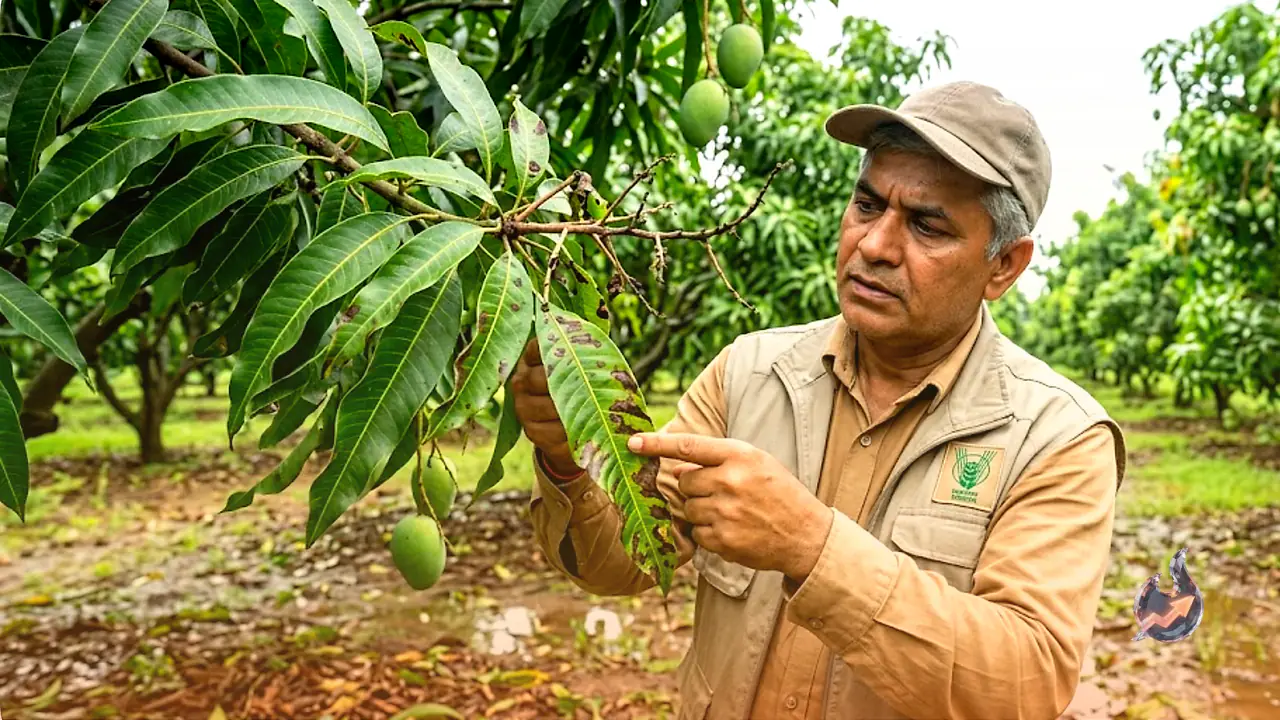
During the monsoon, moisture levels in the air stay consistently high and the soil around the trees remains wet for long stretches at a time. These are exactly the conditions fungus needs to multiply fast. That is why mango trees see the sharpest rise in diseases such as anthracnose, which shows up as black spots on leaves and twigs, powdery mildew, which coats leaves and young shoots in a white powder-like layer, and bunchy top disease during this period. Orchards that are left uncleaned after harvest, with fallen leaves, unharvested fruit debris and broken branches ignored for months, see these problems spread even faster and cover a larger area of the plantation.
Three diseases that weaken the tree from within
Dr I.K. Kushwaha, in-charge and professor at the Krishi Vigyan Kendra, said mango orchards are hit mainly by three diseases that cause the most damage every monsoon. The first is anthracnose, in which dark black spots appear on the leaves and gradually spread to the twigs. The second is dieback, in which the tree begins drying from the top, and if left untreated, the drying gradually creeps further down toward the trunk. The third is called soot ball maker or bunchy top disease, also known as mango malformation, in which the upper twigs develop clustered, rose-flower-like buds that go on to disrupt the tree's entire fruiting process the following season.
Waterlogging is the biggest enemy, precautions to take
According to Dr Kushwaha, the single most important precaution against all three diseases is making sure rainwater never collects and stays inside the orchard. When water keeps standing around the roots for days, the supply of nutrients and air to the roots drops sharply, triggering serious root rot. Alongside this, branches start drying from the top and knot-like growths begin appearing on the stem and twigs at a faster pace. This is exactly why, instead of abandoning trees right after harvest, farmers are advised to keep clearing and cleaning the orchard on a regular basis throughout the rainy months.
Pruning and the right fertiliser spray can prevent damage
If any twig shows a knot-like growth or a rose-bud-like swelling, it should be cut off and removed from the tree without delay. Similarly, twigs that have completely dried out need to be pruned and removed immediately so the disease cannot spread further into healthy parts of the tree. If a tree shows signs of dieback, meaning it is drying from the top, fertilisers such as bentonite sulphur and nano DAP should be sprayed on the tree right away, and applying them near the roots is also considered highly beneficial for recovery.
Copper oxychloride for severe infections
If the infection in an orchard looks particularly severe despite these steps, a chemical called copper oxychloride can be used. It should be mixed at 2 grams per litre of water and sprayed on the tree twice for effective control. Dr Kushwaha said that if farmers look after their orchards this way in time, problems such as root rot, drying twigs and knot formation can be prevented entirely, with the benefit showing up directly in the next year's fruit yield and the overall health of the orchard.