

















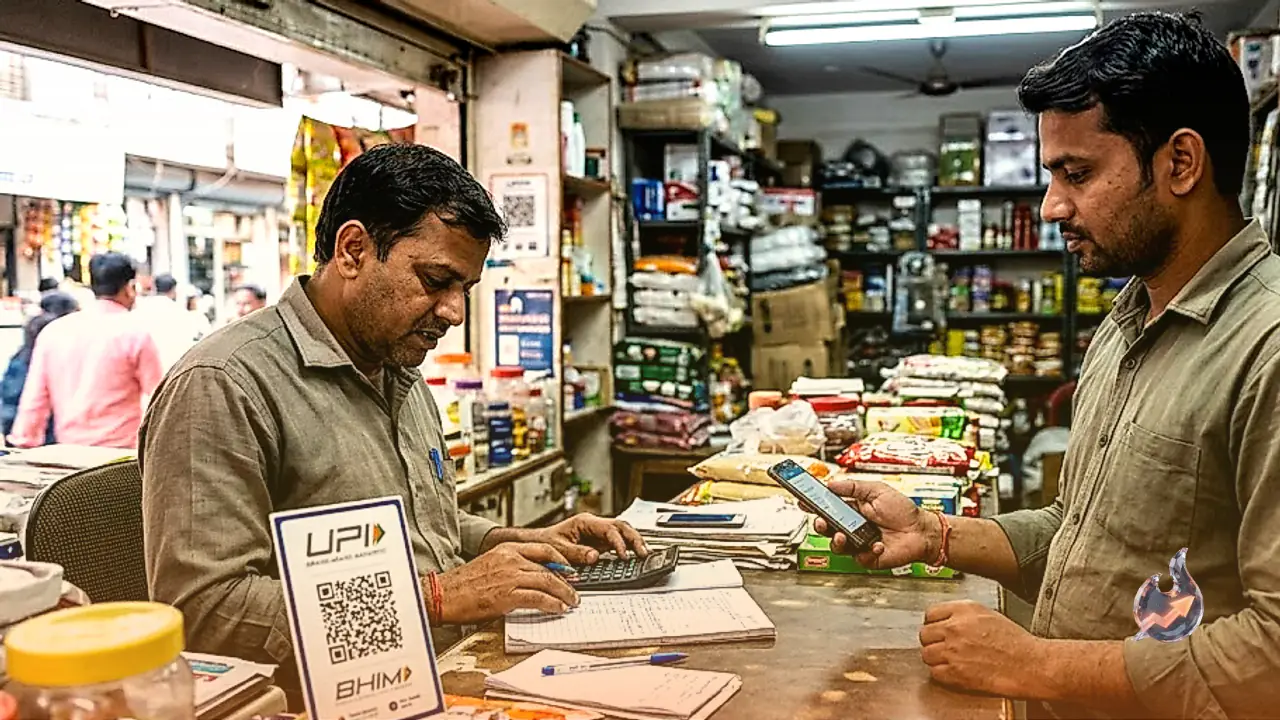

Clarity has emerged for retail consumers following apprehensions surrounding upcoming changes to digital transactions across the country. Starting October 15, person-to-merchant (P2M) UPI transactions exceeding 2,000 rupees will be subject to a 0.4 percent Merchant Discount Rate (MDR). As consumers grew concerned that store owners might tack this surcharge onto their bills, Punjab and Sind Bank Managing Director and Chief Executive Officer Swarup Kumar Saha clarified that the entire cost rests solely with retailers and cannot be shifted onto buyers.
Retail Shoppers Will Pay Only Displayed Shelf Prices
Addressing consumer worries, Swarup Kumar Saha stated that business owners accepting payments over UPI are strictly barred from demanding MDR fees from their shoppers. Retail customers will continue to pay only the price displayed on products or services after October 15. The regulatory framework prevents merchants from levying any convenience fee or billing surcharge, guaranteeing that marked retail prices remain unchanged at checkout.
Maximum MDR Cap Fixed at 300 Rupees Per Transaction
Under the revised guidelines, the 0.4 percent MDR applies exclusively to commercial P2M transactions valued above 2,000 rupees. To keep costs predictable for larger bills, authorities have capped the levy at a maximum of 300 rupees per single transaction. Swarup Kumar Saha said, "Merchants are not allowed to collect MDR charges from customers while accepting payments via UPI." He reiterated that direct person-to-person (P2P) transfers between individuals remain entirely free of charge.
Over 95 Percent of Everyday Transactions Remain Free
Small-ticket retail payments will face no disruption under the new guidelines, as all UPI transactions up to 2,000 rupees remain completely exempt from MDR. Swarup Kumar Saha pointed out that transactions of 2,000 rupees or below account for more than 95 percent of overall merchant UPI volume in India. A reasonable MDR structure ensures that digital payments stay convenient for daily use while creating long-term operational sustainability for the payment infrastructure.
Payment Acceptance Treated as Standard Operating Expenditure
The state-run bank chief highlighted that market dynamics and past transaction data show businesses absorb small digital processing expenses as routine overheads. Payment acceptance costs are considered standard operating expenses that merchants comfortably offset through higher customer footfall, increased average order sizes, and substantial reductions in the security risks and handling costs associated with physical cash.
Flat Cap of 5 Rupees on Railways, Fuel, Telecom and Insurance
Specific consumer categories will benefit from capped fee structures to keep vital services affordable. For transactions exceeding 2,000 rupees involving railway tickets, telecom bill payments, insurance premiums, and fuel purchases at petrol pumps, the MDR is capped at just 5 rupees per transaction. Consumers in these segments will pay only the exact billed dues, with merchants absorbing the minimal processing rate.