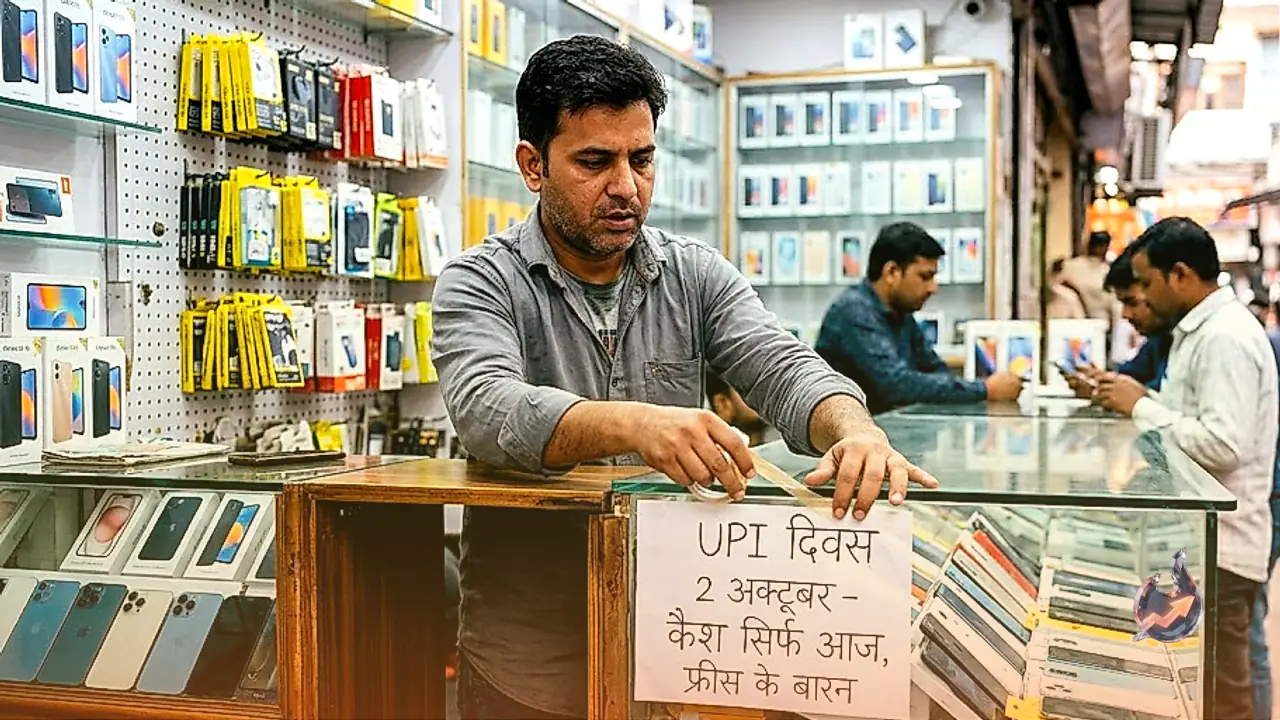

























Across the country, digital payment users are discussing the new regulations scheduled to take effect starting October 15. From this date, paying through UPI will involve a Merchant Discount Rate on commercial transactions nationwide. This rule specifically applies to merchant payments exceeding two thousand rupees. Following the announcement of these guidelines, both consumers and shopkeepers have started evaluating different ways to handle transactions under the upcoming system.
Can splitting bills avoid the new charges
A common question among users is whether paying a total bill of six thousand rupees in three separate installments of two thousand rupees each can bypass the charge. Users often think of such workarounds to avoid paying extra fees under new transaction frameworks. However, financial systems and payment networks monitor commercial activity closely, and executing multiple fragmented transactions to the same merchant within a short span can trigger scrutiny or automated restrictions.
National Payments Corporation of India guidelines
The National Payments Corporation of India has stated that the merchant discount rate will be levied on person-to-merchant UPI transactions starting October 15. Transactions exceeding the two-thousand-rupee threshold will attract a charge of 0.4 percent. At the same time, for large payments of seventy-five thousand rupees or more, the maximum charge has been capped at three hundred rupees to prevent disproportionate costs on high-value commercial settlements.
Transactions exempt from the additional levy
Providing relief for smaller daily purchases, the regulatory body clarified that payments below two thousand rupees will carry a zero merchant discount rate. Furthermore, person-to-person money transfers between individuals will remain completely exempt from any such charges, ensuring that routine peer-to-peer transfers are unaffected by the updated merchant policies.