























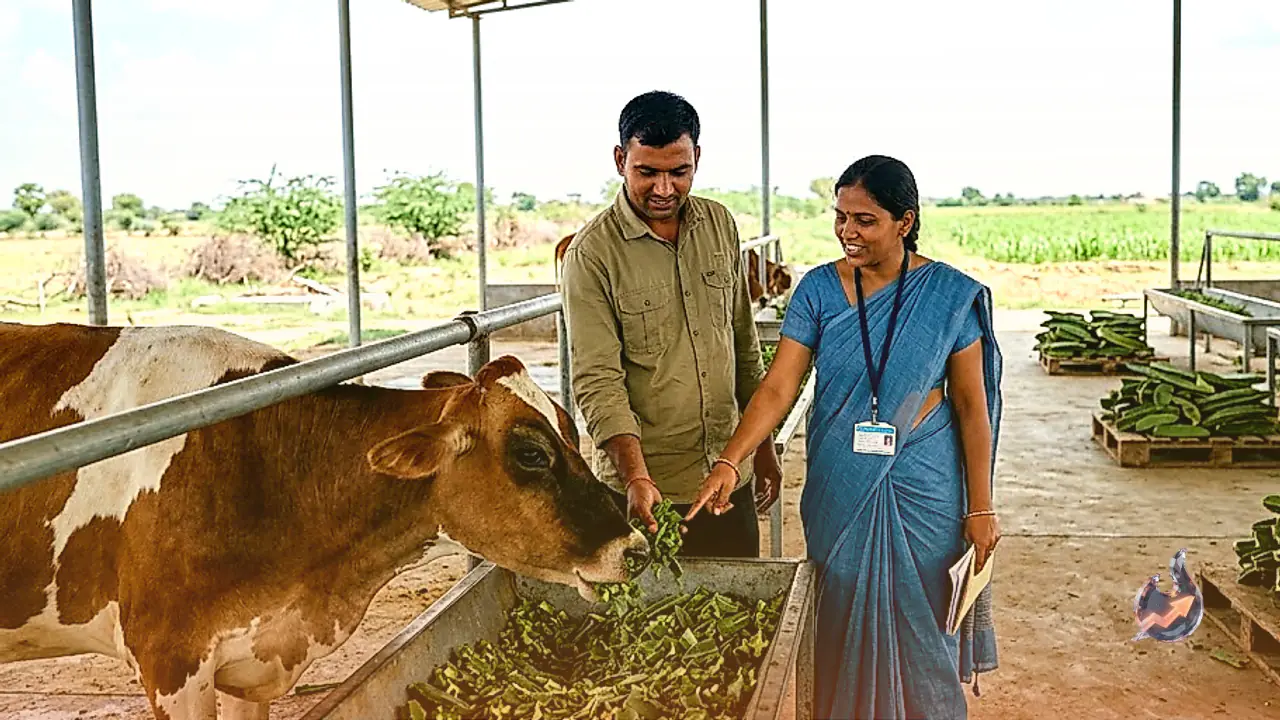

Managing the rising expenses of commercial cattle feed often eats into the profits of livestock owners. When milking animals experience a sudden drop in output, maintaining profitability becomes a daily struggle for farmers. To address this financial burden, researchers at the Krishi Vigyan Kendra in Pali have identified a unique natural fodder option. By incorporating a specific variety of cactus into the daily diet of farm animals, producers can significantly enhance their overall milk yield without relying on expensive commercial supplements.
Boosting Daily Milk Yield and Quality
According to research conducted by animal husbandry expert Jhabar Tetarwal at the Pali center, introducing this nutritious green feed transforms dairy productivity. Animals that typically yield around 10 to 12 liters of milk each day can increase their production up to 15 liters following this dietary shift. Furthermore, the enhanced feed improves the fat content and thickness of the milk, allowing farmers to secure better market prices for their produce.
Reducing Dependence on Expensive Feed
Purchasing high-priced cattle meal, oilcakes, and chemical-laden supplements heavily strains the monthly budget of rural households. The primary advantage of this alternative cactus feed is its high natural protein content. Once integrated into regular routines, it eliminates the necessity for costly commercial mixtures, effectively cutting animal maintenance expenses in half and maximizing direct savings for farmers.
Recommended Daily Portions for Livestock
Agricultural specialists have established specific dietary guidelines to ensure optimal results across different farm animals. Cows and buffaloes should be fed between 2 to 2.5 kilograms daily. Meanwhile, sheep and goats require about 1 kilogram per day, making this solution especially advantageous for goat rearers operating within the Pali district.
Protection Against Dehydration During Extreme Heat
Scorching summer temperatures across western regions frequently lead to severe dehydration, causing livestock to become sluggish and experience reduced milk output. This specialized green fodder contains abundant natural moisture that helps regulate internal hydration levels. Consequently, animals remain shielded from heatwaves and dehydration, ensuring that their daily productivity stays stable even during peak summer months.