























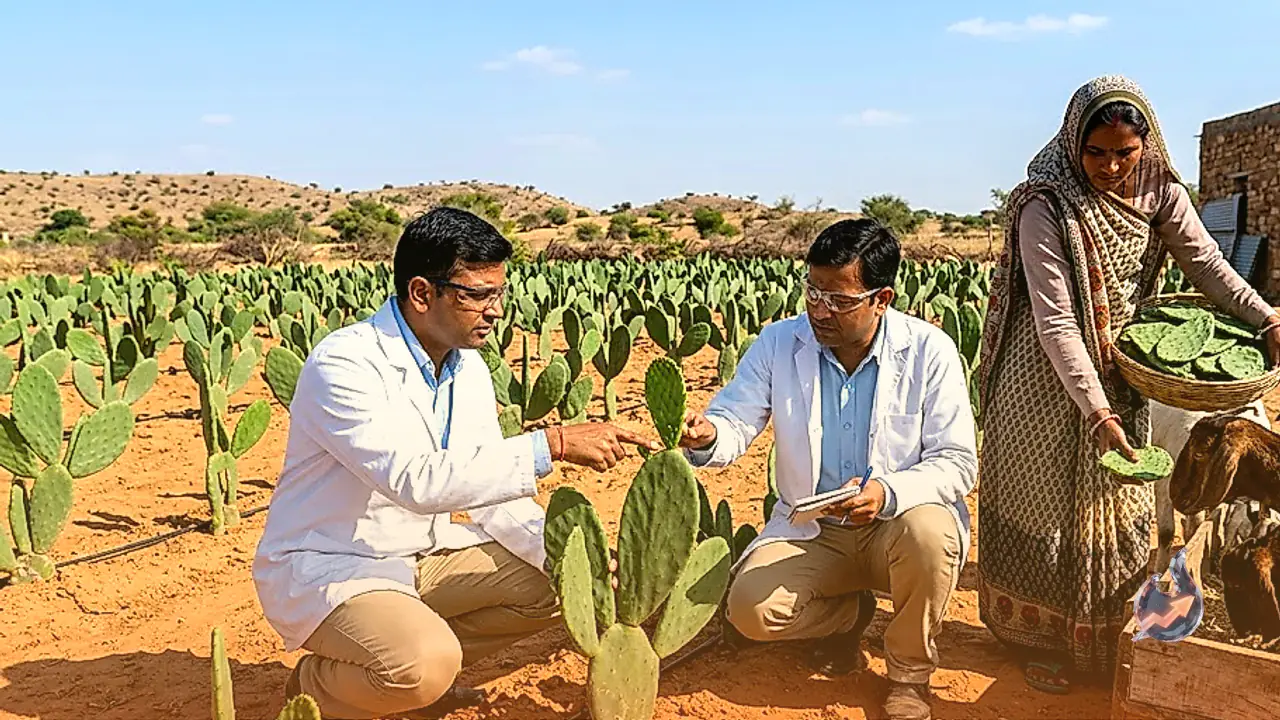

Amid recurring fears of scanty rainfall and droughts that leave livestock owners worried about fodder, a remarkably effective solution has emerged from Rajasthan. Agricultural scientists stationed at the Krishi Vigyan Kendra in Pali have devised an innovative method to tackle feed shortages by utilizing a unique strain of cactus. Following extensive research and trials across numerous varieties, the experts have successfully cultivated a special species that yields exceptional green fodder while requiring minimal moisture. Most importantly, this particular cactus variant is entirely devoid of thorns, making it exceptionally safe, digestible, and beneficial for animal health and milk yield.
Extensive Research Across Eighty Varieties
According to scientist Jhabar Singh, the initiative involved rigorous testing and field trials of 80 distinct types of cacti. After prolonged investigation, researchers selected this specific thornless variety to introduce to the agricultural community. Conventionally, cacti are considered entirely unsuitable for animal consumption due to their sharp protective spikes. However, this specialized thornless cultivar has proven to be an easily digestible and highly nutritious green forage option for farm animals, alleviating major concerns during dry spells.
Thriving in Barren Land With Minimal Water
The standout advantage of this cactus lies in its remarkable ability to flourish effortlessly in regions plagued by extreme water scarcity. Farmers can effortlessly cultivate the crop even on infertile and barren patches of land. The planting procedure itself is straightforward; one-third (1/3) portion of a single leaf is planted directly into the soil. Once the plant takes root and new leaves begin to sprout, it ceases to require any supplementary irrigation. The plant independently absorbs necessary moisture directly from atmospheric humidity in the surrounding air.
Packed With Ninety Percent Water and Twenty-Two Percent Protein
From the perspective of animal health and dairy productivity, this cactus functions virtually like a superfood. Its succulent leaves contain up to 90 percent water content, effectively preventing dehydration among livestock during scorching summer months. Furthermore, it boasts a protein content of up to 22 percent, which directly contributes to boosting milk production and maintaining robust physical health. Requiring negligible maintenance and virtually no production cost, this specialized cactus is poised to significantly strengthen the financial well-being of livestock farmers across western Rajasthan.