





















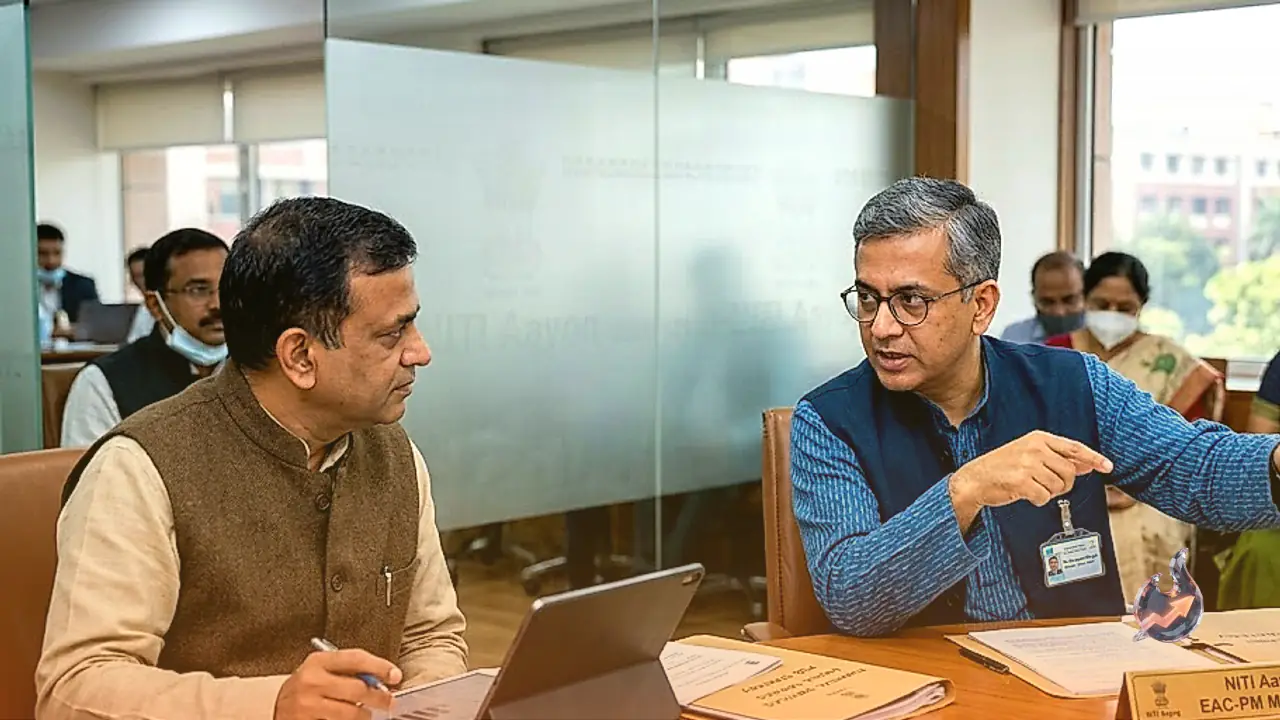

India may be heading toward another phase of public sector bank consolidations to build mega lenders capable of competing in international markets. A research paper by the Economic Advisory Council to the Prime Minister (EAC-PM) has suggested restructuring the nation's banking landscape to meet the growing financing demands of an expanding economy. This recommendation comes after the Modi government merged 15 smaller state-run banks over the past seven years. However, the council emphasized that future mergers must carefully balance scale with market competition, ensuring that the creation of financial giants does not erode healthy competition within the domestic banking sector.
Strengthening Banking Scale for the Viksit Bharat 2047 Goal
The research paper on Indian banking sector reforms highlights that consolidating state-run institutions is essential to supporting the credit requirements of an economy striving to achieve the Viksit Bharat vision by 2047. Currently, the Indian banking industry suffers from a relatively small overall scale combined with significant market share disparities among institutions. Market shares among lenders range from 20 percent down to just one percent or even less. To bridge this gap, the EAC-PM advocates for strategic mergers among smaller banks. The primary objective of consolidation is to create robust financial institutions equipped with strong capital bases, extensive geographical footprints, and the enhanced capacity to fund large-scale national infrastructure projects.
A Look Back at Seven Years of Banking Consolidation
India has already witnessed significant structural changes in its banking sector under the Modi government. In 2017, the associate banks of State Bank of India were merged into the parent entity. This was followed in 2019 by the merger of Vijaya Bank and Dena Bank into Bank of Baroda. The consolidation process reached a major milestone in 2020 when ten public sector banks were integrated into four larger entities. Together, these strategic moves reduced the total number of public sector banks in the country from 27 down to 12. While these initiatives delivered economies of scale and operational synergies, their ultimate success relied heavily on seamless technology integration, alignment of organizational risk cultures, and steady productivity enhancements.
Evaluating Efficiency Gains: The Data Envelopment Analysis Study
To evaluate how mergers have impacted banking performance, the study analyzed 47 banks operating between financial year 2014-15 and financial year 2025-26 using the Data Envelopment Analysis (DEA) methodology. The findings reveal that combined efforts by the government and the Reserve Bank of India (RBI) have effectively boosted industry efficiency. The average technical efficiency across banks climbed from 77.99 percent in financial year 2019-20 to 88.34 percent in financial year 2025-26. Notably, public sector banks achieved an efficiency rating of 93.12 percent in financial year 2025-26, outperforming private sector banks at 86.02 percent. Meanwhile, foreign banks maintained an efficiency band between 83 percent and 85 percent throughout the financial year 2019-20 to 2025-26 period. However, the report also noted that acquiring weaker financial institutions temporarily placed operational strain on the absorbing banks' overall productivity.
Artificial Intelligence and Digital Innovation in Future Banking
Looking ahead, the EAC-PM paper underscores the transformative potential of digital technology and Artificial Intelligence (AI) in driving the next phase of efficiency gains. As banks adopt advanced AI tools and digital platforms, customer interactions will become increasingly personalized, particularly for younger demographics. This technological shift is expected to transition Indian banking from a traditional reactive model into a proactive service ecosystem, enabling lenders to anticipate consumer financial needs and deliver seamless digital banking solutions.