



















Residents of Mumbai are set to navigate a challenging financial environment starting September 1, 2026, as price revisions across essential daily services take effect. Household budgets will experience simultaneous pressure from two vital sectors, covering both morning food staples and daily commuting expenses. While wholesale milk distributors have sanctioned a notable price surge, transport authorities have concurrently approved revised tariffs for auto rickshaws and taxis operating across the metropolitan region.
Wholesale Milk Rates Escalate by ₹9 Per Liter
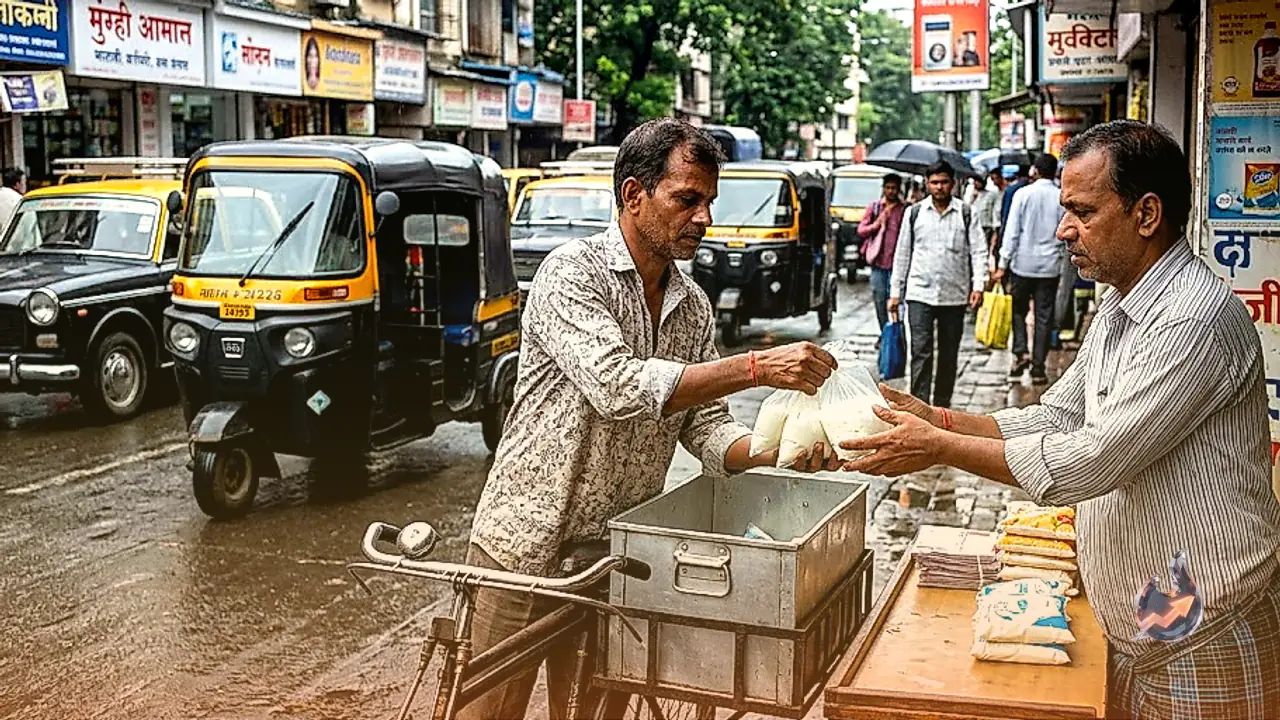
The Mumbai Milk Producers Association has formally announced a significant hike in wholesale milk pricing across the city. Under the revised structure, the wholesale rate for milk will rise from the existing figure of ₹93 per liter to ₹102 per liter, representing an increase of ₹9 per liter. Association President Chandrakumar Singh indicated that these updated pricing terms will remain active from September 1, 2026, through February 28, 2027.
Explaining the financial strain on dairy producers, the association cited a steep inflation of nearly 25 percent in the market cost of essential cattle feed materials. Specific feed components, including grains, tur chuni, and chana chunni, have witnessed substantial price spikes in recent months. This sharp surge in input expenses has elevated overall raw milk production costs, placing severe economic pressure on dairy farmers. It is important to highlight that this revision strictly applies to wholesale transactions, and the final impact on retail consumer prices will depend on individual milk vendors, brands, and retail distribution margins.
Revised Fare Charts for Auto Rickshaws and Taxis
Alongside rising kitchen expenses, daily transit for commuters across the Mumbai Metropolitan Region will become more expensive. The Mumbai Metropolitan Region Transport Authority has officially sanctioned revised fare structures for compressed natural gas (CNG) operated black-and-yellow taxis and three-wheeled auto rickshaws. The updated rate chart aims to compensate vehicle operators for elevated operational and maintenance expenses.
Beginning September 1, 2026, the baseline minimum fare for black-and-yellow taxis covering the initial distance of 1.5 kilometers will increase from ₹31 to ₹33. Similarly, auto rickshaw passengers will see the minimum base fare for the first 1.5 kilometers rise from ₹26 to ₹27. These entry-level price adjustments will apply across all standard street-hailing transit services in the city.
Per-Kilometer Fare Adjustments and Meter Re-calibration
Beyond the initial base fares, distance-based travel rates are also set to increase under the approved transit scheme. For black-and-yellow taxis, the per-kilometer charge beyond the initial 1.5-kilometer distance will rise from ₹20.66 to ₹21.90. Meanwhile, the per-kilometer fare for auto rickshaws will see an upward adjustment from ₹17.14 to ₹18.22.
To implement these new pricing tiers legally and transparently, transport operators must get their vehicle electronic meters recalibrated at authorized centers. Until the electronic meters are recalibrated to reflect the new tariff charts, drivers must comply with official conversion tables. The combined effect of higher transit fares and elevated wholesale milk costs promises to adjust daily expenditure patterns for millions of Mumbai households throughout the coming months.