























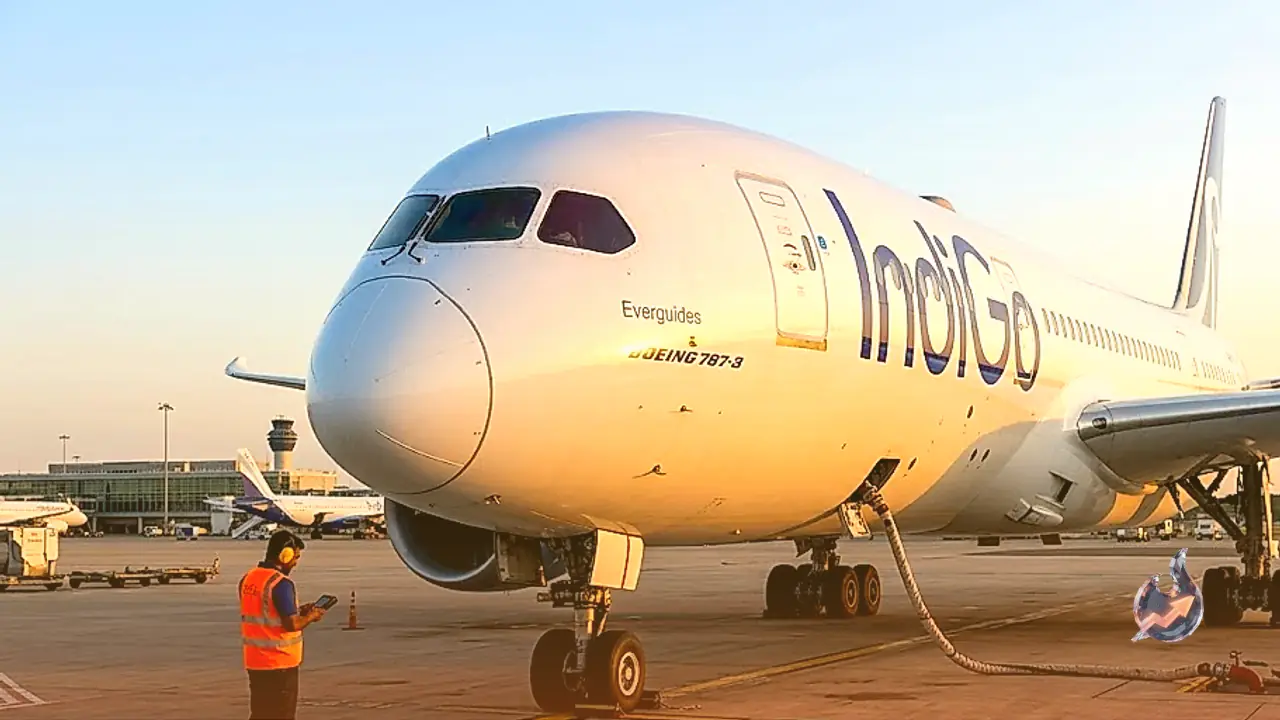

IndiGo, currently operating as India's largest domestic and international airline by market share, has reported a surprising net loss of ₹238 crore for the first quarter stretching from April to June 2026. This financial setback paints a starkly different picture compared to the corresponding three-month window last year, when the aviation giant comfortably secured a massive net profit of ₹2,176 crore. The deficit has caught many industry observers off guard, primarily because the carrier experienced a massive surge in overall passenger volumes, achieved unprecedented heights in ticket sales, and posted record-breaking revenue figures.
Skyrocketing Fuel Bills and Weak Currency Wipe Out Revenue Gains
A closer look at the company's financial statements reveals that the core issue driving this quarterly loss was an overwhelming surge in day-to-day operating expenses, which expanded at a pace that entirely consumed the airline's revenue growth. During these three months, IndiGo actually saw its total income rise by a very healthy 19 percent year-on-year, pushing the top line to a formidable ₹25,614 crore. Within that figure, direct operational revenue climbed by 20 percent to settle at ₹24,584 crore. The cash generated strictly from passenger ticket sales was even stronger, jumping by 23 percent as the airline successfully commanded a higher average fare per flyer across its network.
Despite this massive influx of cash, the total expenditure incurred by the aviation firm spiked by an aggressive 34.4 percent, swelling to ₹25,852 crore. The undisputed primary culprit behind this financial drain was Aviation Turbine Fuel (ATF). IndiGo's jet fuel bill skyrocketed by a staggering 85.7 percent compared to the previous year, eating up ₹10,833 crore for the quarter alone. Because jet fuel universally stands as the single largest cost center for any commercial airline, this dramatic and sudden price escalation severely eroded the company's profit margins, turning what should have been a lucrative quarter into a net loss.
Middle East Tensions Disrupt Flight Operations
Addressing the underlying causes of this turbulence, Managing Director Rahul Bhatia openly acknowledged the multifaceted difficulties the company navigated during this period. He highlighted that the overall operating environment proved exceptionally challenging for the aviation sector. The ongoing geopolitical friction and escalating tensions in the Middle East directly disrupted the airline's regular international flight schedules and routing efficiency. Furthermore, the depreciating value of the Indian Rupee against the dollar acted as a silent tax, inflating the cost of everything from aircraft leases to maintenance spares.
Despite facing these severe macroeconomic headwinds, consumer demand for air travel remained incredibly robust. IndiGo successfully transported a staggering 3.13 crore travelers over the 90-day period. Examining the operational scale, the airline managed a peak daily schedule of 2,298 flights, successfully connecting flyers to 97 domestic cities and 46 international destinations. By the conclusion of June, the carrier's active fleet stood at 432 aircraft. Interestingly, the quarter actually witnessed a net reduction of nine passenger planes from their active roster. Additionally, the passenger load factor, a crucial industry metric that measures how full the aircraft are during flights, dropped slightly to 83.3 percent, down from the 84.6 percent recorded during the same period a year ago.
Massive Debt Load Amid Strong Cash Reserves
Even after absorbing this multi-crore quarterly loss, the broader liquidity foundation of the airline remains fundamentally well-funded to weather immediate storms. IndiGo's balance sheet showed a massive total cash reserve of ₹52,885 crore as of June 30, 2026. This war chest includes ₹39,039 crore classified as free cash, giving the management ample flexibility for future deployment. On the flip side of the ledger, however, the airline's total accumulated debt obligations have expanded significantly, reaching a towering ₹81,531 crore.
Looking ahead to the upcoming July to September quarter, the carrier's management anticipates that the geopolitical uncertainties stemming from the Middle East will likely persist in the near term. Because of this unpredictable environment, IndiGo is not projecting any substantial expansion in its overall flight capacity for the immediate future. Nevertheless, the airline's leadership maintains a confident and optimistic stance regarding the long-term trajectory. They expect their core financial performance to stage a meaningful recovery in the upcoming months as overall aircraft utilization improves, seasonal demand stabilizes, and network operations gradually return to a more normalized rhythm.