
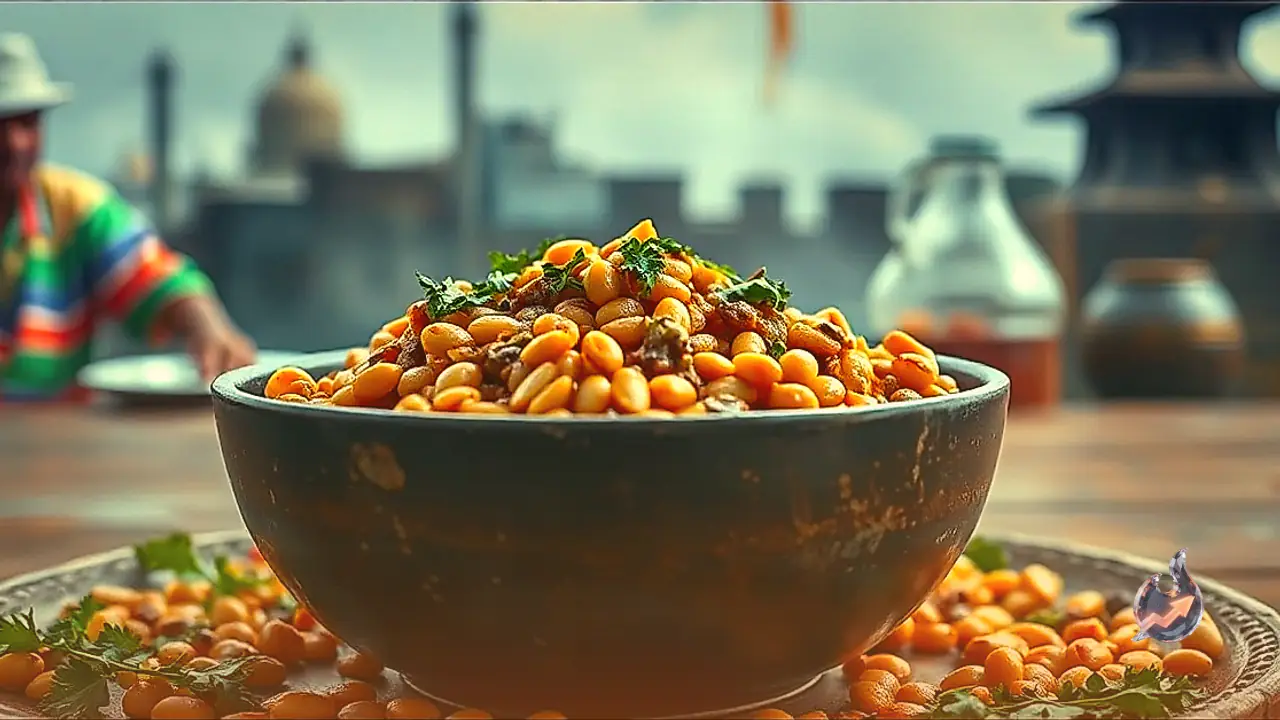

















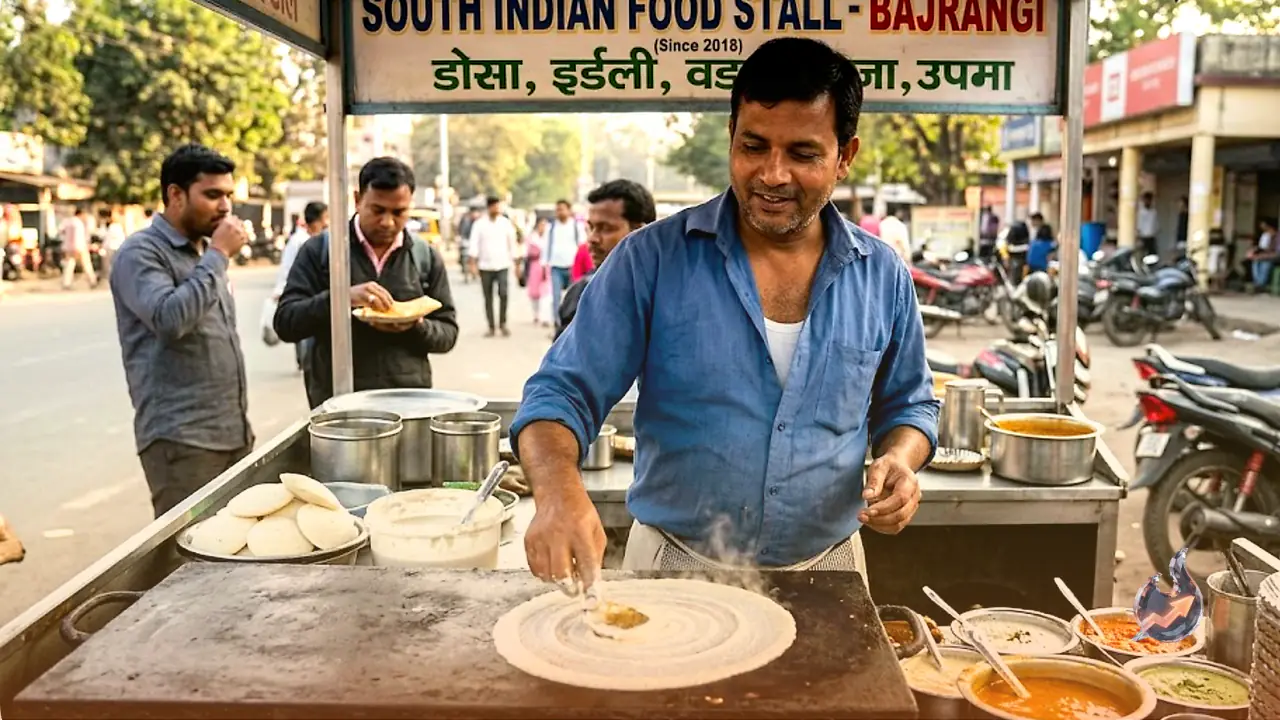

South Indian snacks like dosa, idli and vada are winning over taste buds across the country, and that rising demand is opening up a low cost business opportunity for anyone willing to put in the effort. In Bokaro, Jharkhand, a vendor named Bajrangi has been running his own South Indian food stall for the past five years, and he says the entire setup can be built for an investment of around ₹50,000 if it is planned properly.
How the ₹50,000 investment breaks down
According to Bajrangi, shop rent in a small town costs roughly ₹5,000, or alternatively a small food cart can be bought for about ₹10,000. Setting up the kitchen takes around ₹10,000, while a tawa, a stove and other essential cooking equipment add up to another ₹10,000. On top of that, the starting raw material costs about ₹5,000, interior work for the stall costs around ₹5,000, and a mixer and other necessary machines cost roughly ₹3,000. Add it all up and the stall can be ready to open for close to ₹50,000.
The daily numbers behind the profit
Running the stall day to day comes with its own costs. Bajrangi says that in the early stages, raw material alone costs about ₹2,000 to ₹2,500 a day, covering fresh vegetables, dosa batter, spices, oil, plates and other essentials. On pricing, a dosa typically sells for ₹50, an idli for ₹10 a piece, and a vada for ₹15 a piece. If the stall sells around 50 plates of dosa, 100 idlis and 100 vadas in a day, that alone can generate a profit of ₹1,000 to ₹1,800 daily even in the early days, which adds up to a monthly income of ₹30,000 to ₹50,000.
Cleanliness, taste and delivery apps drive the success
Bajrangi credits his success to sticking to a few basics, keeping the stall clean, using fresh vegetables, and never compromising on the quality of taste. Customers, he says, always prefer clean and tasty food over anything else. Beyond the stall itself, tying up with online food delivery apps has helped push sales further and boost monthly earnings.
You don't need cooking experience to get started
Anyone with a good sense of taste, some knowledge of South Indian cooking and a genuine interest in food can turn this into a full time profession with a bit of training. It is a solid option for anyone looking to get into the food business. Those who don't know how to cook themselves have another route, hiring a skilled cook to handle the kitchen while they focus purely on investment and oversight. In that case, the cook is paid a fixed salary while the owner manages the rest of the business.