






















The historical and religious town of Pushkar, nestled in the Ajmer district of Rajasthan, has long been celebrated on the global stage for its vibrant and aromatic rose farming. For generations, the sprawling fields of pink roses have defined the agricultural identity of this region. However, a silent but highly profitable agricultural revolution is currently reshaping the economic landscape of this famous desert oasis. Progressive farmers in the region are increasingly pivoting toward the commercial cultivation of mangoes and raw mangoes, discovering that these fruit orchards offer a highly reliable and exceptionally lucrative source of income. This transformative shift is not just changing what grows in the fields; it is fundamentally rewriting the financial destinies of local agricultural communities.
During the current harvest season, the local agricultural sector has witnessed a remarkable convergence of favorable factors. Both the overall production volume of the mango crop and the prevailing market prices have aligned perfectly to favor the cultivators. This unprecedented success is not merely a stroke of luck. It is the direct result of farmers embracing modern, advanced agricultural technologies and scientific farming methods. By shifting away from purely traditional approaches, local orchard owners have recorded historic, record-breaking yields on their mango trees this year, translating into spectacular financial windfalls that far exceed historical averages for the region.
The Lucrative Economics of the Summer Harvest
The scorching summer months, which often pose severe challenges to other crops in Rajasthan, have proven to be the golden period for Pushkar's fruit growers. Throughout this peak season, the demand for naturally ripened, juicy mangoes and tart raw mangoes has skyrocketed. This robust demand is not limited to the local wholesale agricultural markets; it extends deeply into the major metropolitan centers across the state. Driven by this record-breaking summer sales volume, farmers have successfully capitalized on the high market appetite, securing bumper profits that perfectly match, and in many cases exceed, their initial seasonal projections.
The financial implications of this transition cannot be overstated. For generations, traditional agriculture in this semi-arid region relied heavily on seasonal rains and crops that offered minimal profit margins per acre. Rose farming, while famous, is highly labor-intensive and incredibly sensitive to sudden weather changes and pest attacks. Mango cultivation, particularly with the introduction of hardy grafted varieties, offers a much more resilient alternative. The deep root systems of mature fruit trees allow them to tap into subterranean moisture reserves, making them far more drought-resistant once fully established. This resilience translates to financial security for farming families. The ability to forecast income based on the health of the orchard rather than hoping for perfect weather has empowered farmers to invest back into their land, purchasing better irrigation equipment and high-quality organic nutrients.
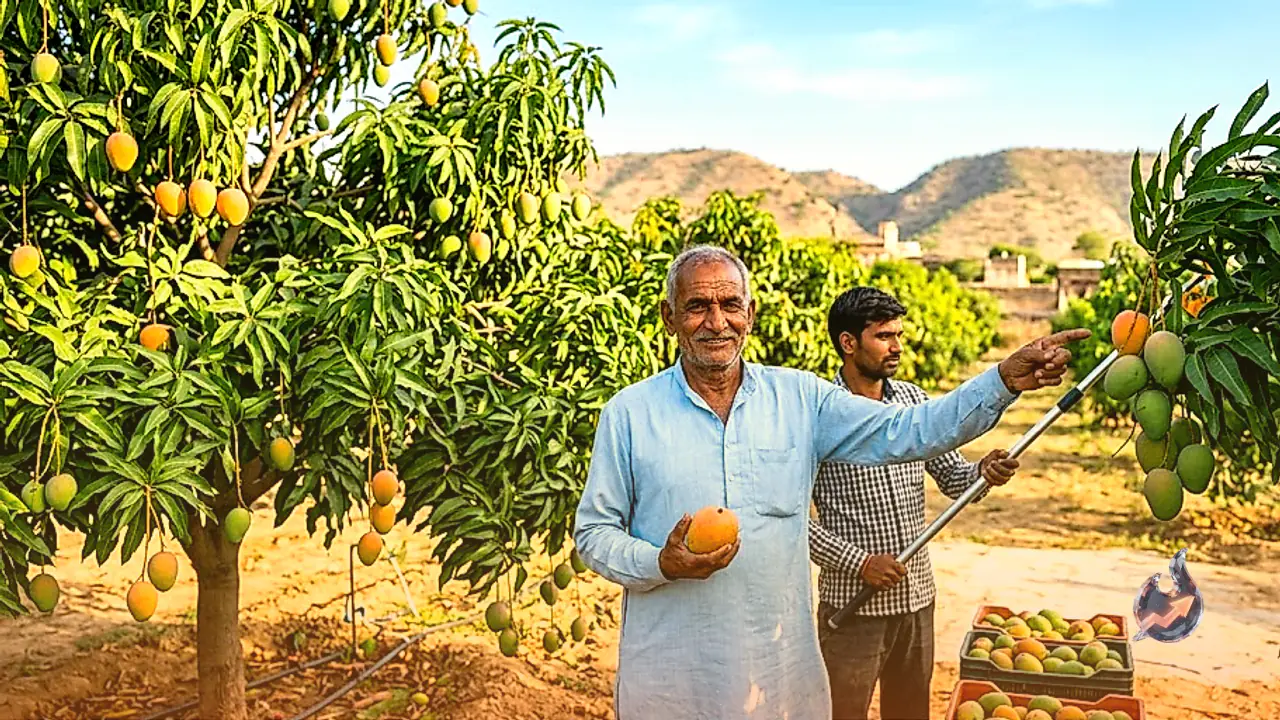
Manish Kumawat, a highly successful local farmer from the Pushkar region, offered a detailed perspective on the current season's extraordinary financial dynamics. Sharing his firsthand experience, he noted that the market trajectory for the mango crop has remained consistently elevated and heavily skewed in favor of the producers this year. According to Kumawat, the combination of exceptionally high-quality yields and an insatiable market demand has allowed farmers to effortlessly secure massive profits ranging from ₹50,000 to ₹60,000 from a single mature tree. This staggering per-tree revenue highlights the immense commercial viability of the crop when managed with modern expertise.
Ideal Climate and the Power of Modern Grafting
The geographic and climatic conditions of Pushkar and its surrounding rural belt play a crucial role in this agricultural success story. Kumawat explained that the specific micro-climate of the area has proven to be extraordinarily suitable for mango horticulture. The unique soil composition, combined with the region's specific temperature fluctuations, creates an ideal environment that naturally fosters the production of vast quantities of premium, high-quality fruit. This natural advantage is now being maximized through strategic botanical choices.
To establish these thriving new orchards, farmers in the Pushkar belt are deploying a dual strategy, utilizing both traditional indigenous saplings and modern grafted plants on a massive commercial scale. While traditional plants have deep roots in local farming culture, they come with a significant drawback: they require a remarkably long gestation period before they begin to bear harvestable fruit. In stark contrast, modern grafted plants developed through advanced scientific horticultural methods mature at an accelerated rate. These scientifically optimized plants establish themselves quickly and begin yielding commercial quantities of fruit in a fraction of the time required by their traditional counterparts. Once these grafted trees reach full maturity, they provide a reliable, consistent, and highly commercial crop year after year.
The adoption of these cutting-edge farming techniques, coupled with the strategic application of organic fertilizers and the precise selection of superior plant varieties, has empowered Pushkar's farmers to achieve maximum premium yields in the shortest possible timeframes. This rapid modernization of agricultural practices has led to a massive and highly visible increase in the total annual income generated from these orchards, firmly establishing fruit cultivation as a cornerstone of the local rural economy.
Expanding Orchards and Generating Local Employment
Today, the commercial farming of mangoes in Pushkar and its adjacent rural borderlands is no longer a small-scale, experimental endeavor. It has expanded into a massive, heavily capitalized agricultural enterprise. Key agricultural belts surrounding Pushkar, particularly Dev Nagar and Motisar, are now home to thousands of expansive, lush green mango and raw mango orchards. These sprawling plantations have dramatically transformed the visual landscape of the entire region, turning arid lands into thriving green economic zones. Every year, from March through the peak summer heat of July, the primary commercial crop matures and is meticulously harvested.
The logistics of handling such a massive volume of perishable fruit require a highly coordinated effort. As the sun rises, hundreds of local workers descend upon the orchards. The process of plucking the fruit is delicate; each mango must be harvested at precisely the right stage of maturity to ensure it survives the journey to distant markets without spoiling. Once harvested, the fruits are meticulously sorted by size, quality, and ripeness level under the shade of large temporary tents. Premium grades are carefully packed into protective crates destined for high-end retail markets, while the slightly lower grades and raw keris are bulk-loaded onto transport trucks heading for regional mandis.
The vast quantities of fruit collected from these thousands of trees are not just consumed locally in Pushkar. Massive commercial shipments are systematically dispatched to major wholesale fruit markets in Ajmer, Jaipur, Jodhpur, and other prominent urban centers across Rajasthan and the broader country. Beyond enriching the farmers, this massive supply chain operation has provided a significant boost to local employment, sustaining a vast network of daily wage laborers, transport contractors, and wholesale commission agents throughout the long summer season.