























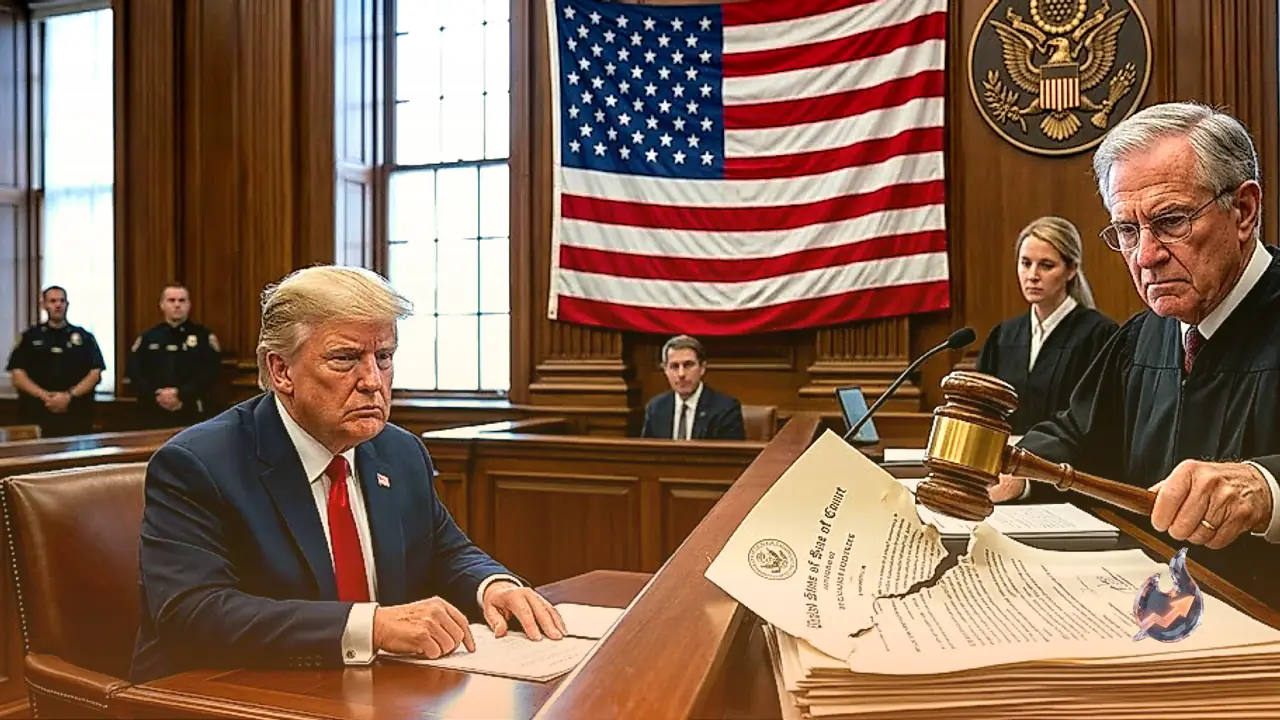

A US Federal judge has voided a legal settlement that would have granted Donald Trump and his family permanent immunity from audits regarding their past tax claims. US District Judge Kathleen Williams ruled that the lawsuit brought forward to facilitate this agreement was filed for an improper purpose. The arrangement, which the President and various federal agencies had reached, not only sought to block the IRS from conducting future audits but also included provisions for a 1.8 billion dollar fund labeled as an 'anti-weaponisation' fund, which has since been abandoned.
Court Findings on the Lawsuit
In her detailed ruling, Judge Williams characterized the lawsuit filed in 2026 by Donald Trump, his two sons, and the Trump Organization as something other than a standard dispute between opposing parties. Instead, she described it as a maneuver orchestrated by lawyers linked to the President and others who had claimed to be government targets. The judge wrote that the litigation was never genuinely about a party seeking a legitimate judicial resolution of a legal or factual conflict between Trump and the IRS, especially given that the President holds authority over the agency.
Origins of the Legal Dispute
The conflict began in January when Donald Trump sued the IRS, alleging that the agency failed to properly secure his financial records. He accused the IRS of allowing a former contractor to access his tax returns and subsequently leak them to media outlets such as The New York Times and ProPublica. Donald Trump Jr. and Eric Trump joined their father and the Trump Organization in the suit, which was filed in Donald Trump's personal capacity rather than his official role as President.
Implications of the Voided Settlement
Furthermore, the US Judge described the settlement as an attempt to lend legitimacy to an agreement intended to confer immunity upon individuals and entities affiliated with the President. The court noted that the agreement sought to earmark billions of dollars from American taxpayers to address grievances that were not defined under existing law. The initial lawsuit had been spurred by the disclosure of private tax information by a former IRS contractor, Charles Littlejohn, but the court ultimately determined that the resulting settlement deal was legally flawed and improper in its formation.