























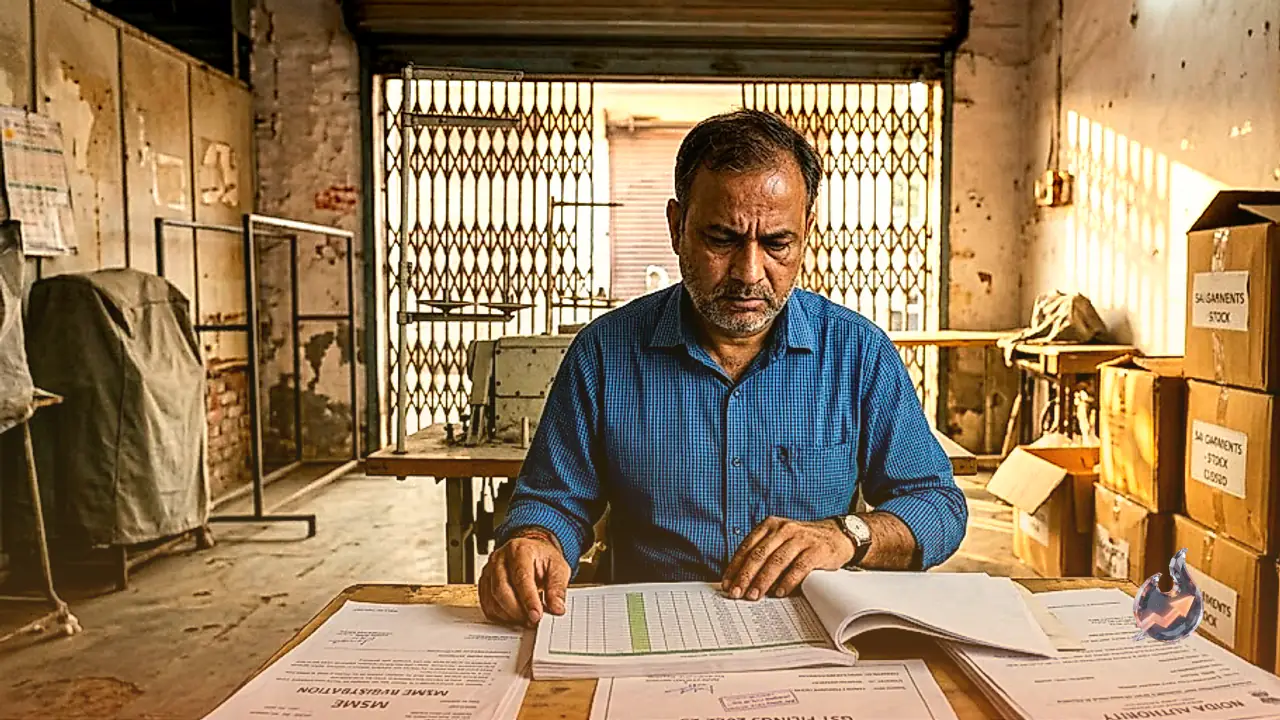

Every year, thousands of entrepreneurs launch small businesses and startups in Noida, one of the country's key industrial hubs, yet a large share of these ventures shut down within just a few years. That raises an obvious question: why do small businesses struggle to survive in a city known as an industrial and economic powerhouse? A lack of funding, poor understanding of the market, a rising compliance burden and delayed payments are often cited as the usual culprits. To dig into this, MSME and startup sector experts were asked what actually separates businesses that last from those that don't.
A business without a plan rarely survives
According to Sunil Srivastava, Director and co-founder of Talent Compliance India, starting a business should never be an impulsive move, it needs to be built on careful planning. Before launch, an entrepreneur must be clear about their strategy, documentation and governance structure. Wherever the business is being set up, the relevant financial compliances have to be in place first. Srivastava says that any micro, small or medium enterprise that chooses to ignore these basics simply won't be able to survive for long.
MSMEs contribute over 30% of India's GDP
Market demand matters, Srivastava says, but governance and day-to-day operational discipline are just as critical. MSMEs in India contribute 30.1% of the country's GDP and account for close to 45.7% of total exports. But sustainable growth, he explains, only comes to businesses whose processes, documentation and internal controls are strong. The more disciplined the foundation of a business, the less uncertainty it has to deal with later.
Backend systems matter as much as sales
Asked whether backend systems are as important as sales, Srivastava explains that sales is what makes a business grow, but it's the backend systems that sustain that growth. Large enterprise clients, investors and regulators today also evaluate a company's governance standards before dealing with it. When workforce management, payroll accuracy, documentation and statutory responsibilities are handled properly, scaling up becomes far easier and operational disruptions come down.
Cutting corners on cost can cost more later
On how businesses should balance cost savings against long-term risk, Srivastava says cost optimisation is necessary, but not at the cost of governance. Short-term savings, he warns, can eventually turn into long, drawn-out legal disputes, delayed operations or damage to a company's reputation. That's why businesses need to pursue efficiency and compliance together, since prevention is always cheaper than correction. Risk management shouldn't be something a business only thinks about during an inspection or an audit, he adds. Regular process reviews, vendor governance, accurate payroll records, proper documentation and ongoing regulatory monitoring need to become part of everyday operations. Strong governance, in his view, is what keeps a business running without interruption.
Businesses that build systems early gain the long-term edge
Srivastava stresses that governance deserves as much attention as product and sales. Proper registrations, documented processes, transparent financial controls, workforce discipline and adopting technology should all be part of a business from day one, not an afterthought. India currently has more than 6.3 crore (63 million) MSMEs, and competition among them keeps intensifying. The long-term advantage, he says, ultimately goes to businesses that build robust systems alongside scaling up.