























Every year, hundreds of thousands of international students travel to the United States to pursue higher education and gain valuable work experience at global corporations. For students holding an F-1 academic visa, navigating the foreign student employment landscape requires a thorough understanding of Curricular Practical Training (CPT) and Optional Practical Training (OPT). These two regulatory provisions established by the US government allow non-immigrant students to gain practical experience directly related to their field of study. However, misunderstandings regarding eligibility, timing, and application procedures can lead to compliance errors that may compromise a student's legal immigration status.
Understanding the Core Definitions of CPT and OPT
CPT and OPT serve distinct roles at different stages of an international student's academic journey in the US. CPT is designed specifically for practical training, such as internships or practicums, undertaken while the degree program is still in progress. OPT, on the other hand, primarily serves as a post-graduation work permit allowing students to gain up to 12 months (or 36 months for eligible STEM graduates) of full-time professional experience in the US. In essence, CPT provides curriculum-integrated training during enrollment, whereas OPT enables post-degree professional employment.
How Curricular Practical Training (CPT) Operates
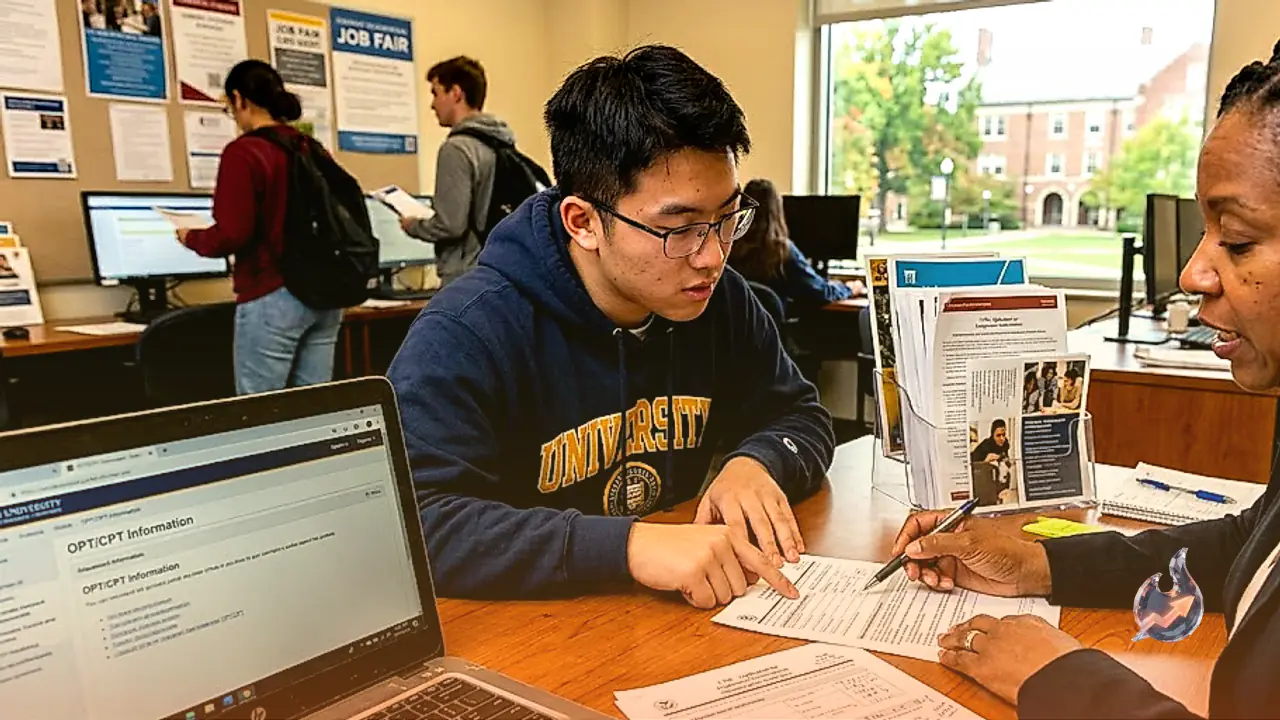
CPT is an authorization that permits F-1 students to accept off-campus employment, paid or unpaid internships, or cooperative education agreements during their academic enrollment. To qualify for CPT, the work experience must be directly tied to the student's major field of study and mandated by the program curriculum or offered as an established credit-bearing course. CPT can be authorized for part-time work (up to 20 hours per week) or full-time work (more than 20 hours per week). Approval for CPT does not involve federal agency filings; instead, it is reviewed and authorized directly by the university's Designated School Official (DSO), who updates the student's Form I-20 accordingly.
The Structure of Optional Practical Training (OPT)
OPT grants F-1 students temporary employment authorization to work in positions directly related to their major area of study. Unlike CPT, OPT is most commonly utilized following degree completion (Post-Completion OPT). Standard OPT authorization grants eligible graduates up to 12 months of employment permission anywhere in the US. Furthermore, graduates holding qualifying degrees in Science, Technology, Engineering, or Mathematics (STEM) fields may apply for a 24-month STEM OPT extension. This extension allows qualifying STEM professionals to work in the US for a total of 36 months (3 years) following graduation.
Four Fundamental Differences Between CPT and OPT
International students should keep the following critical distinctions in mind when planning their practical training
- Timing of Employment: CPT must be completed prior to degree completion while actively enrolled in classes. Post-completion OPT is executed after the student completes all degree requirements.
- Authorization and Documentation: CPT authorization is granted internally by the university DSO without government application fees or separate permits. OPT requires filing Form I-765 with US Citizenship and Immigration Services (USCIS) and securing a physical Employment Authorization Document (EAD) card before starting work.
- Curricular Integration: CPT requires that the employment be an integral part of an established curriculum or credit course. OPT requires only that the employment be directly related to the student's degree field, without needing course credit integration.
- The 12-Month Cumulative Rule: If a student accumulates 12 months (365 days) or more of full-time CPT during their degree program, they completely forfeit their eligibility for post-completion OPT. Careful monitoring of full-time CPT days is therefore essential.
Key Planning Strategies for International Students
Students should consult with their university international student services advisor or DSO early in their academic program to understand institution-specific policies. When pursuing internships during enrollment, students must track their full-time CPT usage to remain under the 365-day cap. With proactive planning, F-1 visa holders can effectively leverage both training authorizations to build a strong professional foundation in the United States.