





















The pursuit of a doctorate in India often hinges on crucial financial support, primarily distributed through the nation's premier academic qualification test. Every single year, a massive wave of students clears the demanding assessment with hopes of securing the Junior Research Fellowship (JRF). This fellowship is considered the golden ticket, offering vital economic stability during the grueling years of doctoral research. However, the ground reality paints a starkly different picture. The vast majority of candidates who successfully qualify the baseline examination find themselves excluded from the financial grant. This glaring discrepancy recently took center stage during the Monsoon Session of the Lok Sabha, where Congress parliamentarian Shashi Tharoor directed a series of pointed inquiries at the central government regarding the dwindling prospects for young scholars.
Demanding Answers on the House Floor
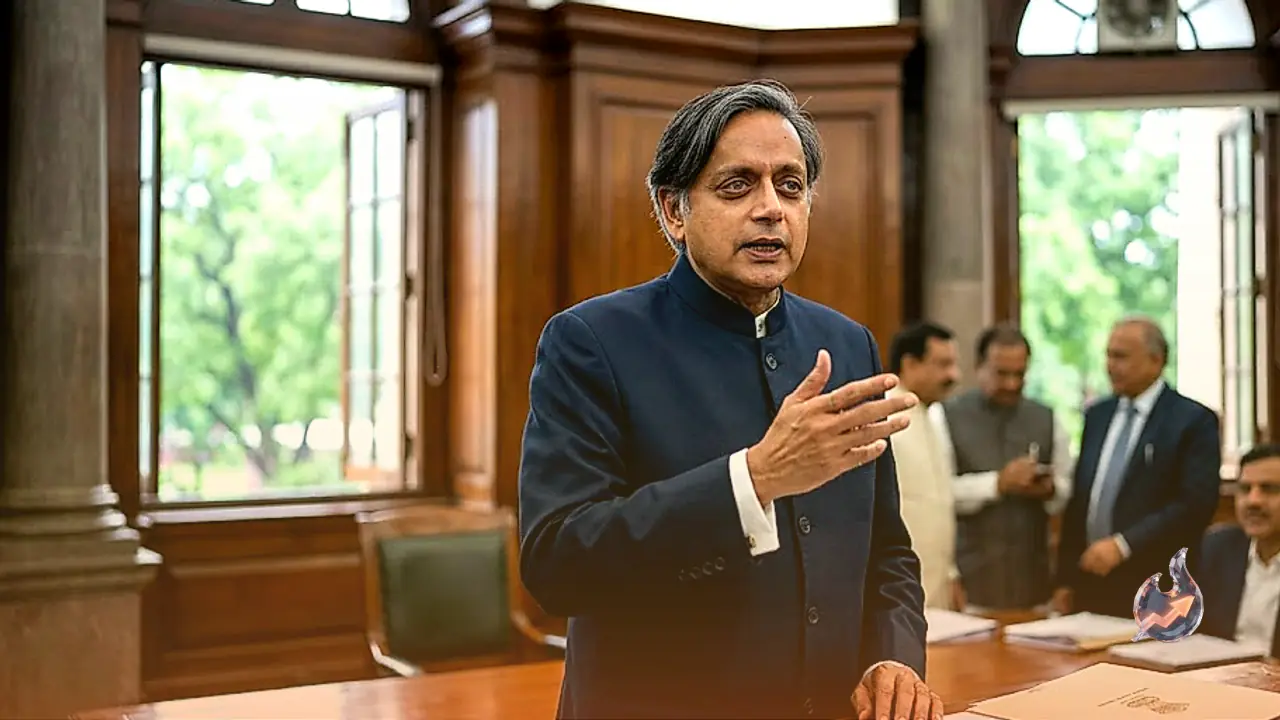
Taking the floor in Parliament, the Member of Parliament launched a comprehensive critique of the current academic funding structure. He pressed the Ministry of Education for detailed statistics spanning the last half-decade. Specifically, the lawmaker demanded transparency on the exact annual volume of candidates clearing the baseline qualification versus the fraction actually awarded the monetary grant. Furthermore, he sought the precise percentage of successful test-takers who eventually received the funding. A critical part of his questioning revolved around whether policymakers have formally recognized the continuously expanding chasm between the pool of successful candidates and the minuscule group receiving economic backing. He asked the administration to clarify the underlying reasons for this alarming trend.
The Staggering Mathematics of Rejection
To illustrate the severity of the bottleneck, the Congress leader presented hard data from recent testing cycles on the floor of the House. Looking at the June 2025 iteration of the examination, a staggering 7,51,907 hopefuls appeared for the academic evaluation. Out of this massive cohort, a mere 5,269 individuals were deemed eligible for the financial grant. The subsequent cycle offered no relief. During the December 2025 testing period, approximately 7,35,614 participants took the test, yet the fellowship was granted to just 5,108 candidates. By highlighting these specific figures, the parliamentarian underscored the mathematical improbability of securing the grant. He demanded an explanation from the ruling administration as to why such an overwhelming multitude of academically proven students are systematically denied the funds necessary to pursue advanced research.
Pushing for Structural Reforms
Beyond presenting historical data, the lawmaker pushed the government for actionable solutions. He directly questioned the administration on its future roadmap, specifically asking if there is any concrete blueprint to expand the total number of available fellowship slots. Given the surging population of graduates eager to contribute to academia through dedicated studies, he argued that the current funding limits are severely outdated. Additionally, he probed whether policymakers are actively considering structural reforms to the existing eligibility framework. At present, the system operates on a rigid, percentage-based cap. The Member of Parliament urged the authorities to rethink this limitation so that a broader segment of meritorious students can access the monetary resources required for their scholarly endeavors.
The Frozen Stipend Crisis
The parliamentary intervention did not stop at the primary funding scheme. The Congress leader also resurrected a long-standing grievance concerning the alternative financial aid program designed for doctoral candidates. This secondary support system, known as the Non-NET Fellowship, is intended for scholars who fail to secure the primary merit-based grant. The lawmaker highlighted that the monthly stipend for this secondary program has remained entirely unchanged at just 8,000 rupees since the year 2006. Pointing out the massive inflation and rising cost of living over nearly two decades, he questioned whether the administration was even cognizant of this severe financial stagnation. More importantly, he demanded to know what specific interventions are being drafted to enhance this compensation and asked for a definitive timeline for when the revision would be implemented.
The Ministry's Defense of the Quota
The responsibility of addressing these pressing queries fell to Dr. Sukanta Majumdar, the Minister of State for Education. Responding on behalf of the central administration, the minister provided a detailed breakdown of the existing operational mechanics. However, his parliamentary reply largely focused on explaining the current rulebook rather than offering direct solutions to the lawmaker's demands for expansion. The minister elaborated that the selection process for the financial grant is strictly governed by comparative performance in the national assessment. According to the established guidelines, only the top six percent of the total appearing candidate pool are certified as eligible for university teaching positions, designated as Assistant Professor status. It is from this already narrowed group of high-achievers that the apex education commission allocates a fixed quota of 11,750 financial grants every single year.
Alternative Avenues for Financial Aid
In an attempt to broaden the scope of available support, the government's response highlighted several alternative funding avenues outside the primary academic commission's purview. The Minister of State emphasized that the financial burden of supporting doctoral scholars is shared across multiple federal departments and state-run institutions. He pointed out that various other ministries run their own distinct scholarship programs. Furthermore, the administration drew attention to specialized funding initiatives tailored for specific demographic groups. These include dedicated schemes aimed at uplifting candidates from Scheduled Castes (SC), Scheduled Tribes (ST), and Other Backward Classes (OBC). Additionally, targeted support exists for Persons with Disabilities (PwD) and single girl children. The official reply also suggested that ambitious scholars could secure financial backing by integrating themselves into specialized research projects sponsored by diverse government agencies.
Sidestepping the Compensation Hike
When addressing the contentious issue of the frozen 8,000-rupee stipend, the ministerial reply was notably circumspect. Instead of committing to a financial hike or providing the timeline demanded by the opposition, the government chose to reiterate the foundational philosophy of the program. The minister explained that this specific initiative was originally launched to offer partial financial relief to MPhil and PhD researchers who have no other source of monetary backing. The administration stressed that the core objective of the scheme is to facilitate scholars studying in central universities located in geographically isolated areas and the northeastern region of the country. Consequently, the pressing question regarding when the nearly two-decade-old compensation amount would be adjusted for modern economic realities was left entirely unanswered.
An Unresolved Crisis for Scholars
Ultimately, the extensive parliamentary exchange concluded without resolving the core anxieties of the academic community. The fundamental issues brought to light by Shashi Tharoor, which included tracking the five-year trajectory of successful candidates, addressing the shrinking success percentage, and acknowledging the expanding gap between qualification and funding, remained subjects of debate. The overarching demand for a systemic expansion in the number of available research grants was met with an explanation of existing quotas rather than a promise of reform. Because the administration bypassed the direct questions concerning seat increases and stipend hikes, the topic continues to generate intense discussion. Hundreds of thousands of candidates continue to clear the grueling examination annually, yet the harsh reality remains that only a severely restricted fraction will ever receive the state-sponsored economic support necessary to turn their research aspirations into reality.