






















As Teacher's Day approaches every year, the collective imagination naturally turns toward school classrooms, chalkboards, and teachers standing before rows of eager students. People remember their former mentors, offer their gratitude, and celebrate their immense contributions. Yet, amid all this mainstream attention, a massive workforce operates quietly without any grand stages or shiny medals, laying the absolute foundation for millions of children across India. These are the nation's Anganwadi workers. From dusty rural lanes to crowded urban settlements, these dedicated individuals take children aged three to six by the hand and introduce them to the wider world. They do much more than just distribute nutritional supplements; they narrate engaging stories and teach foundational life lessons through play. Despite these profound responsibilities, society and the administrative system often view them merely as workers rather than acknowledging them as true teachers. Writing on the occasion of Teacher's Day, Deepa Mogilighetti, Chief of Policy and Partnerships at EkStep Foundation, highlights why Anganwadi workers truly deserve the formal designation and respect of teachers.
Administrative Burdens Versus Child Development
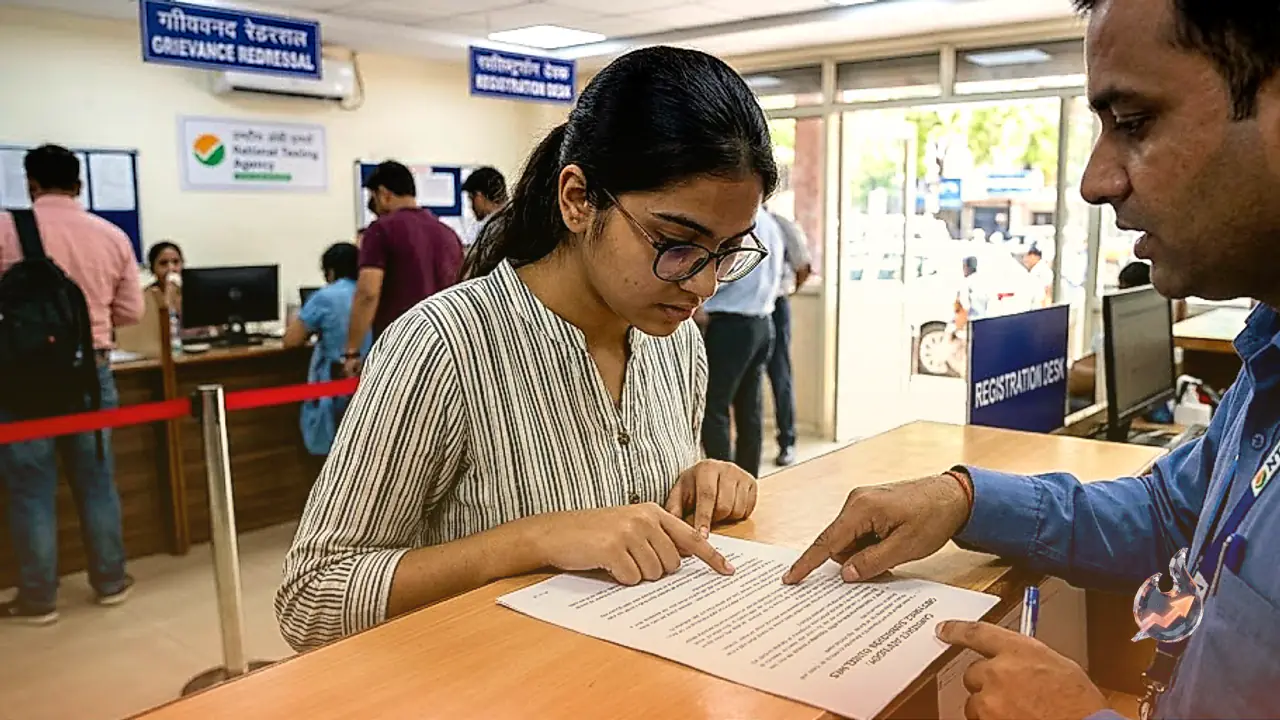
As long as the system continues to treat Anganwadi workers strictly as administrative clerks, it will keep overlooking the strongest pillar of early childhood development in the country. Therefore, examining the intricate details and true importance of their daily work has become essential. A typical morning for an Anganwadi worker often involves a difficult tug-of-war between sitting down with children to tell stories or filling out endless official registers. Between managing attendance records, updating nutrition trackers, calculating ration supplies, and compiling dozens of reports, the precious time required for children's cognitive development frequently gets lost. Despite these heavy paperwork demands, the moment a worker sets those registers aside and sits down on the floor to form a circle with the children marks the true beginning of genuine teaching.
Understanding Capabilities Over Rote Learning
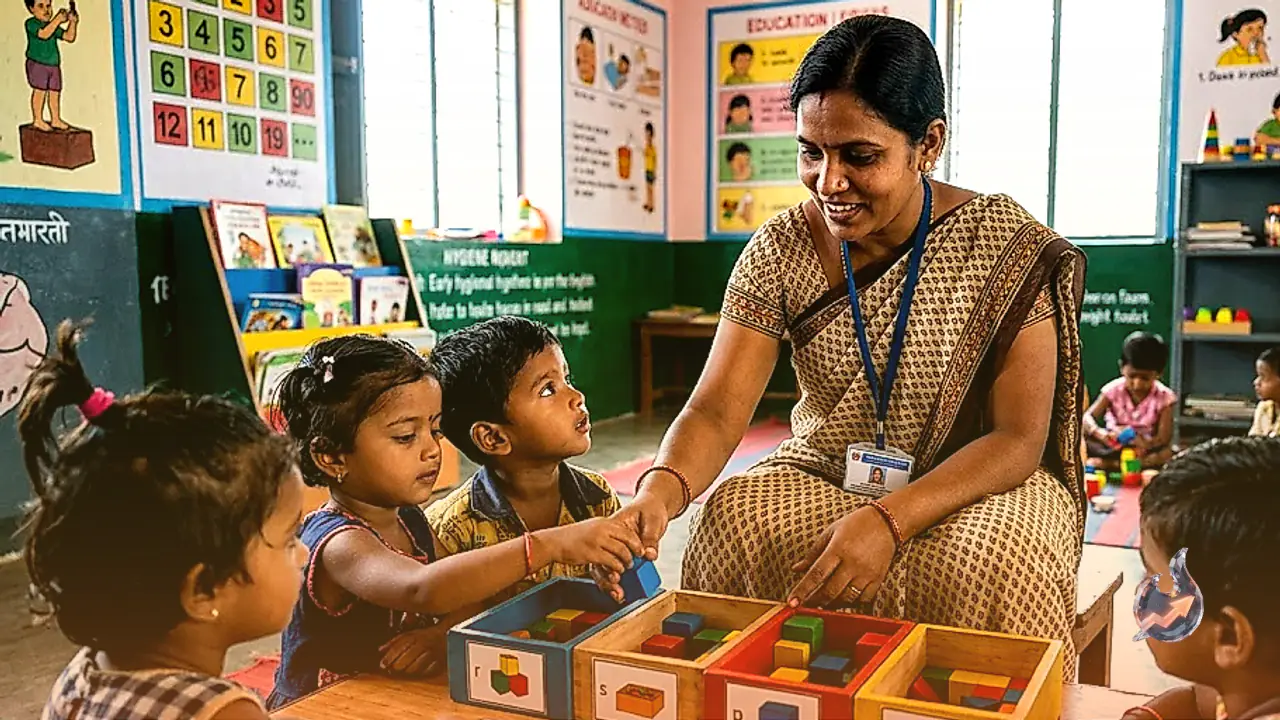
Most formal schools evaluate young children based on what they can memorize and recite. In contrast, an Anganwadi worker's approach remains uniquely different and deeply empathetic. Whether organizing an impromptu water play session among children during a power outage or helping a hesitant child integrate smoothly with the rest of the group, an Anganwadi worker focuses on recognizing a child's inherent potential rather than counting their limitations. Making a child feel entirely secure and sparking a natural curiosity for learning inside them represents the highest form of pedagogy. India's vast Anganwadi network stands proudly as one of the largest public systems globally, with approximately 1.4 million centers reaching deep into remote rural corners, tribal belts, and marginalized neighborhoods.
The Power of Trust and Familiarity
The core strength of this massive network lies in genuine warmth and personal connection. An Anganwadi worker thoroughly understands a child's family background, home environment, and native language. A prime example comes from the Kodathi Gate center in Bengaluru, where attendance soared from 12 to over 40 children purely on the strength of a secure environment, engaging toys, and captivating stories. When parents gain complete confidence that their child is resting in safe hands, they willingly send them to the center every day. While various government campaigns like the National Curriculum Framework and Poshan Bhi, Padhai Bhi increasingly emphasize foundational learning and play-based education, the fundamental question remains whether societal mindsets are shifting alongside these structural policies.
Necessary Steps for True Recognition
The issue extends far beyond simply renaming the title of an Anganwadi worker to that of a teacher; the core question is whether society truly views them through a teacher's lens. Do people understand the psychological learning hidden behind their simple nursery rhymes? Can the system recognize the emotional labor invested in calming a crying child? If these workers are to be genuinely accepted as educators, superficial title changes will not suffice, and concrete steps must follow. Their administrative workload must be substantially streamlined so they can dedicate more quality time to the children. Additionally, they require regular training along with modern teaching-learning materials, paired with honorariums and facilities that properly reflect their immense responsibilities. Teacher's Day should not merely serve as a moment to thank those traditionally recognized as teachers, but also as an occasion to honor the unsung figures who selflessly forge the nation's foundation. An Anganwadi worker often acts as the very first trustworthy adult outside the family in a child's life, and recognizing the true depth of her work will ensure the title of teacher feels like a well-deserved honor rather than a mere promotion.