























Whenever a major nationwide competitive examination approaches in India, the entire logistical landscape undergoes an intense transformation. Railway platforms overflow with determined aspirants, passenger coaches run far beyond capacity, and hotels in test-centre cities quickly exhaust their accommodations as anxious parents accompany students across states. A comprehensive study by SBI Research highlights this immense scale, documenting how India's foremost tests rank among the largest academic and professional selection exercises conducted anywhere on the planet.
India's Prominence on the Global Examination Roster
Across the roster of the 14 largest examinations worldwide, India secures four prominent positions, driven by fierce competition for limited educational seats and public sector opportunities. The medical entrance examination NEET UG stands as the fifth largest test across the globe, drawing approximately 25 lakh applicants each cycle. The civil services examination UPSC CSE registers nearly 12 lakh hopefuls, while engineering entrance test JEE Main sees roughly 10 lakh candidates. Additionally, UGC NET, which assesses eligibility for collegiate lectureship and research fellowships, logs over 8 lakh candidates annually.
Comparing Security Protocols With China's Gaokao
Holding the top global position is China's college admission exam, Gaokao, which witnesses roughly 1.29 crore candidates sitting for assessments. Managing an event of that magnitude demands near-military precision; testing materials in China are secured in reinforced steel rooms constantly monitored by motion sensors and armed police escorts. Aside from China, practically no other nation organizes evaluations at such a colossal volume. In India, organizing these nationwide assessments resembles a mega administrative deployment that engages nearly every tier of regional and central governance.
Operational Bottlenecks and Systemic Integrity
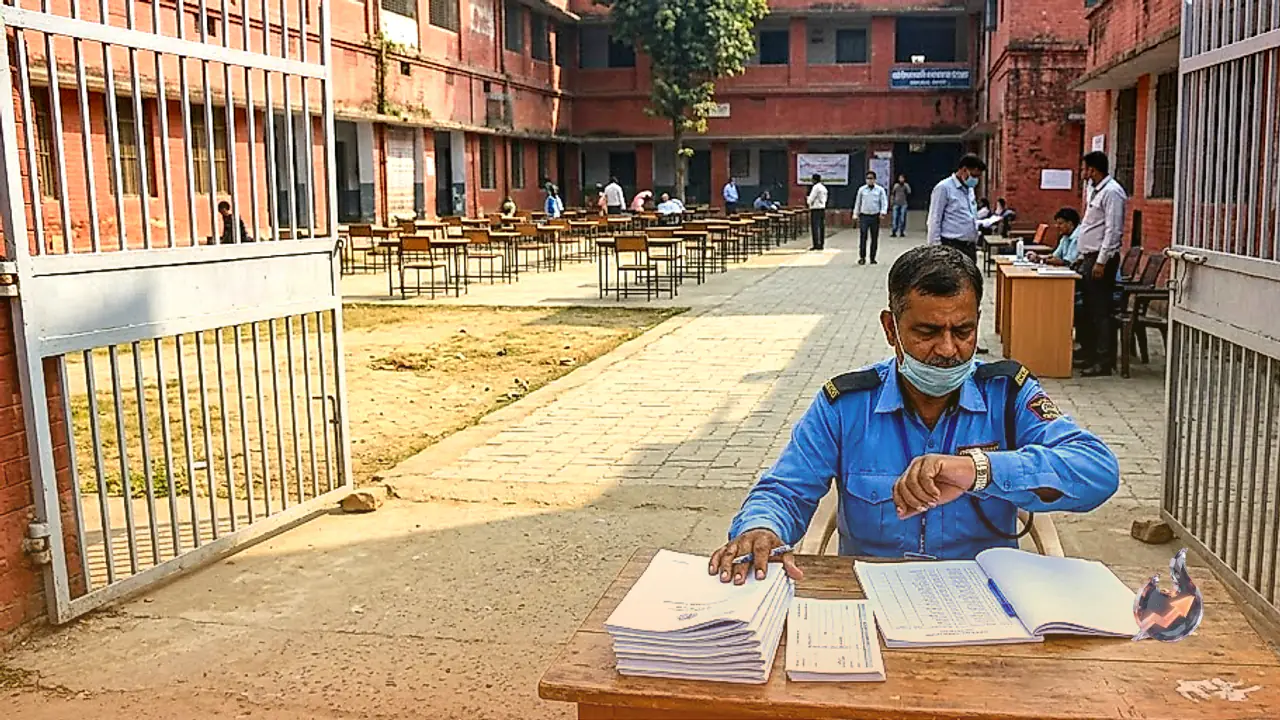
While these astronomical application numbers underline the deep-rooted aspirational focus on specialized careers, they also expose severe vulnerabilities within domestic testing infrastructure. The intense contest where thousands scramble for a single vacancy raises the stakes immensely. In recent years, high-profile exams including NEET UG have faced serious disruptions, ranging from question paper leaks to logistical chaos at testing venues and administrative negligence. Such lapses have repeatedly sparked fierce public debates across India's political and educational sectors regarding institutional integrity.
The Blueprint for a National Testing Framework
Addressing these recurring failures requires moving beyond diagnosing shortcomings to implementing structural remedies observed in other rigorous global testing regimes. The research advocates for establishing a modernized National Testing Framework equipped with digital marking solutions, standby emergency reserve centres, and a clear, transparent grievance redressal channel. As millions of young citizens dedicate formative years toward crafting their professional trajectories, establishing ironclad security and fair evaluation mechanics remains essential for sustaining public trust.