















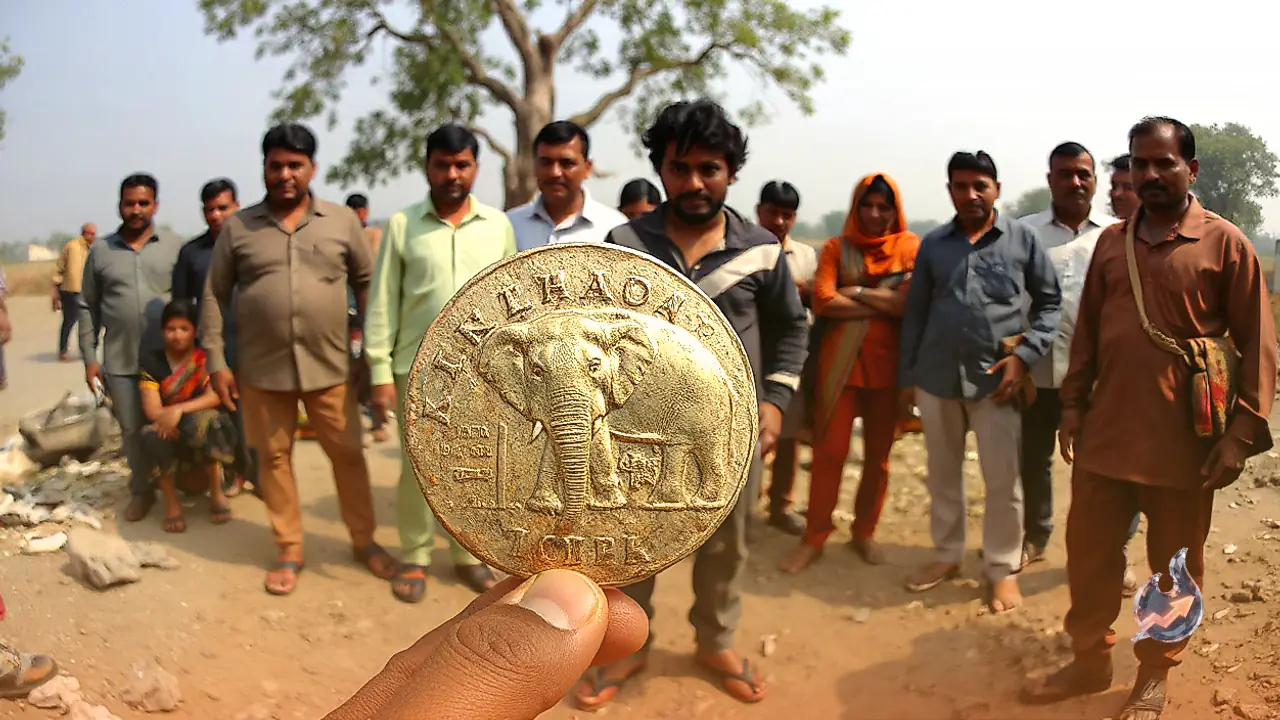

The history of Chhattisgarh is not merely confined to majestic traditional forts, ancient temples, and the tales of bygone kings, but the old coins discovered across the region also narrate the glorious saga of its past. In ancient times, this region was known as Dakshina Kosala, where a variety of advanced currency systems flourished under the rule of prominent dynasties such as the Kalchuris and the Sharabhapuriyas. These historical coins feature intricate engravings of elephants, peacocks, and various deities. Most notably, the timeline of these rare coins stretches from the 1st century BCE all the way to the reign of the Mughal emperor Akbar. Let us take a detailed look at the fascinating history of these ancient and rare coins of Chhattisgarh.
The Oldest Coin Dating Back to the 1st Century BCE
According to historians and experts, ancient Chhattisgarh or Dakshina Kosala possessed its own well-organized and independent monetary system. The oldest coin unearthed from the region was found in the historical site of Malhar, which is estimated to belong to the 1st century BCE. This ancient coin has a unique composition, featuring the clear figure of an elephant on one side and the inscription 'Ora' on the reverse. Subsequently, during the 1st century, 'tree-in-railing' style coins came into circulation, bearing a tree on one side and an elephant on the other. These specific coins were manufactured using lead, while copper coins featured the figure of a peacock alongside the letter 'ma' inscribed in Brahmi script, showcasing the script and artistry of that era.
Coins Depicting Elephants and Deities in the 3rd and 4th Centuries
As time progressed, significant changes occurred in the shapes and engraved motifs of these currencies. During the 3rd and 4th centuries, coins bearing the figures of elephants and deities came into circulation, carving out a distinct identity for themselves. The weight of these ancient coins ranged from approximately 1 gram to 3.2 grams. The artistic depictions inscribed on these currencies offer a vivid glimpse into the prevailing art styles and religious beliefs of that period, serving as valuable tools for understanding history.
Distinctive Coins Issued by the Sharabhapuriya Kings
Continuing the evolution of metal craft, the 5th and 6th centuries witnessed the rule of the Sharabhapuriya dynasty in Chhattisgarh. Coins belonging to three prominent rulers of this dynasty—Karmaditya, Mahendraditya, and Prasanamatra—have been discovered. These coins weighed roughly 1.3 grams. The most fascinating aspect is that a specialized technique was employed to craft these coins, known in numismatics as 'repousse coinage'. Under this unique method, a heavy die was stamped from only one side of the coin, which naturally created a slight relief on the reverse side.
Gold and Copper Coins of the Kalchuri Rulers
The Kalchuri dynasty holds a highly significant place in the political and economic history of Chhattisgarh. According to experts, Kalchuri rulers initially arrived in the village of Tumman and established it as their early capital, later shifting their main administrative center to Ratanpur. During this historical era, rulers such as King Ratnadeva, Jajalladeva, Prithvideva, and Pratap Malladeva issued their own coins. Both gold and precious copper metals were extensively utilized to mint these currencies. While some coins weighed one masha, others were found weighing up to three and a half mashas, providing solid insights into the robust economic prosperity and sound monarchical administration of that era.
Special Coins Issued During the Era of Akbar
Amidst the influence of Mughal rule during the medieval period, numerous notable changes were also witnessed in the coinage recovered from the region. Particularly during the reign of the Mughal emperor Akbar, various imperial mints issued distinct types of coins, which included both round and square shapes. Rare coins from Akbar's era are currently preserved and showcased in exhibitions. According to experts, coins associated with the Din-i Ilahi faith and traditions of Akbar's reign are also displayed, featuring clear mentions of specific names corresponding to different months.
Living Documents of the Past
In short, these old coins recovered from Chhattisgarh were not merely a standard medium of trade or financial transactions. These precious currencies encapsulate within themselves the complete living history of the political standing, exquisite art, rich culture, and prevailing economy of the various dynasties that once ruled the region, connecting the present generation deeply with its historical roots.