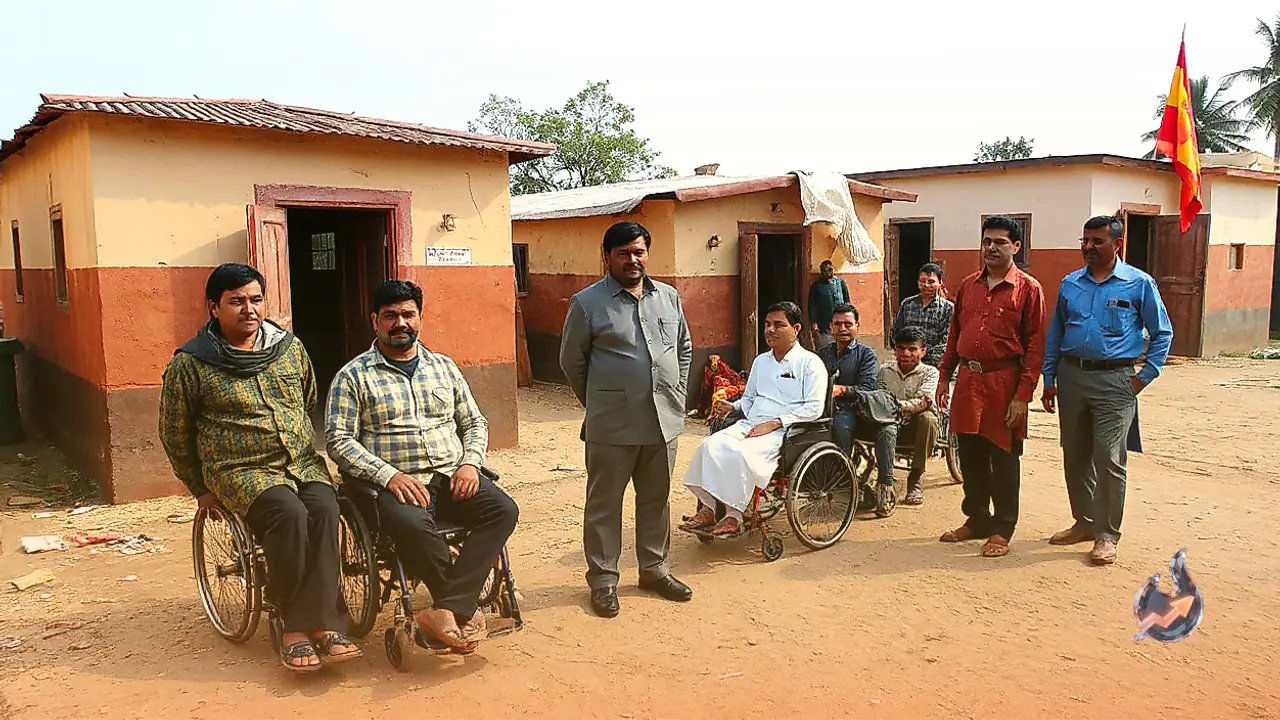

Shelter homes established in Chhattisgarh for the care and rehabilitation of differently-abled and mentally challenged individuals have once again come under severe scrutiny due to glaring administrative failures. Commissioners appointed by the high court carried out surprise inspections across 11 such facilities to evaluate ground realities. The subsequent investigation report has raised alarming questions regarding the overall functioning of these institutions. These centres operate primarily on state government funding while day-to-day management is outsourced to various non-governmental organizations.
Severe Deficiencies in Medical Care and Health Management
According to established guidelines, visiting medical professionals are mandated to inspect each centre twice every week. However, the inspection revealed that doctors barely showed up more than once or twice a month. Furthermore, there was no verifiable written or digital record confirming the round-the-clock presence of qualified nursing or paramedical personnel inside the premises. Essential support mechanisms for mental health care were glaringly absent, and formal logs for tracking medical emergencies were completely unmaintained across multiple facilities.
Lack of Administrative Transparency Surrounding Deaths
In a women's facility located in Raipur, as many as five fatalities were recorded during the current year, which included a minor child. The inspection report explicitly noted the total absence of documentation or official communication to verify whether mandatory notifications regarding these deaths were formally submitted to the concerned authorities. In a separate incident involving the death of a young boy, institutional staff claimed he was previously healthy, suffered a fall from his bed, and subsequently experienced severe seizures. The report has strongly recommended a thorough inquiry into the chronological sequence of this event, underlying causes, and any potential medical correlation to the eventual death.
Inhumane Restraints and Financial Constraints
The inspections also uncovered deeply concerning instances of harsh treatment within the facilities. An inmate was found physically restrained and tied to a bed, a situation that was rectified only after the direct intervention of the visiting commissioner. The report pointed out that another female inmate was neither aggressive nor exhibited any abnormal behavioral traits that warranted restrictive measures. Addressing the financial aspect, Social Welfare Department Director Kalendra Singh Thakur stated that the financial grants allocated by the state government are relatively meager, compelling the managing institutions to inject personal funds to sustain operations.
State financial aid is officially earmarked for covering salaries of approximately 10 administrative staff members, four trainers, specialized therapists, and a part-time doctor, alongside utility bills for electricity and water, and rental liabilities. Additionally, these funds are meant to finance daily meals, clothing, medicines, toiletries, recreational activities, and educational supplies for the residents.
These designated shelter homes have remained under continuous judicial oversight by the high court for the past six years. The proceedings originated from a public interest litigation alleging systemic mismanagement and widespread administrative irregularities within these institutions. The petition was filed by the advocacy group Kopal Vani Child Welfare Organisation. In August 2023, a division bench of the high court directed the principal secretaries of the social welfare, public health, and finance departments to submit formal affidavits, while appointing 11 distinct commissioners to inspect the 11 shelters. Oversight intensified further in 2024 under a bench led by then Chief Justice Ramesh Sinha. Attention is now firmly fixed on what concrete actions the government and the judiciary will take in response to the unsettling findings detailed in the report.