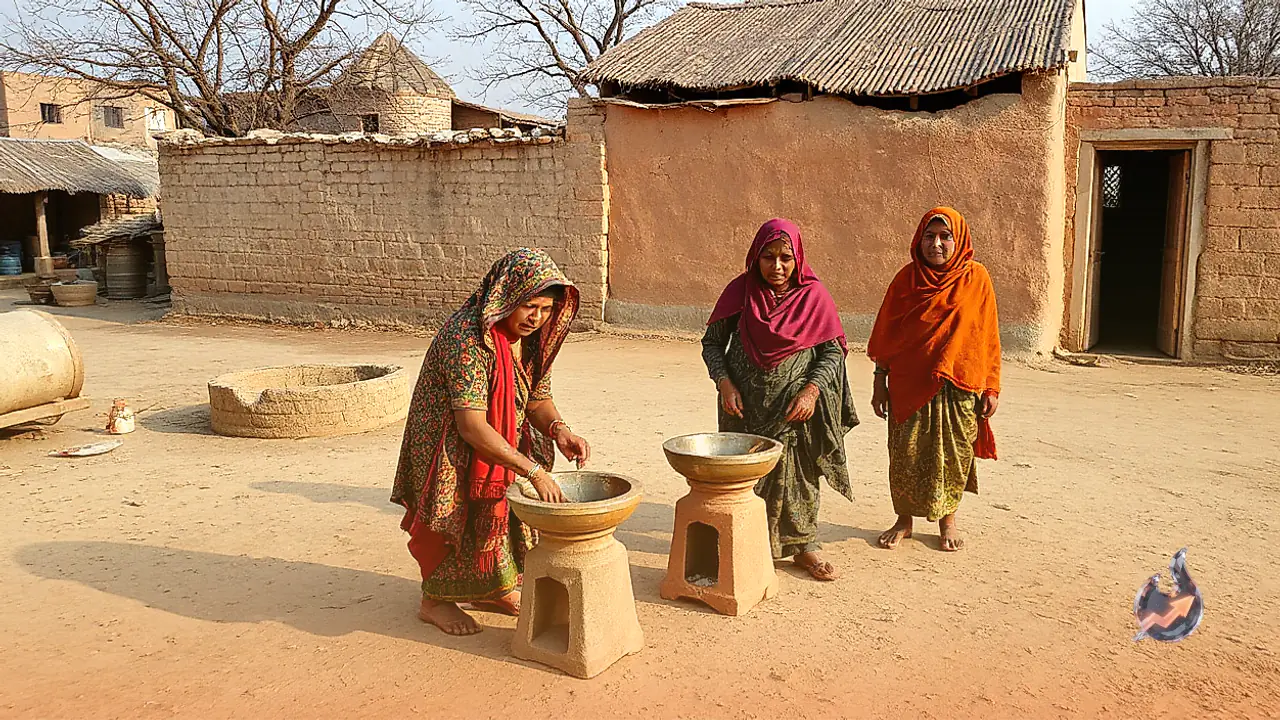
















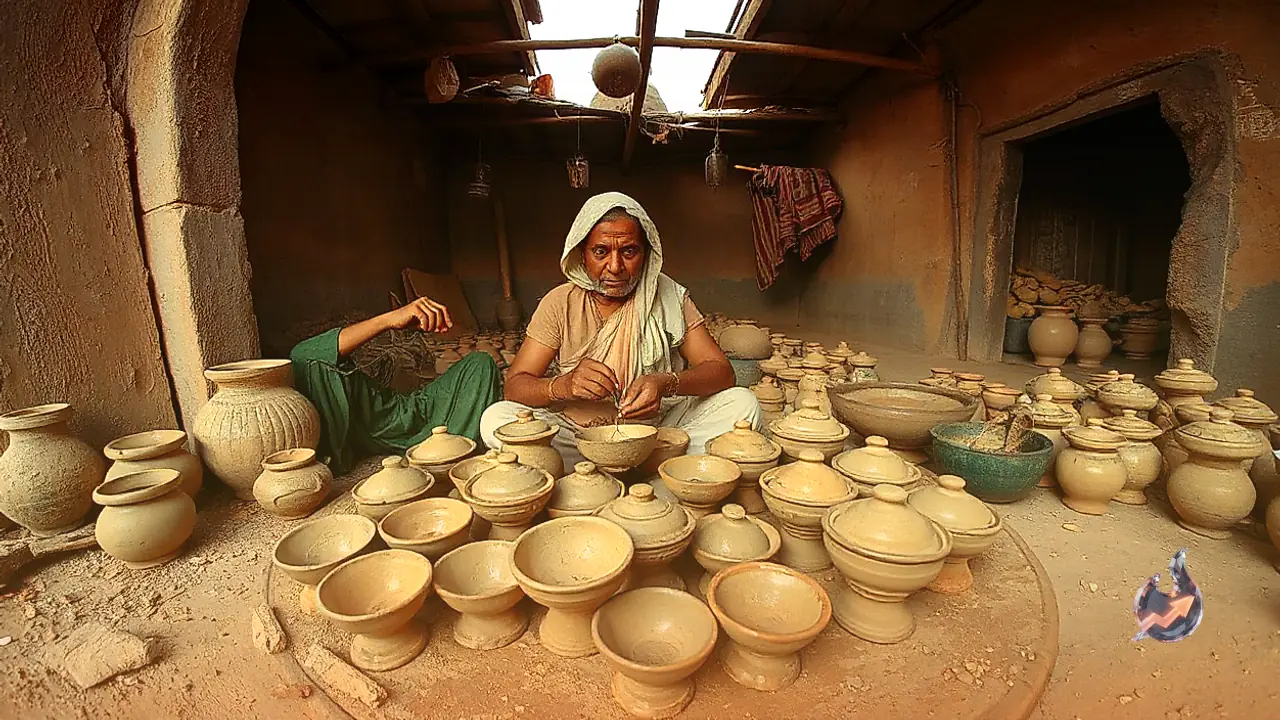

Spinning moist clay over a traditional wooden wheel, Munna continues to safeguard an ancestral craft that has sustained his community for generations. Operating out of Kumharta in the Darima region of Surguja district, Chhattisgarh, Munna has dedicated the past 12 to 15 years to the trade of handmade pottery. Rather than learning through modern classrooms or vocational schools, he inherited the craft purely through keen observation and personal persistence, keeping living traditions firmly rooted in daily rural life.
Mastering Pottery by Observing Family Elders
Munna explains that his journey with clay and the wheel spans well over a decade, crossing 10 to 12 years of hands-on daily production. He never enrolled in any formal academy nor studied under an external mentor. During his formative years, his ancestors and elder relatives spent their days shaping earthen vessels at home. By closely watching their finger movements, pressure control, and shaping methods, Munna absorbed the subtleties of the craft. Although he never received formal academic schooling, that inherited knowledge became both his identity and his household livelihood.
Crafting Everything From Festival Diyas to Matkas and Handis
As soon as refined clay touches his palms, it smoothly transforms into versatile shapes. Munna does not restrict his work to seasonal festival lamps; his workshop yields a wide array of functional cookware and containers. His lineup includes piggy banks, dohnas, telais, kadhais, earthen batuas, handis, and conventional water matkas. Munna manages the complete technical lifecycle of clay, understanding precisely how much water and pressure each vessel requires to achieve structural balance and daily durability.
Improvised Wooden Wheel and a Week-Long Production Cycle
The foundation of Munna's craft lies in selecting fine-grained smooth clay that can withstand pressure without cracking. Over the years, he engineered an improvised wooden wheel tailored to his working rhythm. Using manual momentum, he spins the wheel to mold each vessel with bare hands. Munna emphasizes that shaping is merely one phase of a demanding process. Sourcing clay, refining it, shaping, air-drying, and kiln-firing take approximately one full week before any piece is ready for customer use.
Festival Demand and Selling Lamps at Five Rupees Each
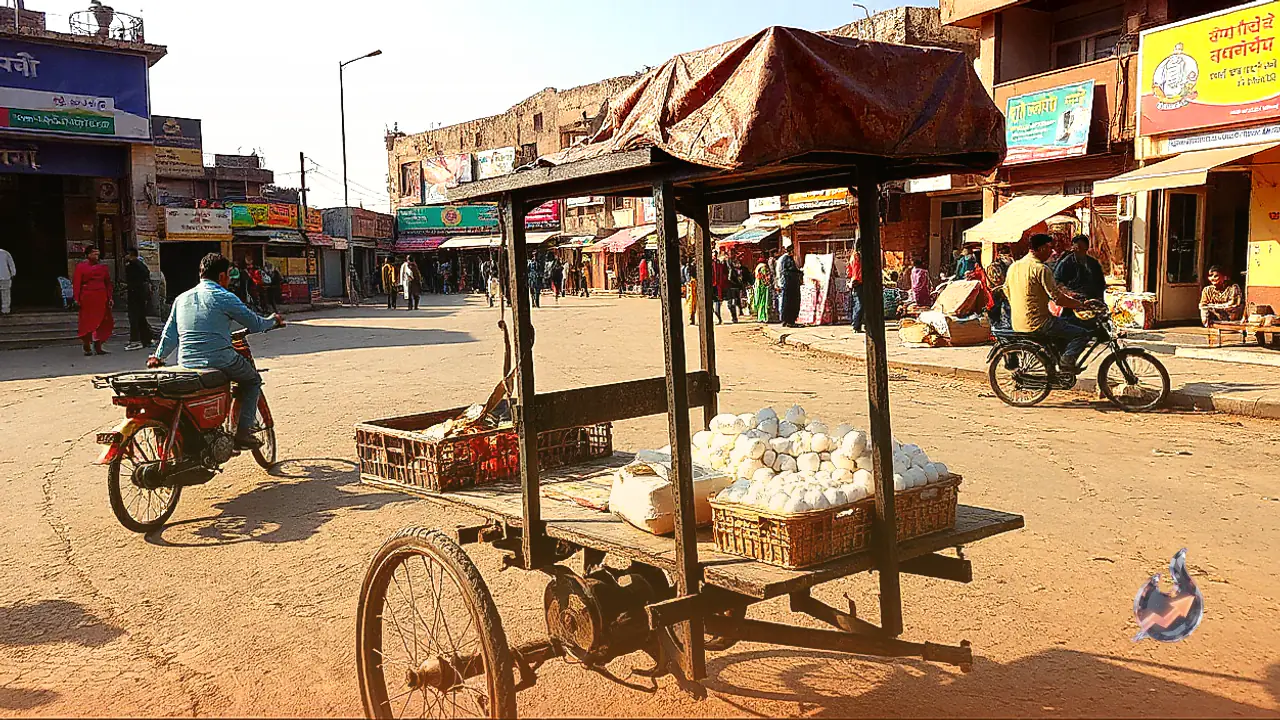
Work intensifies significantly around cultural occasions, particularly as the festival of Deepawali approaches. Munna is currently occupied with sculpting thousands of earthen diyas. While forming a single diya on the wheel takes roughly two to three minutes, managing the overall volume requires sustained manual stamina. Munna bypasses intermediaries, personally traveling to local markets to display and sell his pottery. At present, he prices each handcrafted diya at approximately five rupees.
Sustaining a Household on Two Hundred to Four Hundred Rupees a Day
Despite growing up without formal education, Munna turned manual dexterity into a dependable means of living. A full day of shaping and tending to earthen pieces yields daily earnings ranging between 200 and 400 rupees. During peak festival weeks, elevated public interest in clay items offers hope for a healthier income margin. These modest earnings remain the sole financial pillar supporting his family, proving that traditional craftsmanship still provides meaningful survival.
Preserving Culinary Heritage Amid Modern Material Shifts
Reflecting on generational continuity, Munna notes that his forebears used clay vessels for both cooking and dairy processing, a custom he proudly continues. Despite modern markets being dominated by steel, aluminum, and plastics, specialized earthen cookware like dohnas and handis retains cultural prominence. Families still favor clay handis for slow-cooking traditional sweets like kheer, infusing milk and rice with an authentic earthy aroma. For Munna, clay pottery is not just a commercial product, but an irreplaceable cultural identity that endures through changing times.