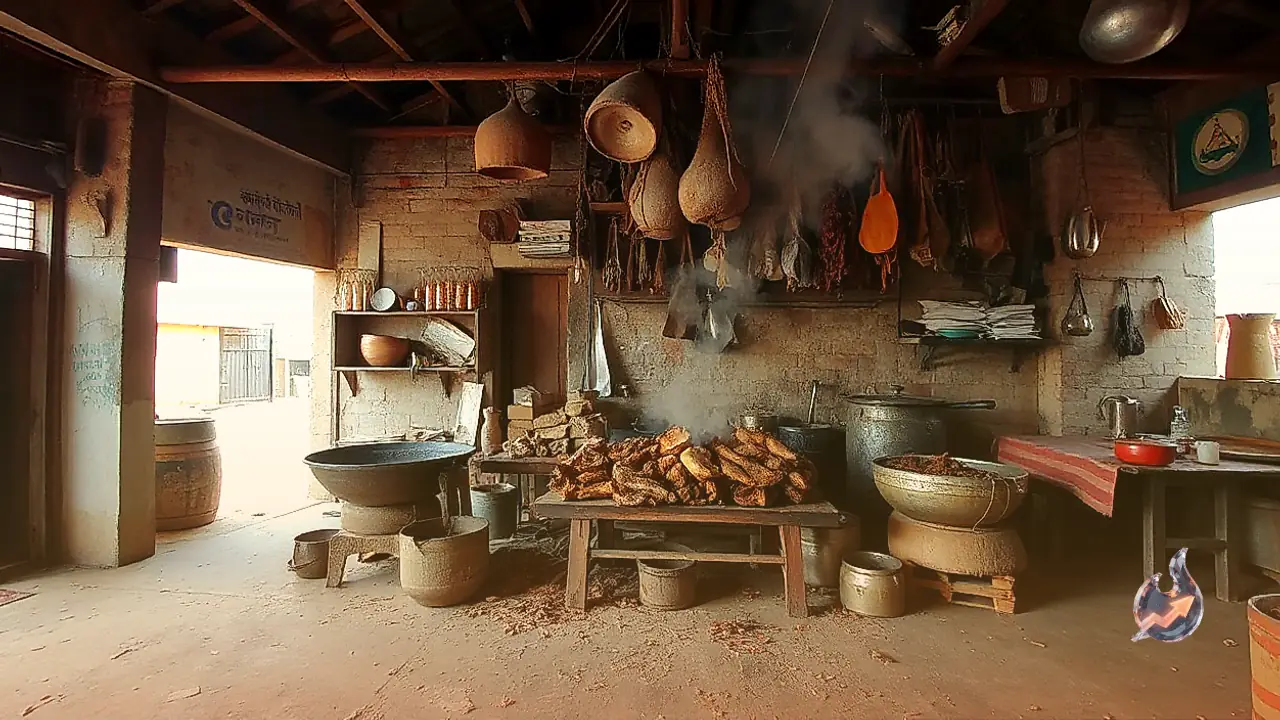

















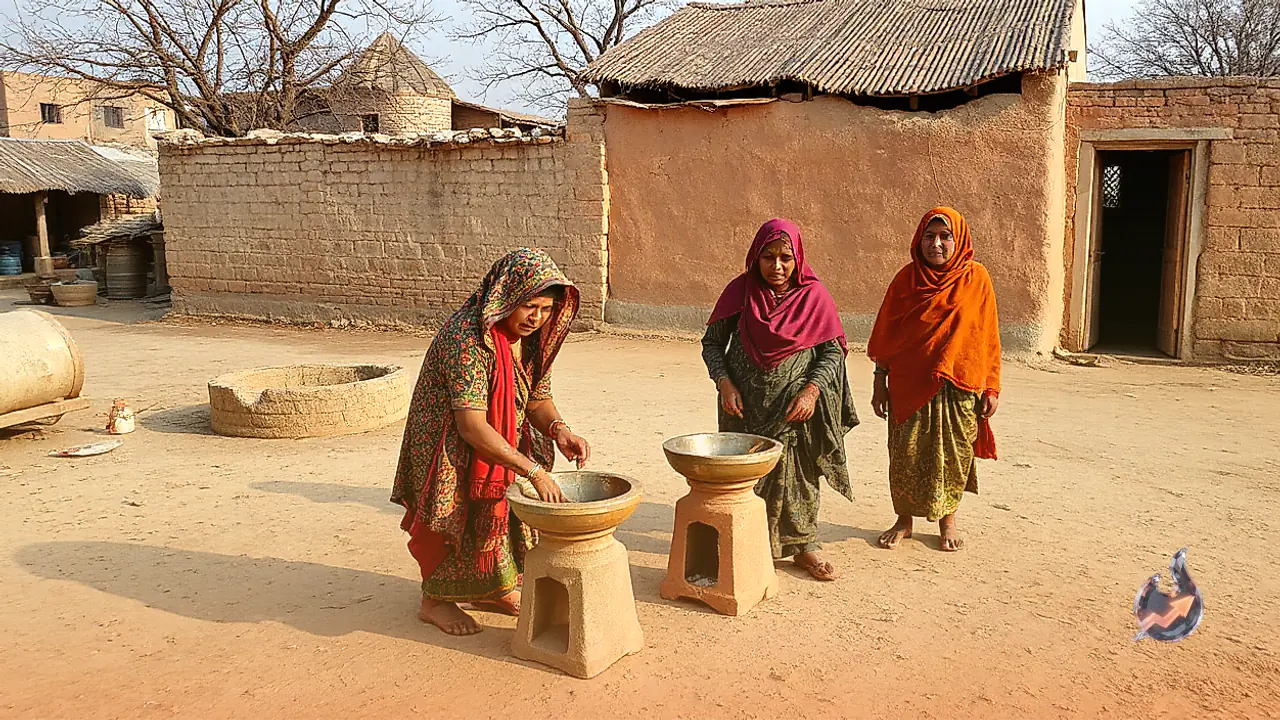

In the rural hamlets of Surguja district in Chhattisgarh, ancient culinary customs continue to anchor daily life and domestic routines. As the winter chill sets in, women residing in the Darima area gather to prepare a time-honored kitchen staple: traditional badis made from a blend of kohda, commonly known as pumpkin, and urad dal. Crafted entirely by hand without relying on modern kitchen mixers or electric grinding equipment, this sun-dried specialty forms an indispensable component of regional meals. Households throughout the area prepare a fresh vegetable curry using these savory nuggets every two to four days, drawn by their distinctive texture and rich homemade flavor. The primary factor behind this celebrated taste is the use of the traditional stone slab, or sheel, to crush the soaked lentils into a smooth, thick batter that machine processing simply cannot replicate.
Harvesting and Shreading the Pumpkin Fruit
The elaborate preparation begins straight from the soil, where mature kohda fruits growing across farm plots and domestic vegetable patches are carefully chosen and harvested. Elderly resident Pawaro explained that picking the ripe fruit is the foundational step in the entire process. Once carried home, the large pumpkin is halved with a sharp blade into two manageable sections. The women then use a specialized local scraping blade, locally termed a korni, to grate and shred the inner flesh. This scraping requires physical endurance and careful technique to achieve the fine, even texture necessary for the patties to bind properly. Only after the pumpkin flesh has been fully scraped down does the kitchen transition to preparing the binding pulse.
Manual Grinding on Stone and Shaping the Rounds
Alongside the processed pumpkin, whole black gram lentils are submerged in water to soak for several hours until properly tender. Once fully swollen, the wet urad dal is placed directly onto a traditional stone slab to be ground by hand with a heavy stone roller. Manual crushing retains the pulse's natural oils and yields a consistent, dense batter without excess liquid. Next, this freshly ground lentil batter is combined with the finely shredded kohda pulp and worked thoroughly until evenly distributed. Taking small portions of the combined mixture in their palms, the women shape them into neat, bite-sized spherical dumplings resembling tiny laddus. The entire preparation takes place inside rural courtyards using purely manual, age-old culinary techniques.
A Two-Day Process Yielding Two Distinct Varieties
According to Pawaro, producing these winter badis is an intensive, two-day artisanal undertaking rather than a quick afternoon chore. The initial day is spent exclusively on cutting the dense pumpkins and laboriously shredding the pulp with the korni scraper. The following morning is dedicated to soaking, stone-grinding the urad dal, and rolling the wet paste into individual nuggets before spreading them out to dry. An intriguing aspect of this rural kitchen craft is that it yields two entirely different varieties of badi. The white-toned variety is made primarily using the extracted seeds of the kohda fruit, whereas the dark-colored variety is specifically formulated and reserved for preparing spiced curries.
Surguja-Style Cooking Mirroring Everyday Potato Curry
Transforming these dried nuggets into a finished meal is remarkably straightforward and accessible. In village kitchens, the cooking method closely mirrors that of an everyday spiced potato curry. Prepared in the distinctive Surguja culinary style, the badis are simmered alongside a balanced blend of regional spices over a steady flame. When combined with village-ground seasonings and traditional tempered gravies, the badis absorb the aromatic juices, delivering a hearty, robust, and comforting dish that pairs effortlessly with plain boiled rice or flatbreads.
An Ancestral Flavor Passed Down Through Generations
Reflecting on her long association with this kitchen craft, Pawaro shared that her family has been preparing kohda badi continuously since her early childhood years. The craft, passed down through elder family matriarchs across generations, continues to be preserved by today's rural homemakers. While kohda badis can technically be rolled and dried at other points during the year, they hold a uniquely cherished place during the winter season. The cooler months bring an abundant harvest of mature pumpkin fruit across Chhattisgarh's countryside, making raw ingredients easy to source. In Pawaro's household, this savory heirloom preparation appears on the dinner plate every two days, providing enduring proof of the village's culinary resilience.