

















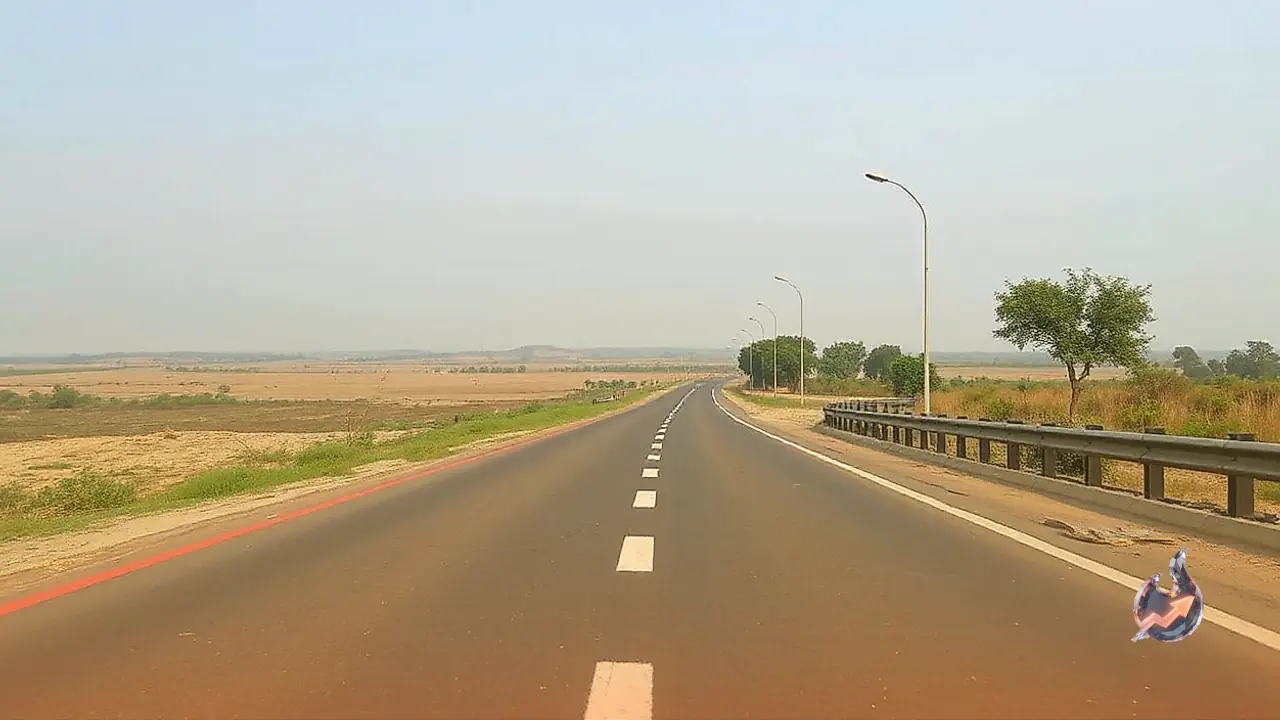

In an innovative effort to safeguard wild animals from fatal road accidents, a unique safety experiment has been implemented in the Kanha Tiger Reserve area situated near the border of Madhya Pradesh and Chhattisgarh. A rough red-colored layer has been paved onto a specific segment of the Raipur-Jabalpur National Highway-30, giving it the appearance of a red carpet. Officially termed table-top red marking, this design aims to alert motorists and force them to slow down their vehicles so that wildlife can roam safely.
National Highway Authority of India Project and Future Plans
The National Highway Authority of India has deployed this technology in its first phase within the Kanha Tiger Reserve zone, located roughly 12 kilometers past Chilphi in the Kabirdham district. Under this initiative, a special red marking has been applied across a four-kilometer stretch of the highway. Following this implementation, authorities are preparing to introduce the exact same technology along the sections of the highway that pass through the Bhoramdeo Sanctuary as well.
Vibrations and Sound Alerts for Drivers on the Road
The table-top red marking looks distinct compared to a standard roadway. Its surface is roughly five millimeters higher than the normal road level and has a rough texture. When any vehicle travels over this designated patch, the tires create a noticeable physical vibration. This movement signals to the driver that they have entered a sensitive wildlife zone, prompting them to reduce their vehicle speed and proceed with heightened caution.
In addition to the physical feedback, vehicles moving across this textured layer generate a distinct sound from their tires. It is anticipated that this sound will alert any nearby wild animals, and in situations where an animal suddenly steps onto the asphalt, the risk of a collision could be substantially minimized.
Previous Trials Conducted Within Madhya Pradesh
This particular method of table-top red marking was previously tested elsewhere in Madhya Pradesh. The initial trial took place within the Veerangana Durgavati Tiger Reserve, where a two-kilometer portion of National Highway 45 was paved with a similar layer. Building upon the observations from that earlier project, the technique has now been extended to the Kanha Tiger Reserve corridor.
Animal movements across busy transportation corridors remain a major challenge for conservation and road safety. Consequently, this specialized red pavement serves as an effective early warning system for vehicle operators. If motorists heed the design and slow down in time, it can help enhance safety for both the local wildlife and everyday travelers.