
China is set to reach a milestone in its space exploration efforts by welcoming a foreign national aboard its Tiangong space station for the first time. Pakistani astronaut Muhammad Zeeshan Ali will become the first foreign spacefarer to visit the facility as part of the upcoming Shenzhou-24 mission. The crew composition includes mission leader Tang Hongbo and first-time flyer Wu Yi alongside Zeeshan Ali. The spacecraft is scheduled to lift off on the morning of November 25 from the Jiuquan Satellite Launch Center located in northwestern China.
Scientific Mission and Bilateral Space Agreement
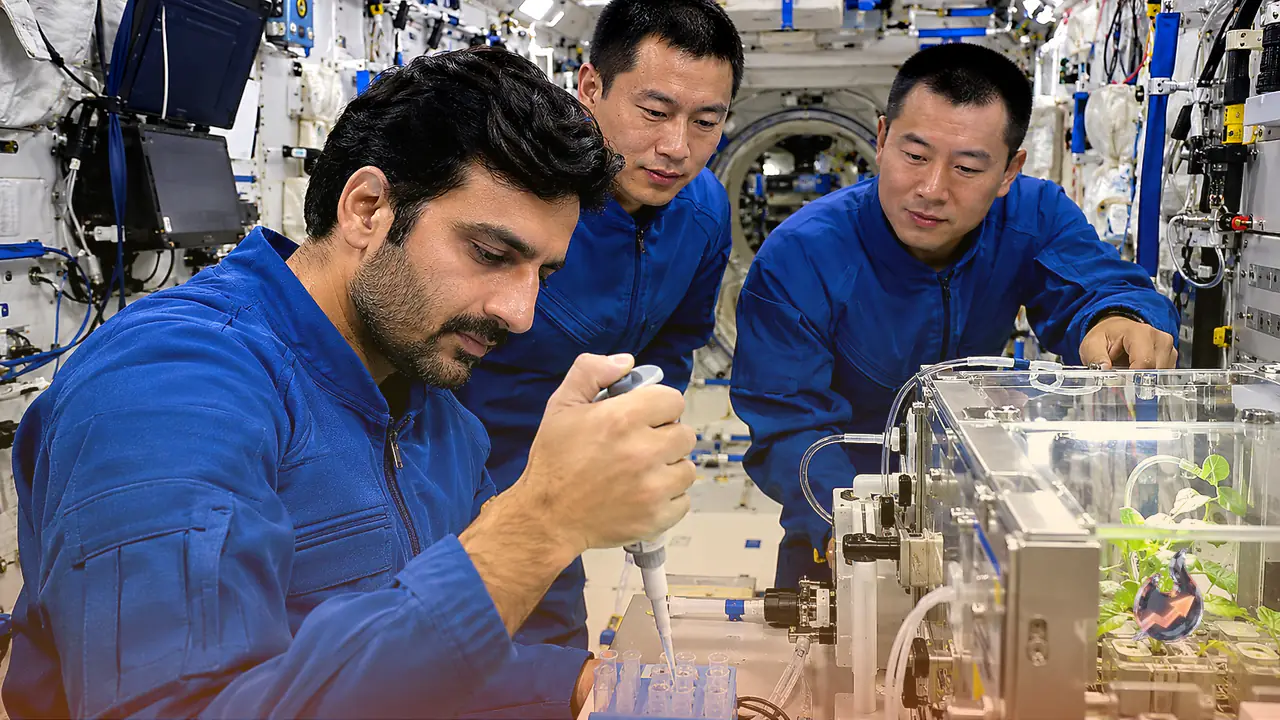
Muhammad Zeeshan Ali joins the mission as a payload specialist under a bilateral agreement established between China and Pakistan in February 2025. During his stay at the space station, he will manage routine daily operational tasks while carrying out specific scientific experiments. His work plan focuses on four primary research projects covering biotechnology and material sciences. Additionally, he will conduct specialized studies on photosynthetic microorganisms in space environment. Photosynthesis is the process through which plants and certain microbes generate nourishment using sunlight. After completing his designated scientific tasks, Zeeshan Ali will return to Earth aboard the Shenzhou-23 spacecraft.
Crew Achievements and Historic Milestones
The Shenzhou-24 mission also marks significant personal milestones for the Chinese members of the crew. Tang Hongbo, who has previously completed two spaceflights, will establish a new record by becoming the first astronaut to travel to the Tiangong space station three separate times. Meanwhile, astronaut Wu Yi is embarking on his maiden space journey. This collaborative mission represents the first time in China's spaceflight history that Chinese crew members are venturing into orbit alongside an astronaut from another nation, establishing an operational model for international participation in the Chinese space program.
Expanding Lunar Ambitions and Space Competition
By opening its space station to international partners, China is broadening the scope of global participation in its orbital infrastructure. At the same time, the country is advancing its long-term space exploration strategy, which includes a target to land human astronauts on the surface of the Moon by the year 2030. In this high-stakes arena of space technology and lunar exploration, the United States remains China's primary geopolitical rival, driving rapid developments in orbital facilities, scientific research, and deep space capabilities.