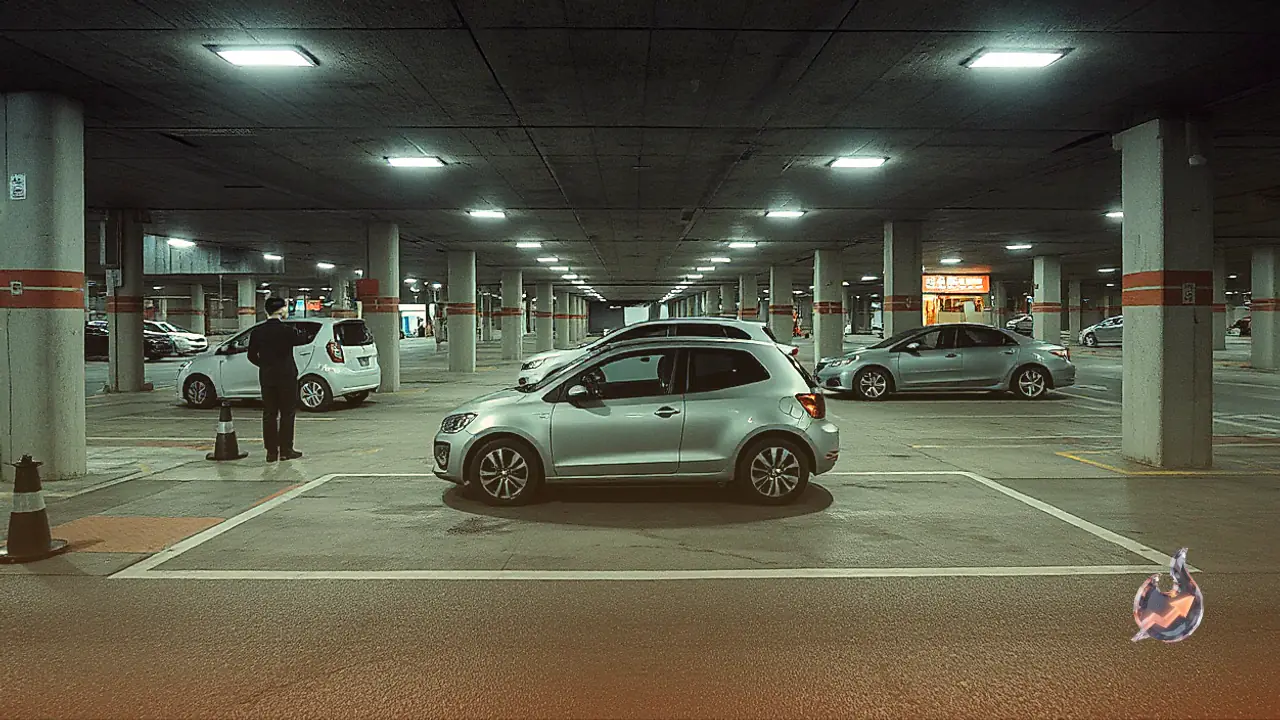

It was around three in the morning when a security guard stationed in a basement garage in Anhui province, China, heard strange and unexpected noises echoing through the space. Armed with a flashlight to investigate the disturbance, he discovered a car moving back and forth entirely on its own, with no driver behind the wheel. The vehicle was repeatedly struggling to adjust itself properly into a parking slot. CCTV footage capturing this bizarre display of technology has since gone viral across social media platforms. As the adoption of driverless vehicles accelerates rapidly across China alongside aggressive government backing for robotics and automation, unsettling incidents like this naturally spark valid concerns.
An All-Night Parking Marathon
The surveillance footage clearly shows the automobile continuously repeating its parking maneuvers inside the enclosed garage. When the owner reviewed the system logs later, they discovered that the automatic parking feature had activated a staggering 868 times throughout the course of the night. After hours of endless repositioning, the car finally managed to settle next to another vehicle. Such occurrences highlight how automated systems can occasionally become trapped in endless loops when handling complex or confined spatial environments.
Potential Causes Behind the Glitch
According to technical experts, three primary factors could explain this unusual behavior. First, the owners might have remotely moved the car out using a mobile application and attempted to park it again. Second, poor lighting conditions inside the basement, faded parking guidelines, or extremely cramped spaces may have caused the vehicle's onboard sensors to repeatedly miscalculate the correct coordinates. Third, it could stem from an unforeseen software glitch, though definitive confirmation would require a thorough inspection of the vehicle's internal log data.
Assistance Versus Full Autonomy
Manufacturer guidelines explicitly state that such systems function strictly as driver assistance tools, meaning human attentiveness remains essential at all times. Under national standards in China, the speed of vehicles utilizing automated parking features is restricted to a maximum of 30 kilometers per hour. While watching driverless cars perform an automated midnight dance might seem amusing at first glance, it serves as a stark reminder of how far remote control technology has permeated everyday spaces and how heavily people have begun depending on it without adequate caution.