



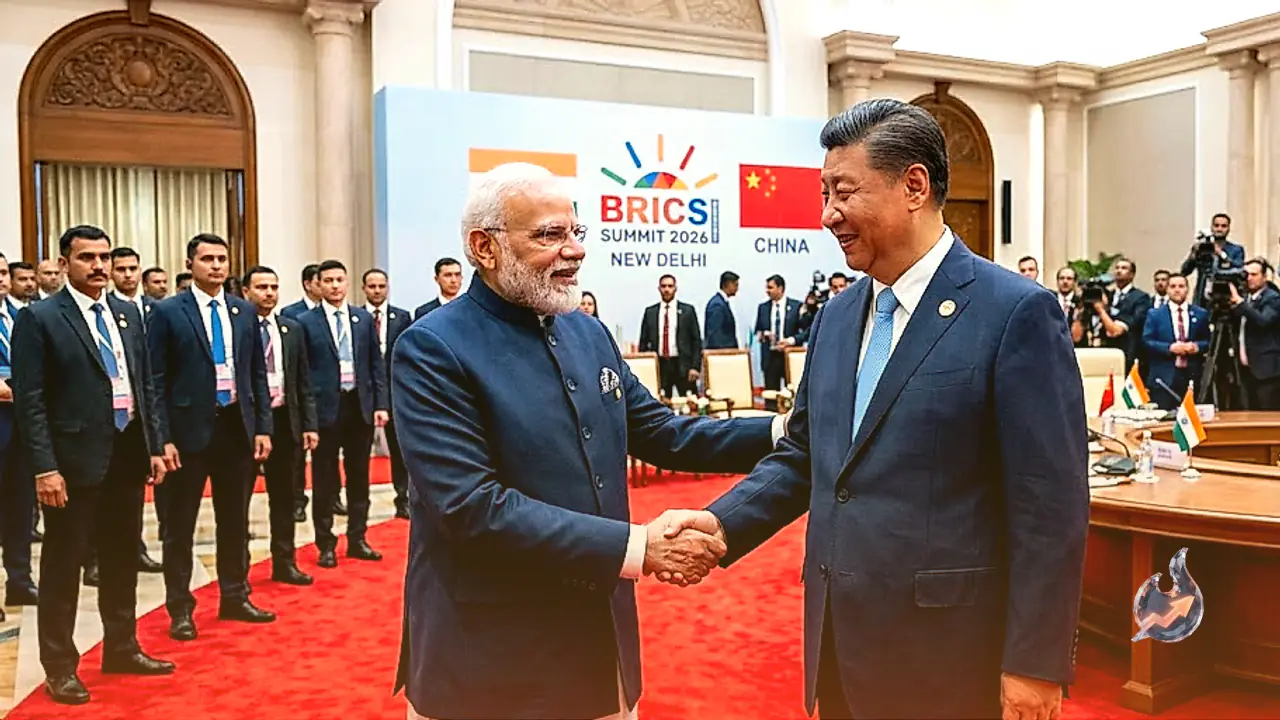















A highly significant and historic diplomatic moment unfolded at the BRICS Summit 2026 held in New Delhi, capturing the attention of global observers. Following the conclusion of a crucial closed-door meeting of the BRICS member nations, Indian Prime Minister Narendra Modi and Chinese President Xi Jinping demonstrated a remarkable degree of warmth and bonding. As they exited the private session, the two leaders were seen shaking hands, holding onto each other's hands, smiling broadly, and engaging in an animated, friendly conversation. This visual of deep camaraderie was captured live by cameras and has sparked widespread speculation that the confidential deliberations inside the meeting room were highly successful and productive, leading to this visible post-meeting happiness between the leaders of the two Asian giants.
Warm Interaction Between Prime Minister Modi and President Xi Captured on Camera
Footage from the event on September 12, 2026, shows Prime Minister Narendra Modi and President Xi Jinping coming face-to-face immediately after the closed-door session concluded. The two leaders immediately engaged in a warm conversation, holding each other's hands for an extended period with wide smiles on their faces. They appeared exceptionally relaxed, sharing lighthearted moments and laughing together multiple times. Around them, delegates, diplomats, and high-ranking officials from other BRICS member nations watched the interaction with keen interest and curiosity. In the subtle language of international diplomacy, such expressive and positive body language between the top leaders of rival nations signals a thawing of relations and suggests that the prolonged bilateral tensions that have characterized their border relations in recent years are gradually easing through persistent diplomatic channels.
What Transpired Inside the Confidential BRICS Meeting?
Closed-door sessions at BRICS summits are historically known for being highly confidential, sensitive, and strategically vital. Free from media presence, television cameras, and public scrutiny, these meetings allow heads of state to voice their opinions and national concerns with complete candor. During this specific session in New Delhi, the leaders focused on critical global challenges, including the state of the global economy, promoting bilateral trade using local currencies to bypass traditional financial systems, reinforcing global supply chains against future disruptions, and addressing sensitive regional and global security matters. Analysts believe that this unrestrained, frank dialogue behind closed doors allowed both India and China to better appreciate each other's strategic perspectives. This mutual understanding likely paved the way for the remarkably cordial and cooperative attitude displayed by both leaders once they emerged from the conference room.
Why the United States and Western Nations are Watching Closely
As the world's two most populous nations and fastest-growing major economies, any sign of rapprochement or warm diplomatic ties between India and China inevitably causes ripples across Western capitals, particularly in Washington and Brussels. Western media outlets and geopolitical strategists are analyzing this interaction under a microscope. The primary concern for Western policymakers is that a substantial improvement in economic and strategic relations between New Delhi and Beijing could lead to the creation of a massive, consolidated power center in Asia. Such a coalition would possess the combined economic and geopolitical weight to directly challenge the historical dominance of the US dollar in international trade and undermine the unilateral foreign policies and global governance models traditionally dictated by Western nations.
A New Chapter in Bilateral Relations Amidst Border Tensions
The relationship between the two neighboring giants has been severely strained over the last few years due to military standoffs and diplomatic friction along their shared border. Despite these challenges, persistent diplomatic and military-level talks have been ongoing to resolve the disputes. Multilateral platforms like the BRICS Summit provide a unique and invaluable avenue for the top leadership of both countries to engage directly and informally without the rigid constraints of bilateral summits. Prime Minister Narendra Modi's independent and pragmatic foreign policy, which prioritizes India's national sovereignty and strategic interests above all, has successfully positioned the nation as a formidable global mediator. This warm interaction in New Delhi could potentially mark the beginning of a stable, cooperative, and peaceful new chapter in India-China bilateral relations.