






















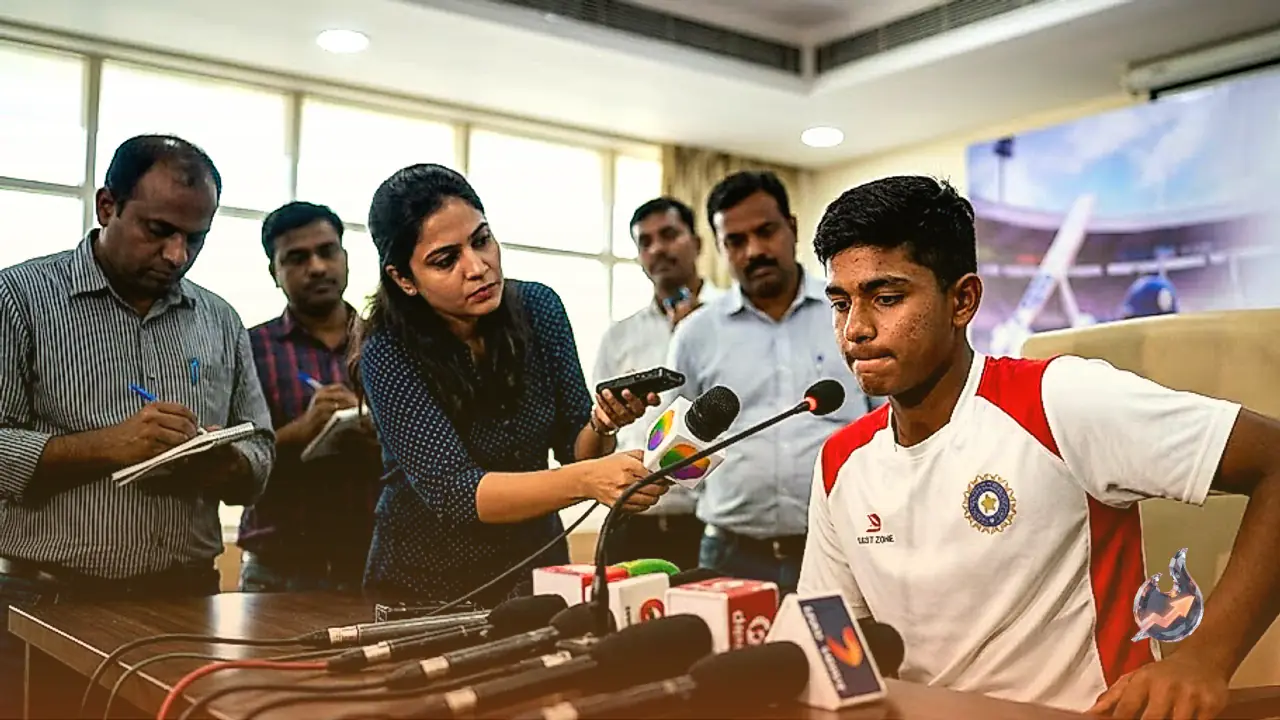

In the landscape of Indian domestic cricket, whenever an exceptional young talent achieves a major breakthrough, an intense debate naturally arises regarding the timing, magnitude, and nature of the responsibilities that should be assigned to them. Recently, the official selection committee for the East Zone Duleep Trophy squad announced its team roster, appointing 15 year old batting prodigy Vaibhav Sooryavanshi from Bihar as the vice captain. Shortly after this selection was made public, former Gujarat captain Priyank Panchal shared his perspective on social media, suggesting that the selectors should have refrained from designating the youngster as vice captain. Panchal argued that adding such a leadership title could impose unnecessary mental pressure on the teenager, emphasizing that he should first be given time to comprehend the intricacies and demands of red ball first class cricket.
Former Gujarat Captain's Social Media Stance and Concerns Raised
Priyank Panchal's public observations have initiated a broader dialogue among cricket experts and analysts. The central question emerging from this discussion is whether Panchal's advice represents a protective counsel intended for Vaibhav Sooryavanshi's long term growth, or if it reflects a rigid, traditional mindset hesitant to adapt to the evolving realities of contemporary cricket. A review of cricket history demonstrates that athletic greatness and leadership potential have never been strictly tied to age or decades of domestic experience. When Sachin Tendulkar made his international debut at the age of 16 against a formidable Pakistani bowling lineup featuring Wasim Akram and Waqar Younis, several experts expressed reservations about introducing such a young player to the highest level so quickly. However, Tendulkar silenced those doubts through his extraordinary performance on the field.
Vaibhav Sooryavanshi's Rise and Modern Aggressive Cricket
Vaibhav Sooryavanshi is not merely a 15 year old cricketer; he embodies the modern, fearless, and aggressive approach that has become the defining characteristic of contemporary Indian cricket. Despite his young age, the composure, technical proficiency, and assertive strokeplay he has displayed against seasoned opposition prove that his tactical understanding and confidence match those of mature cricketers. When the East Zone selection panel expressed faith in his natural talent and leadership capabilities by assigning him the role of vice captain, publicly questioning that choice comes across as doubting both the vision of the selectors and the innate competence of the player.
Traditional Domestic Record Versus Out-of-the-Box Thinking
Examining Priyank Panchal's own career highlights his stature as a respected figure in Gujarat domestic cricket. He accumulated thousands of runs across numerous seasons in the domestic circuit and served as Gujarat's captain for an extended period. Nevertheless, despite his prolific run scoring at the domestic level, Panchal never earned a cap for the Indian national team. His approach to the game largely remained aligned with conventional, risk-averse methodologies. Consequently, when a player whose career was characterized by traditional boundaries questions the leadership role of a teenager known for playing dynamic, modern cricket, it highlights a contrast in cricketing philosophies. Panchal's reaction seems to reflect a difficulty in aligning with the accelerated pace and changing dynamics of modern cricket.
Does Vice-Captaincy Create Pressure or Build Confidence?
The core premise of Priyank Panchal's argument centers on the idea that holding the vice captaincy will subject Vaibhav to undue pressure. However, modern sports psychology suggests that young athletes of the current generation do not retreat from high pressure environments; rather, they tend to elevate their performance when entrusted with meaningful responsibility. Being named vice captain sends a clear signal to a player that the system holds immense confidence in their abilities. When selectors appoint a 15 year old to a leadership group, they are not merely conferring a designation; they are establishing that the player is an integral pillar of the team's strategic future. This responsibility accelerates psychological maturity and aids in developing decision making skills under match conditions.
Learning Red-Ball Nuances Through Direct Field Engagement
Isolating Vaibhav Sooryavanshi from leadership roles is not an effective method for teaching him the nuances of red ball cricket. Tactical understanding is best developed directly on the field while actively participating in the decision making process. Collaborating with the captain in dressing room strategy sessions and navigating complex match situations will enhance his development rather than impede it. The decision by East Zone selectors to include Vaibhav in the core leadership team is seen as a forward-looking step. For a considerable duration, East Zone domestic cricket faced a narrative regarding a scarcity of proactive, aggressive young leaders. Appointing a talent like Vaibhav represents a strategic move for the region's cricketing prospects. Senior players and former captains must recognize that cricket is no longer governed by the slower timelines of past decades, and when a 15 year old possesses leadership intellect, providing an early platform is a progressive choice.