























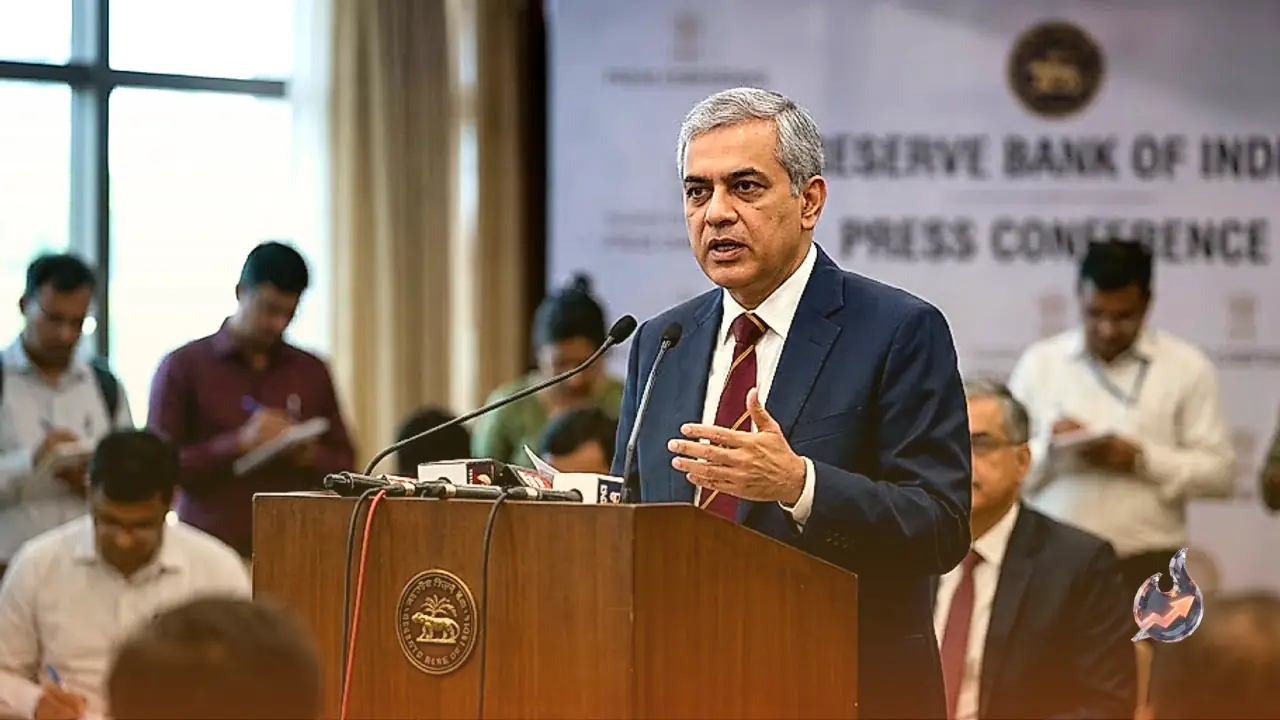

As public participation in digital assets continues to climb, the Reserve Bank of India has reiterated its vigilant position regarding the potential pitfalls of private cryptocurrencies. On Saturday, RBI Governor Sanjay Malhotra underscored that India is maintaining a cautious stance toward cryptocurrencies while actively encouraging foundational advancements such as distributed ledger technology and tokenization systems. The central bank firmly backs technological progress, yet critical considerations surrounding national sovereignty, the effectiveness of monetary policy, and cross-border capital flows necessitate strict caution when dealing with unregulated crypto assets.
Embracing Core Technology While Guarding Financial Stability
The central bank distinguishes between the speculative nature of private digital tokens and the systemic value of their underlying architectures. Distributed ledger technology operates as a decentralized digital mechanism where transaction records and data, rather than resting in a single repository, are shared across a coordinated network of independent computers. Alongside this, tokenization acts as a robust security process that converts real-world asset ownership or sensitive financial data, such as credit and debit card credentials, into protected digital tokens. Sanjay Malhotra stated that the approach focuses on promoting foundational technologies, noting that the central bank is applying some of these internally as well as externally under public-private partnerships.
The Core Dilemma Around Monetary Policy and Uniformity of Currency
Elaborating on the primary reasons behind this vigilant outlook, the RBI Governor pointed to the uniformity of currency, representing the single, consistent value of money, and the potential disruption cryptocurrencies could cause to monetary policy. Unchecked digital tokens can undermine a central bank's ability to steer interest rates, liquidity, and economic stability. This risk is especially pronounced in emerging market economies that operate with necessary restrictions on foreign capital flows, where rapid, unregulated capital flights could compromise domestic macroeconomic resilience.
Cross-Border Payments Stand Out as the Real Operational Challenge
Addressing payment systems, Governor Malhotra observed that domestic transactions no longer present an unresolved operational dilemma. In India and multiple other jurisdictions, domestic settlements have already become exceptionally fast, economical, and seamless. Instead, the substantial friction lies in cross-border settlements across jurisdictions. To resolve international payment bottlenecks without compromising legal structures, alternative frameworks are being evaluated, prominent among which is Central Bank Digital Currency along with other sovereign digital mechanisms.
Mounting Sovereign Debt, Rising Bond Yields, and Balancing Inflation
Commenting on worldwide debt pressures and elevated bond yields, Sanjay Malhotra explained that yield movements fundamentally track supply and demand dynamics. Both government administrations and private enterprises are increasing their spending, notably driven by heavy capital investments in emerging technologies like AI. Because capital remains finite while overall outlays have surged, both sovereigns and private firms have turned heavily to borrowing, driving up aggregate debt levels and yields. On domestic monetary management, the Governor noted that while policy centers on domestic economic expansion and price stability, international interest rate trajectories inevitably influence real interest rates in India. Accelerating inflation exerts upward pressure on lending rates and borrowing costs, making the continuous calibration between inflation containment and interest rates a primary challenge.