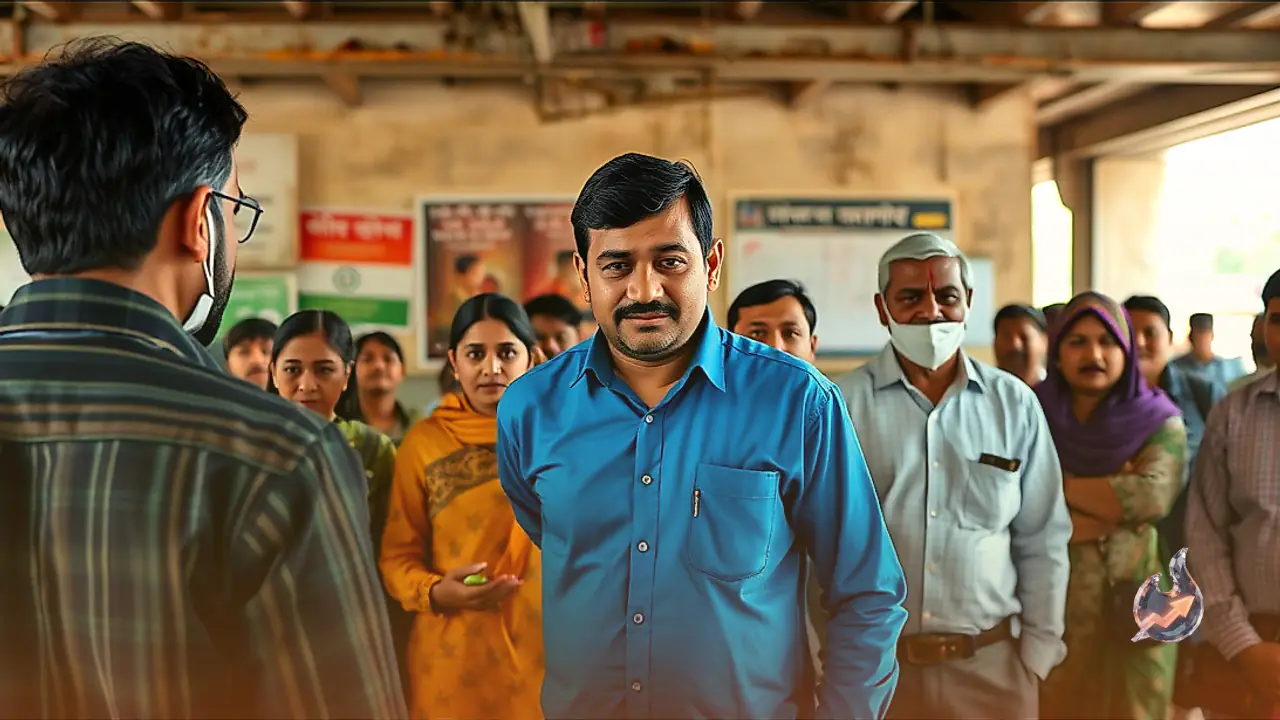















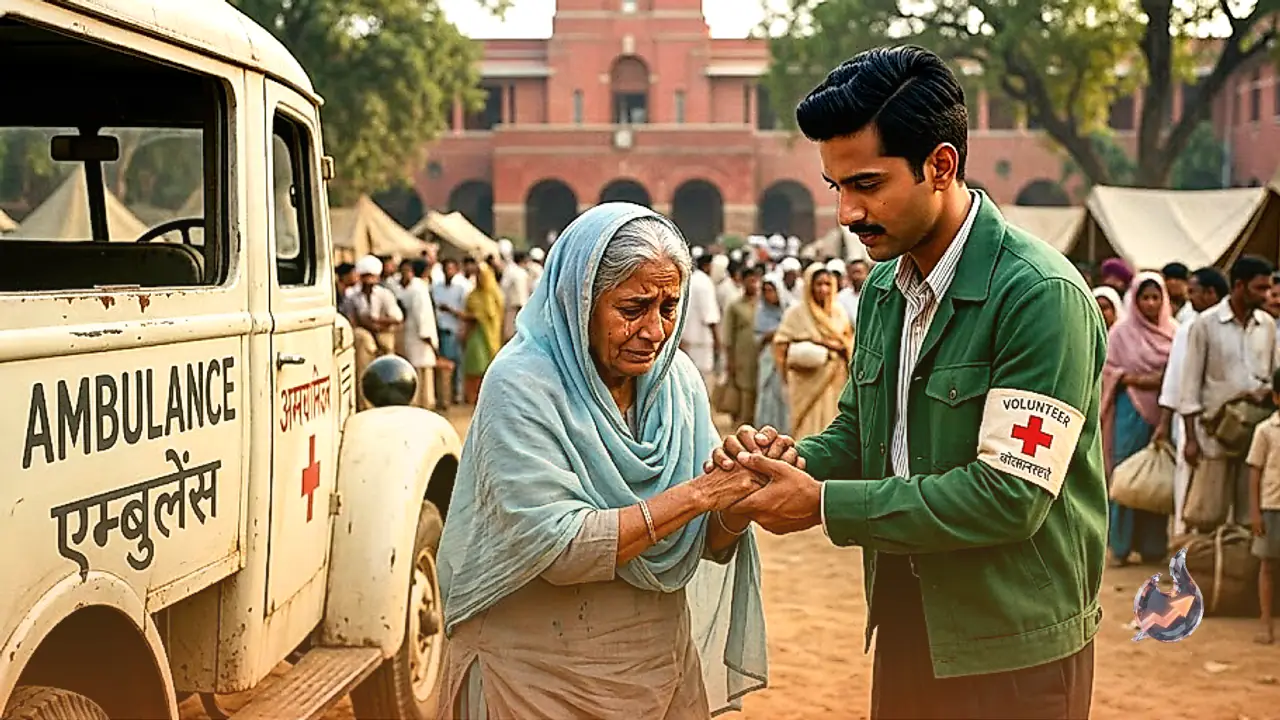

When India underwent Partition in August 1947, actor Manoj Kumar's family was among the hundreds of thousands of displaced refugees who crossed the newly drawn border into Delhi. Upon arriving in the capital, his younger brother fell critically ill. In that grueling hour of distress, the child received medical care at St. Stephen's Hospital, while the rest of the family found temporary shelter alongside hundreds of other refugees at the Delhi Brotherhood House campus in Civil Lines. Manoj Kumar retained a lifelong sense of deep gratitude toward both institutions. Brother Solomon George, the in-charge of the Delhi Brotherhood Society, shared that Manoj Kumar held the organization in high esteem until the end of his life.
Chaos and Demographic Shift in Partition-Era Delhi
In August 1947, the situation in Delhi had reached a alarming crisis point. While violent communal riots engulfed broad swathes of the city, a massive influx of Hindu and Sikh refugees poured in from across the border. At that time, Delhi housed a total population of approximately 9 lakh residents. As the tragedy unfolded, around 3 lakh Muslim residents departed from Delhi for Pakistan, while nearly 5 lakh Hindu and Sikh refugees arrived from western territories to rebuild their lives in the capital. The scenes at the Old Delhi Railway Station were harrowing, as trains arrived carrying bloodied, severely injured, and deeply traumatized passengers. The station platforms were overwhelmed with cries for help, grief over lost family members, and utter uncertainty about the future.
The Relief Crusade of Delhi Brotherhood Society and Cambridge Mission
Faced with overwhelming challenges, government agencies were bolstered by numerous voluntary organizations that stepped onto the front lines of relief operations. A prominent entity among them was the Delhi Brotherhood Society (DBS), whose roots traced back to the establishment of the Cambridge Mission in the capital in 1877. It was this mission that laid the foundations for St. Stephen's College in 1881 and St. Stephen's Hospital in 1885. During the peak of Partition violence, courageous DBS volunteers stationed themselves directly at the Old Delhi Railway Station, rescuing injured passengers from incoming trains and transporting them swiftly to medical facilities. At the hospital, dedicated doctors such as Dr. Ruth Roseveare worked round the clock performing life-saving surgeries and emergency care.
Simultaneously, the Brotherhood House campus in Civil Lines was converted into a refuge center under the supervision of Father Weatherall. Setting aside all distinctions of caste, creed, and religion, the volunteers provided clean drinking water, food, medicine, shade, and physical security to the displaced masses. Working tirelessly day and night, these volunteers transformed St. Stephen's Hospital and College into living sanctuaries of humanitarian relief during one of history's darkest hours.
Community Solidarity: Sanatan Dharma, Arya Samaj, and Sikh Organizations
The relief response extended far beyond missionary groups, as diverse social and religious organizations mobilized resources across Delhi. Volunteers from the Sanatan Dharma and Arya Samaj networks took responsibility for escorting arriving refugees safely to secure locations, organizing temporary relief camps, and managing food distribution channels throughout the city.
The Sikh community demonstrated immense institutional leadership during the crisis. Under the guidance of Jathedar Santokh Singh, the Sikh Gurdwara Prabandhak Committees alongside various Sikh social bodies organized community kitchens (langars), established mobile medical units, and provided armed security patrols for refugee camps. Volunteers maintained vigilant watch from railway stations to residential shelters. Crucially, these self-reliant community efforts paved the way for permanent social infrastructure in post-independence Delhi, leading directly to the founding of educational institutions such as Mata Sundri College and Harkishan Public School.
Medical Pioneers, Women's Committees, and Dr. N.C. Joshi's Martyrdom
Essential health care and pharmaceutical supplies were systematically channeled through the Red Cross. Meanwhile, the United Council for Relief and Welfare, chaired by Lady Mountbatten, acted as a central coordinating body for multiple non-governmental organizations, ensuring that emergency supplies reached vulnerable camps without duplication or delay.
Women's organizations played a decisive role on the ground. Relief committees under the Indian National Congress, Kasturba workers, and the Delhi branch of the All India Women's Conference took charge of child welfare, meal preparation, and clothing distribution across relief camps. In Karol Bagh, prominent physician Dr. N.C. Joshi braved riot-torn streets to treat victims of violence. Tragically, Dr. Joshi was killed by rioters while rendering medical aid. In honor of his sacrifice, the Dr. N.C. Joshi Hospital continues to serve the public on Joshi Road in Karol Bagh today.
18-Hour Hospital Shifts and the Legacy of Dr. Sushila Nayyar
Delhi's major medical facilities faced unprecedented pressure during the crisis. Medical staff at Irwin Hospital (now known as Lok Nayak Hospital) and Lady Hardinge Hospital worked continuously to save riot victims. Dr. K.J. McDermott, Principal of Lady Hardinge Medical College, together with her colleague Dr. O.P. Bali, personally attended to patients for 18 grueling hours every single day.
Dr. Sushila Nayyar, Mahatma Gandhi's personal physician, remained stationed among refugees and wounded citizens throughout the unrest. She accompanied Gandhi Ji through riot-affected neighborhoods to deliver peace appeals and calm tensions. Following independence, Dr. Sushila Nayyar served as Delhi's first Health Minister, playing a pivotal role in establishing the capital's public healthcare framework.
An Enduring Legacy of Unconditional Humanity
The 1947 Partition left deep physical, economic, and emotional scars on Delhi, uprooting hundreds of thousands of lives and claiming thousands of innocent victims. Yet amid that profound darkness, the light kindled by volunteers, medical professionals, and civic groups demonstrated the strength of human empathy.
Without political motives or religious bias, those who tended to the wounded embodied true public service. From transporting casualties from railway stations to running community kitchens and quelling rumors, their tireless labor saved countless lives. Generations later, elderly residents who survived that era still recall the selfless individuals who acted as guardians during Delhi's most fragile moment. Today, institutions like Brotherhood House and St. Stephen's Hospital stand as living monuments to an era when humanity rose above division to protect human life.