





















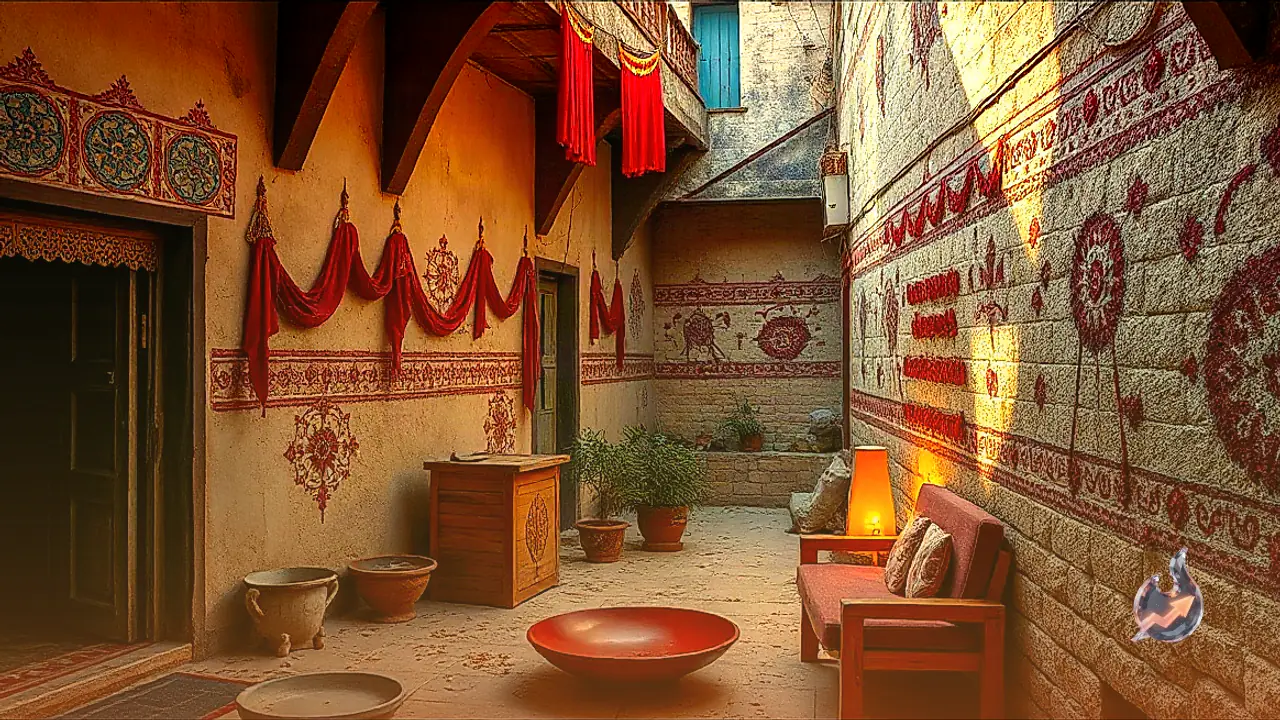

In the historic Mewar region of Rajasthan, cultural traditions and seasonal observances extend far beyond formal religious rituals, embedding themselves deeply into everyday household life and folk expression. A prominent reflection of this connection is seen during the fortnight of Shraddh through the custom of making Sanjhi. Throughout these days, women and daughters in the family prepare elaborate decorative murals on house walls and courtyard grounds using cow dung, enhancing them with an assortment of natural shades and organic materials.
Crafting the Base and Shaping Sacred Motifs
The creation of Sanjhi begins by laying down a solid foundation directly upon the wall surface or the earthen courtyard floor. A smooth base of fresh cow dung is applied first to create an even canvas. Once this foundation is ready, women begin molding and sketching diverse artistic motifs with their hands. These patterns reflect an intimate reverence for nature and traditional spirituality. In many dwellings, delicate foliage, floral layouts, and leafy vine patterns take shape, while in others, figures of revered deities and auspicious heritage symbols are carefully crafted.
To embellish these motifs, creators rely entirely on easily accessible local resources. Fresh blossoms, tender green leaves, natural grains of various textures, and locally sourced earthy pigments are carefully set into the moist outlines. This completely organic approach ensures that the decorative art remains fully harmonious with the surrounding natural environment.
Fostering Domestic Unity Through Collective Craft and Folk Songs
A defining hallmark of this Mewari custom is its absolute independence from commercial shopping. There is no requirement to bring expensive decorations or artificial paints from the market. Ordinary, unpretentious materials readily found inside rural homes provide everything needed to bestow grace upon the artwork. This self-contained simplicity explains why the practice retains its distinctive presence in villages and ancestral family residences even now.
Historically, crafting Sanjhi formed a regular evening routine that brought different generations together. As dusk fell, women and youngsters in the household would sit alongside one another to construct the designs collaboratively. They accompanied their labor by singing regional folk melodies passed down across generations. In doing so, Sanjhi evolved into far more than an ornamental practice, serving as a vital social anchor that cemented family solidarity and shared happiness.
Sustaining Traditional Values Amid Modern Home Decor Trends
At a time when contemporary domestic aesthetics are dominated by store-bought, synthetic furnishings and industrially produced items, continuing the practice of handcrafting Sanjhi from cow dung represents a meaningful defense of Mewar's living heritage. In several areas, young people are actively observing their elders to learn the technical steps and symbolic meanings behind these seasonal creations.
This enduring folk tradition offers a timely reminder that authentic cultural beauty does not depend on financial extravagance. Instead, it flourishes through soil, organic matter, seasonal blossoms, and the warmth of family cooperation that continues to sustain indigenous customs across centuries.