




















No bhajan-kirtan, qawwali or classical music gathering feels complete without the sound of a harmonium. Many assume the instrument runs on some modern electronic mechanism, but in reality it is built from wood, rubber and metal reeds, shaped entirely by a craftsman's hands. In Rosra bazar of Samastipur district, that old-school craftsmanship is still very much alive, with harmoniums being made the traditional way even today.
A skill passed down through generations
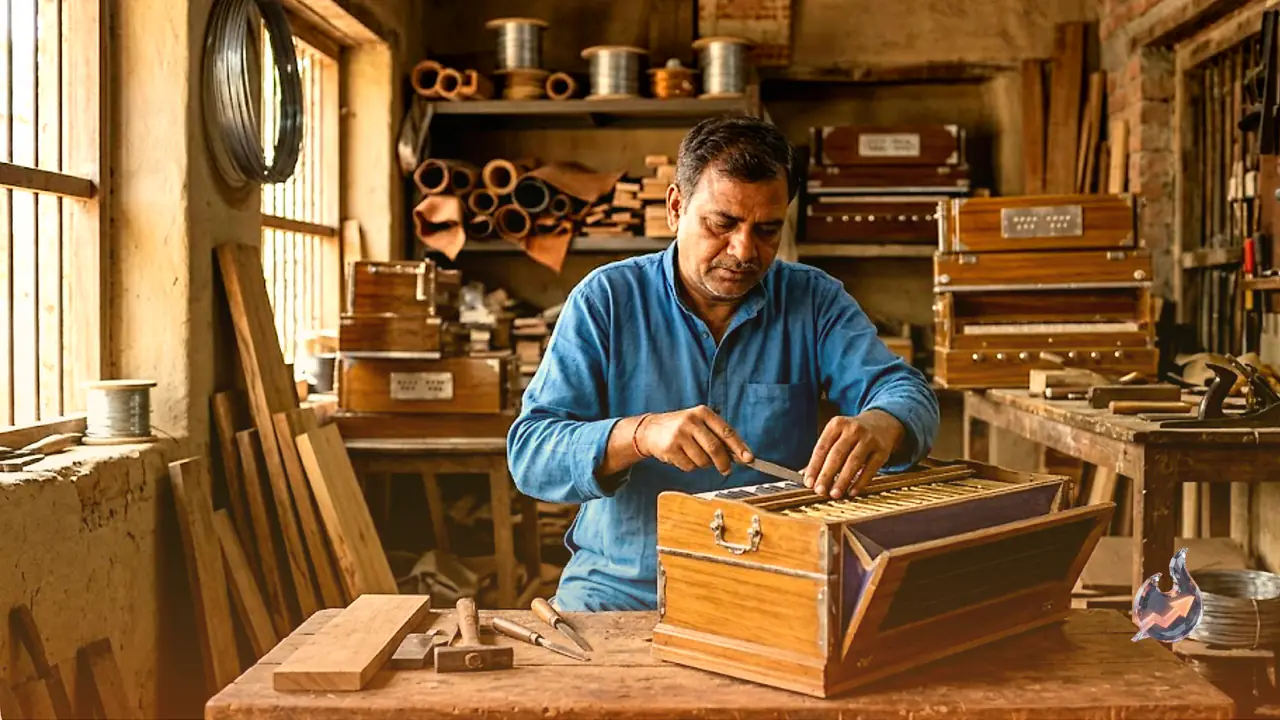
Dinesh Kumar Sharma, a resident of Rosra bazar, has been making harmoniums for several years now. For him, it is not just a livelihood but a family legacy. His grandfather used to do this work earlier, and Dinesh has now taken on that same responsibility. His small shop has become his real identity, a place where he not only builds new harmoniums but also repairs old, damaged ones.
Teak wood and the labour of skilled hands
Dinesh uses teak wood, known locally as sagwan, to build his harmoniums, while the reeds have to be bought from the market. The rest of the process, shaping the wood, assembling the structure and tuning the instrument, comes down entirely to his own experience and the precision of his hands. Every step demands close attention to detail, since even a small error can throw off the harmonium's sound.
Customers from across Bihar to Delhi
According to Dinesh, demand for his handcrafted harmoniums is not limited to Samastipur or its surrounding areas. Buyers come to him from districts like Buxar and Saharsa in Bihar, and even from as far as Delhi. The harmoniums made at his shop start at around Rs 8,000 and go up to Rs 15,000. Years of experience and the quality of his craftsmanship keep customers travelling long distances, actively seeking him out in Rosra.
A traditional craft that survives the age of machines
Dinesh says that even in an era when almost everything is machine made, this traditional handcraft has managed to stay alive, and that, he believes, is his biggest identity. Music lovers and connoisseurs hold this skill in high regard, which is why customers keep finding their way to his small shop.