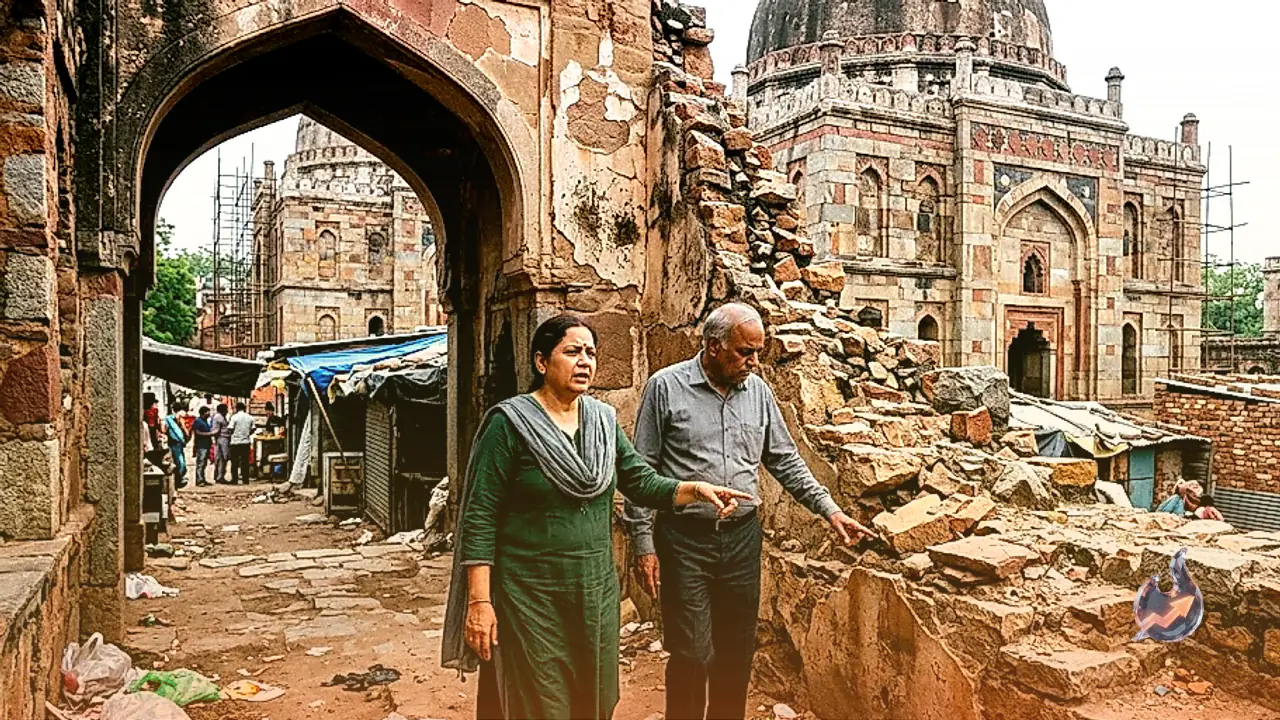

























In a significant legal development regarding unauthorized settlements in the national capital, the Delhi High Court has granted six weeks to the residents of three slum clusters situated near the Prime Minister's residence on Lok Kalyan Marg to clear the land and relocate. A division bench comprising Chief Justice D.K. Upadhyay and Justice Tejas Kariya delivered the judgment while hearing appeals concerning Bhai Ram Camp, Masjid Camp, and DID Colony. To ensure that the rehabilitation process is conducted smoothly, the court also mandated the establishment of a dedicated Monitoring Committee chaired by a retired judicial officer.
Monitoring Committee and Protection of Constitutional Rights
Emphasizing the human dimension of the displacement, the High Court observed that eviction and relocation procedures must be meaningful and humane. The bench stressed that the right to life guaranteed under Article 21 of the Constitution of India inherently encompasses the right to live with human dignity. The newly ordered Monitoring Committee, headed by a retired judicial officer, will closely oversee the relocation exercise to guarantee that the promises made to the displaced families regarding civic infrastructure at Savda Ghevra are honored in letter and spirit.
Security Concerns and Government Stand on Relocation
Defending the eviction action, representatives of the Central Government argued before the court that the three slum clusters were situated in an exceptionally sensitive security zone immediately adjacent to an operational Air Force station. Authorities underlined that clearing these unauthorized structures was essential for strengthening defense infrastructure and serving paramount national security interests. Furthermore, government counsel stated that in-situ rehabilitation on the existing land was impossible due to the complete non-availability of alternative suitable land in the immediate vicinity. Consequently, plans were finalized to move all 717 identified residents across Bhai Ram Camp, Masjid Camp, and DID Colony to Savda Ghevra.
Mandated Infrastructure at Savda Ghevra and Directives for DUSIB
While the division bench rejected the contention of the slum dwellers that the eviction violated the provisions of the 'Delhi Slum and JJ Rehabilitation and Relocation Policy, 2015', it bound the administrative authorities strictly to their undertakings. The court directed that all commitments made regarding civic amenities at Savda Ghevra (including reliable electricity supply, LPG connections, educational facilities for children, subsidized bus passes, functional dispensaries, and other essential services) must be fully executed. Additionally, the court issued specific instructions to the Delhi Urban Shelter Improvement Board (DUSIB) to actively assist the affected residents by facilitating the physical transportation of their household goods and belongings to the newly allotted units in Savda Ghevra.
Background of the Appeal and Legal Proceedings
The division bench's verdict came upon challenging a single-judge order issued on May 11, which had refused to intervene in the eviction drive and had given the inhabitants merely 15 days to vacate the premises. Reviewing the timeline, the court noted that eviction notices had initially been served by the authorities as far back as October 2025. Recognizing that substantial time had elapsed since the initial notifications, the division bench extended the transition period from 15 days to six weeks, giving the families adequate time to pack their belongings and transition orderly to their new residential site.